
Many workshops want welding automation, but they stop at programming. The parts change every day, and the robot often waits longer than it welds.
Mechanical small parts reverse modeling intelligent welding uses 3D vision scanning to identify the workpiece, rebuild the weld seam model, and generate the welding path automatically. I use it to help factories weld small batches, mixed parts, and changing products with less teaching work.
I have met many factory owners who like the idea of a welding robot, but they do not like the idea of programming it. I understand this feeling very well. A traditional industrial welding robot can be powerful, but it also asks for time, skill, and patience. When the workpiece changes, the operator often needs to teach points again. When the batch is small, the time spent on teaching may be longer than the real welding time. This is the reason I started to pay close attention to reverse modeling intelligent welding for mechanical small parts. I do not see it as only a robotic welding system. I see it as a more practical way to bring automation into real workshops, where parts are not always perfect, batches are not always large, and workers need tools that are easy to use.
How Does The System Identify The Workpiece And Generate The Welding Path Automatically?
Many users fear robot teaching because it feels slow and difficult. One wrong point can cause bad welds, rework, or even collision.
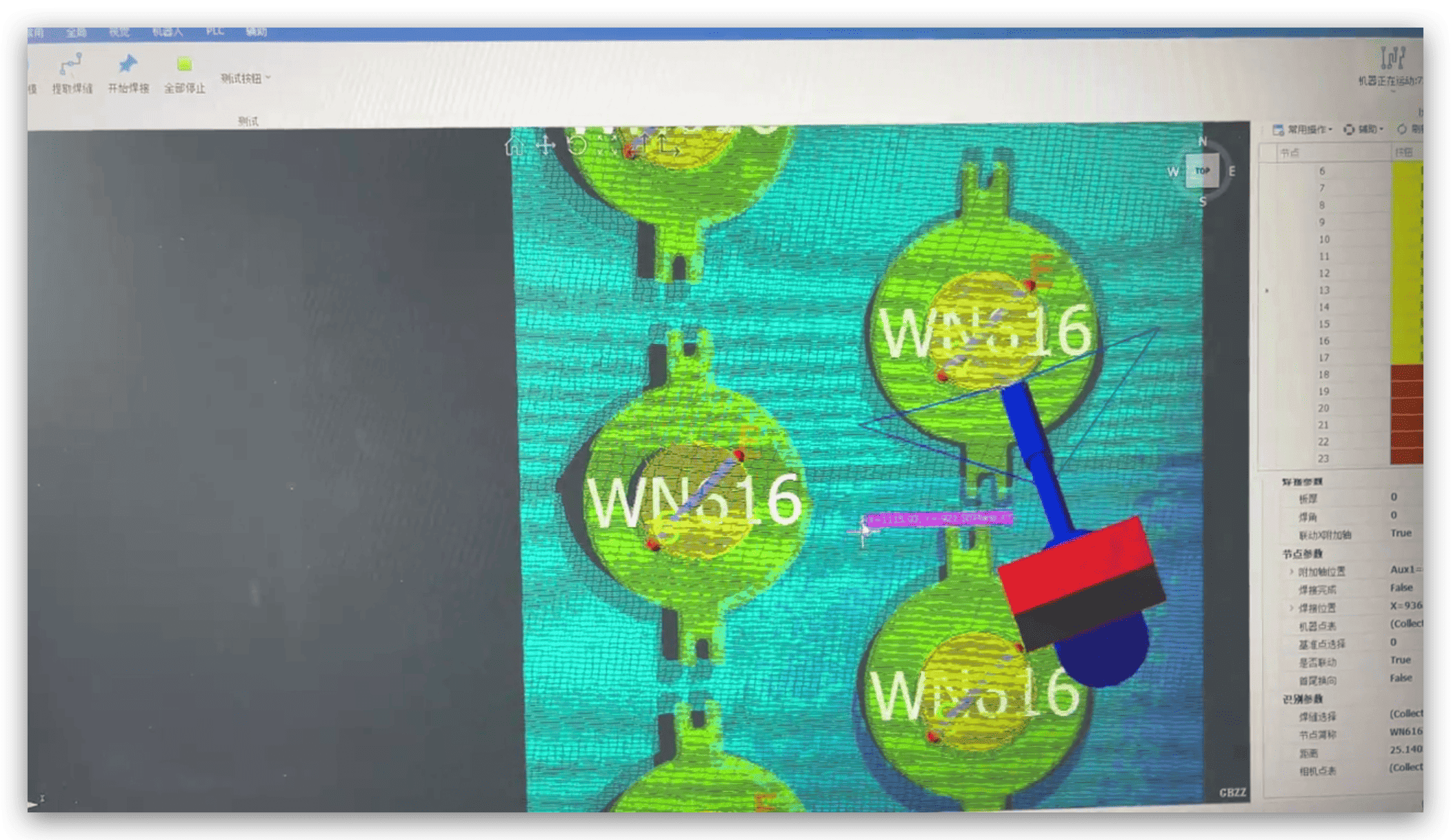
The system uses 3D vision scanning to read the real workpiece position and shape. It then builds a digital model, finds the weld seam, and creates the welding path automatically, so I do not need traditional point-by-point teaching.
I start from the real workpiece, not from a perfect drawing
In many mechanical workshops, the drawing is not always the same as the real part. I have seen brackets with small bending errors. I have seen machined parts with small position changes. I have also seen welded assemblies that move slightly after clamping. A normal welding robot follows the taught path. It does not know the part has moved unless I add sensors or adjust the program. This is where reverse modeling becomes useful.
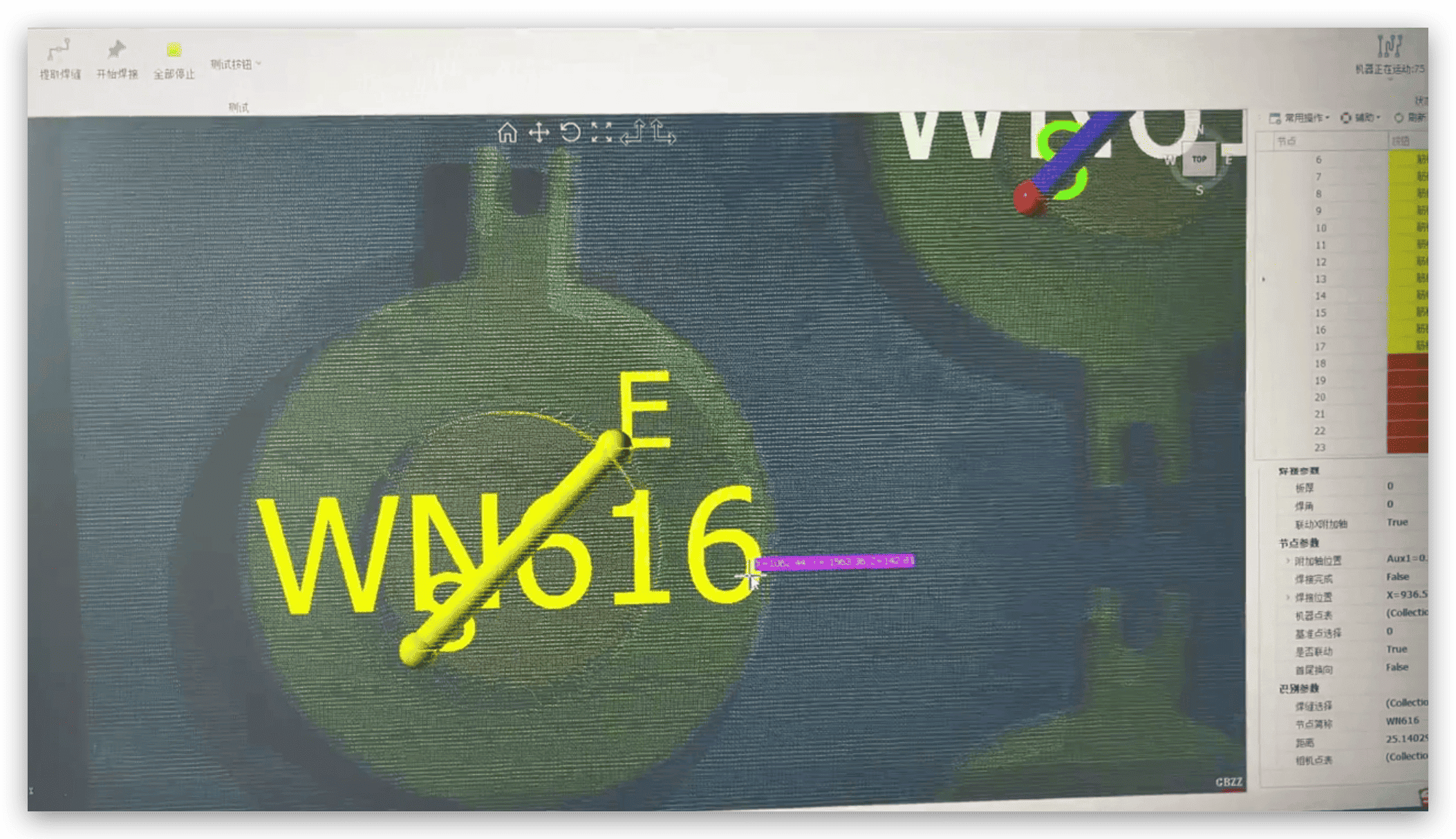
The system scans the workpiece first. The 3D vision unit collects the surface data. The software then compares the scanned data with the welding task. It finds the seam position in the real space. After that, it generates the path for the automatic welding robot. I do not need to slowly move the robot from one point to another. I only need to confirm the welding process, the seam type, and the welding parameters.
| Step | What I Do | What The System Does | Result |
|---|---|---|---|
| Load the part | I place the workpiece on the fixture | The camera scans the part | The system gets real position data |
| Confirm the job | I choose the welding task | The software finds the seam | The path is created |
| Check the path | I review the route on screen | The robot simulates movement | Collision risk is reduced |
| Start welding | I press start | The welding robot follows the generated path | The weld is completed |
I reduce teaching time in a very practical way
When I talk with customers, I do not tell them that traditional teaching is useless. It still works very well for mass production. If a factory welds the same part all year, a normal industrial welding robot can be very efficient. But many factories do not work that way now. Many factories take small orders. One day they weld a guard frame. The next day they weld a machine cover. After that, they weld small brackets, bases, pipe supports, or custom parts.
For these factories, traditional teaching becomes a hidden cost. The worker spends time making programs. The machine waits. The manager waits. The customer also waits. With reverse modeling intelligent welding, I can shorten this waiting time. The system helps me move from manual judgment to digital recognition. The operator does not need deep robot programming knowledge. The operator still needs welding experience, but the system removes much of the repeated path teaching work.
I still control the welding quality
Some people ask me if automatic path generation means the machine takes over everything. My answer is no. I still need to choose the correct welding method. I still need to set power, wire speed, travel speed, shielding gas, and weaving style when needed. The system is intelligent, but welding is still a process. Good welding needs correct preparation.
For example, if I use a MIG welding robot for a steel part, I still check joint gap, wire type, gas flow, and torch angle. If I use laser welding on stainless steel small parts, I check focus position, power, speed, and fixture stability. The smart part is that I do not spend long hours teaching each weld point. The system helps me find and follow the seam. I use my welding knowledge to make the weld strong and stable.
| Welding Item | My Manual Decision | System Support |
|---|---|---|
| Weld seam location | I confirm the seam type | The system finds the seam position |
| Welding parameters | I set process values | The system applies them to the path |
| Torch posture | I set angle rules | The system keeps the posture along the seam |
| Path accuracy | I review the route | The system corrects path based on scan data |
I see the biggest value in daily factory work
The best thing about this system is not only speed. The best thing is that it lowers the mental pressure on the operator. A new operator may not know how to program a robot well. A skilled welder may not want to spend days learning robot code. The reverse modeling system gives both of them a more direct way to work. They can scan, confirm, and weld.
This is also why I often explain it as a bridge between manual welding and full automation. It keeps the worker involved, but it removes heavy repeated work. It makes a robotic welding machine feel less like a complicated robot cell and more like a smart welding tool. For small mechanical parts, this feeling matters a lot. The workshop needs a machine that can adapt quickly, not a machine that only works well after long preparation.
Why Is It Suitable For Small-Batch And High-Mix Mechanical Parts?
Small-batch production often suffers from setup waste. The order is small, the part type changes often, and traditional automation feels too heavy.
This system is suitable for small-batch and high-mix parts because it reduces programming work, adapts to part changes, and lets I switch jobs faster. It is useful for brackets, frames, covers, bases, supports, and many custom welded components.
I see small-batch work as the real test of automation
In the past, many people believed welding automation was only for large factories. I also heard this many times from customers. They said, “My order is not big enough for a robot.” They said, “My parts change too often.” They said, “I cannot hire a robot programmer for every new job.” These words are very real. I do not ignore them.
A traditional welding robot is very strong when the product is stable. It can repeat the same weld all day. But small-batch production needs another kind of flexibility. The workshop may have 20 pieces of one part, 50 pieces of another part, and 10 pieces of a custom part. In this case, the setup method becomes more important than the robot speed. If setup takes too long, automation loses its value.
Reverse modeling intelligent welding solves this problem in a more direct way. I can use scanning to capture the part. I can let the system build the welding route. I can reduce the need for repeated teaching. This makes the robotic welding system more friendly to factories that do not have large batch orders.
| Production Type | Traditional Robot Challenge | Reverse Modeling Advantage |
|---|---|---|
| Large batch | Teaching time is acceptable | Stable repeat welding |
| Small batch | Teaching time is too high | Fast job change |
| Mixed products | Many programs are needed | Auto path generation helps |
| Custom parts | Drawings may not match parts | Real scan data improves fit |
I can handle many part types with one system
Mechanical small parts are not always simple. Some parts have short seams. Some parts have curved seams. Some parts have inside corners. Some parts have tabs, ribs, plates, and pipe sections. When I use manual welding, an experienced welder can adjust by eye and hand. When I use a traditional robot, I must convert this human adjustment into fixed robot points. That is not always easy.
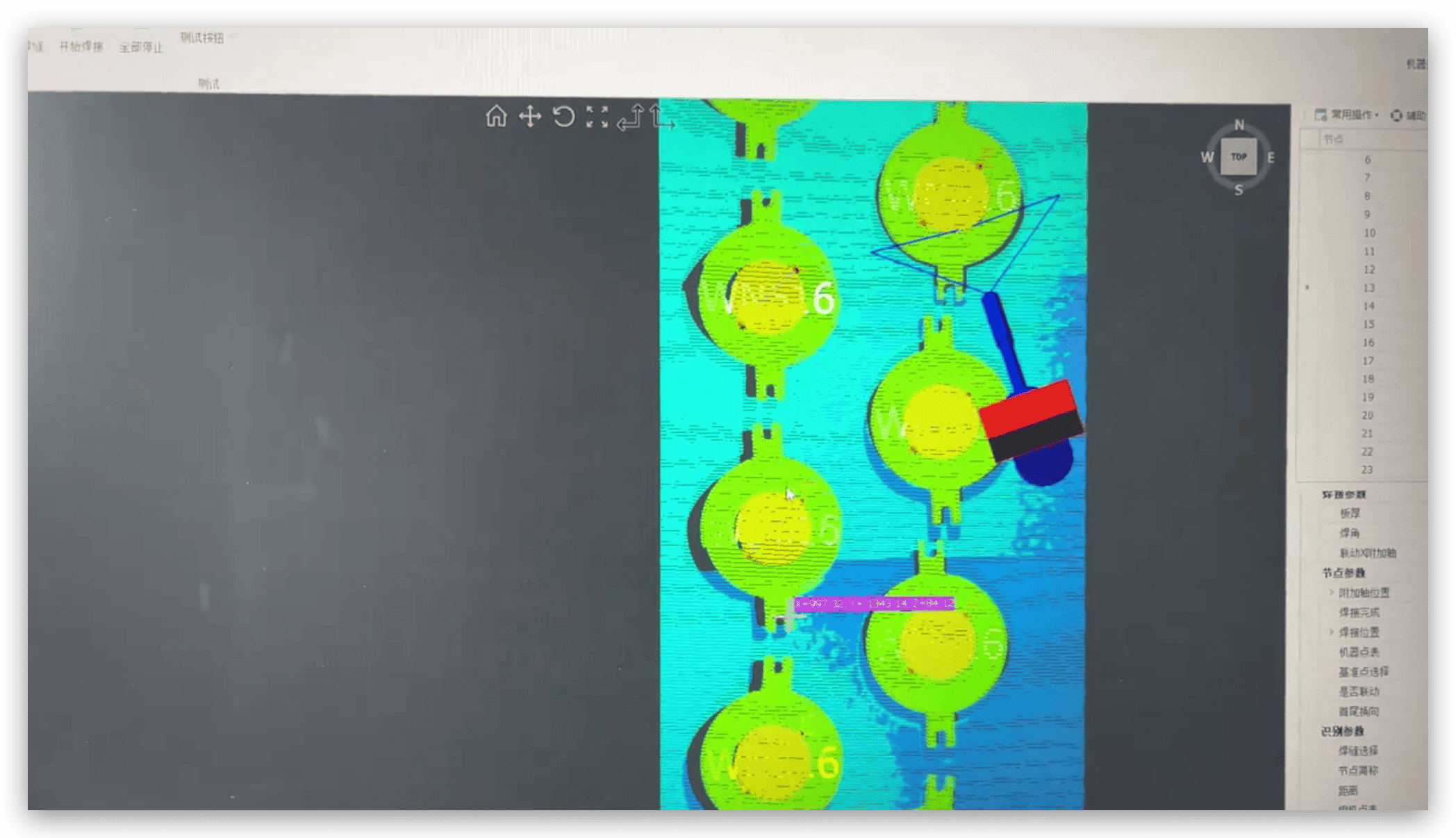
With a vision-based automatic welding robot, the system can read the actual part. It does not depend only on a fixed taught position. This helps when the fixture has small deviation or when the part has small dimensional differences. It also helps when the customer wants to change the part design. I do not need to start from zero every time.
I usually explain the suitable parts like this:
| Part Type | Common Material | Why The System Helps |
|---|---|---|
| Small brackets | Carbon steel, stainless steel | Short welds and many varieties |
| Machine covers | Stainless steel, mild steel | Visible weld quality matters |
| Support frames | Carbon steel | Position changes are common |
| Pipe supports | Steel pipe and plate | Seam location may vary |
| Equipment bases | Thick plate | Stable path and penetration matter |
| Custom mechanical parts | Mixed materials | Fast switching is important |
I still need good fixtures, but I do not need perfect fixtures
Some people think an intelligent system means they no longer need fixtures. I do not agree. A fixture is still important. The fixture keeps the part stable. It controls the gap. It protects the weld quality. But the fixture does not need to be as perfect as it must be in a fixed robot program.
In a traditional robot cell, even a small position change can cause the torch to miss the seam. In reverse modeling welding, the camera can scan the actual position. The system can then correct the path. This gives the workshop more tolerance. It does not mean I accept bad part preparation. It means I do not lose the whole weld because of a small shift.
This point is very important for small workshops. Many small and medium factories do not have expensive precision fixtures for every part. They may use simple clamps. They may use modular tables. They may use quick-change supports. The intelligent robotic welding machine works well with this kind of flexible production method.
I can combine different welding processes
The phrase “welding robot” does not mean only one welding process. In my work, I often see different needs. Some customers need laser welding for thin stainless steel. Some customers need MIG welding for thicker carbon steel. Some customers need TIG welding for special joints. Some customers want a collaborative welding robot because they have limited space and need easier human-machine work.
For mechanical small parts, process choice matters. A MIG welding robot is good for many structural steel parts. It gives good filling ability. It handles gaps better than laser in many cases. A laser welding system is very fast and clean when the fit-up is good. A collaborative welding robot can be a good choice when the factory wants a smaller cell and easier operation. An industrial welding robot is better when the part is heavier, the duty cycle is higher, and the factory wants a stronger production station.
| Robot Or Process | Best Use Case | My Comment |
|---|---|---|
| MIG welding robot | Carbon steel, thicker parts | Good for strength and filling |
| Laser welding robot | Thin sheet, stainless steel | Fast and clean when fit-up is good |
| Collaborative welding robot | Small workshops, flexible work | Easy to use and space saving |
| Industrial welding robot | Heavy duty production | Strong, fast, and stable |
| Automatic welding robot with vision | Mixed parts and small batches | Reduces teaching work |
I help customers calculate the real value
When a customer asks about ROI, I do not only compare welding speed. I compare total working time. Manual welding may look simple, but it includes waiting, measuring, positioning, tacking, welding, grinding, and rework. Traditional robotic welding may look fast, but it includes programming, testing, correcting, and fixture adjustment. Reverse modeling intelligent welding reduces the setup side.
For one customer, I once looked at a small bracket job. The weld length was not long. The real problem was not welding speed. The real problem was that the part changed often. A standard robot needed too much teaching time. A worker could weld the bracket by hand, but the quality changed from person to person. The intelligent system gave a better middle point. It helped them keep stable welding quality, and it reduced the pressure on skilled welders.
I always tell customers that this system is not magic. It is a tool. But it is a very useful tool when the factory has many part types and wants to reduce dependence on manual skill.
How Does It Improve Welding Efficiency And Consistency For Smart Manufacturing?
Manual welding depends heavily on people. One worker may weld well today, but fatigue, skill gaps, and part changes can reduce quality tomorrow.
The system improves efficiency and consistency by scanning parts, generating paths, keeping stable torch movement, and applying the same welding parameters each time. It helps I build a more repeatable and intelligent welding process.
I measure efficiency by the whole process
Many people only ask one question: “How fast can the robot weld?” This question is important, but it is not enough. I prefer to ask, “How long does the whole job take from part loading to finished weld?” This view is more useful in real factories.
A welding robot may move faster than a human welder. But if the programming takes too long, the total job is not efficient. A manual welder may start quickly. But if the weld quality is unstable, rework takes time. Grinding takes time. Inspection takes time. Customer complaints take even more time.
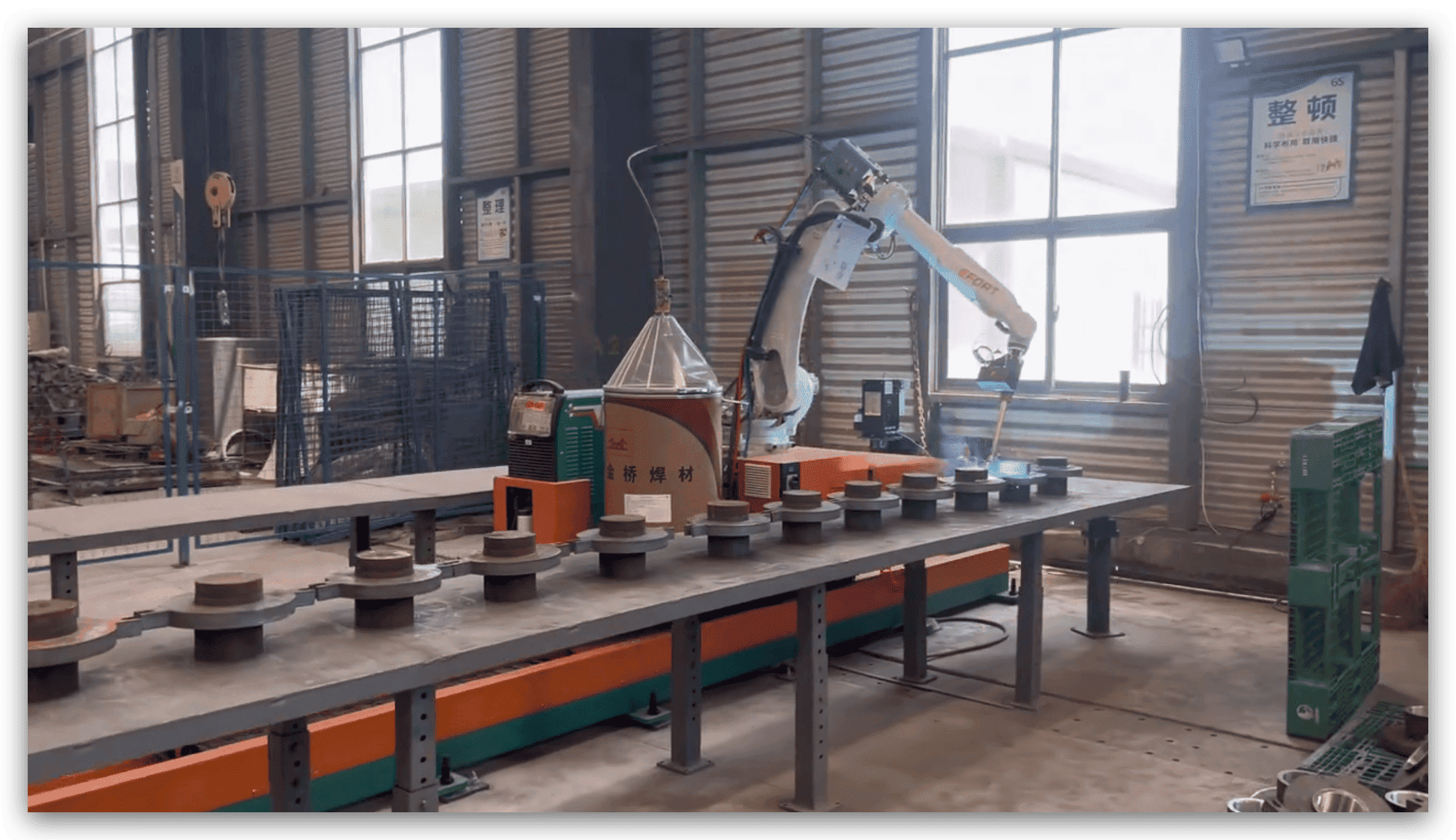
The reverse modeling system improves the whole process because it reduces the time between a new part and a finished weld. I place the workpiece. The system scans it. I check the path. The robot welds it. This rhythm is easy to understand. It also fits the way many workshops already work.
| Process Stage | Manual Welding | Traditional Robot | Reverse Modeling Intelligent Welding |
|---|---|---|---|
| New part setup | Fast start | Slow teaching | Fast scan and path generation |
| Welding speed | Depends on worker | Fast | Fast and stable |
| Quality control | Depends on skill | Stable if setup is correct | Stable with path correction |
| Job change | Easy but manual | Slow | Faster |
| Worker demand | Skilled welder needed | Programmer needed | Welding knowledge plus simple operation |
I improve consistency through stable motion
A human welder has skill, but a human welder also gets tired. The hand angle may change. The travel speed may change. The arc length may change. These small changes affect weld appearance and penetration. A robot does not get tired. Once the path and parameters are correct, the robot repeats the same movement.
This is one of the main reasons customers buy an industrial welding robot or a robotic welding machine. They want stable welds. They want less rework. They want the same quality on Monday morning and Friday afternoon. Reverse modeling adds another layer to this consistency. It lets the robot adjust the path based on the actual part. So the robot is not only repeating a fixed path. It is following a path created from real scan data.
This is very useful for mechanical small parts. Many small parts have weld seams that are not long, but they require good appearance. If the seam is off by a few millimeters, the weld may look poor. The intelligent system helps keep the torch in the right place.
I reduce the need for highly skilled robot programming
Skilled robot programmers are not easy to find. Skilled welders are also not easy to find. Many factories feel pressure from both sides. I have heard this many times from customers in Europe, the United States, the Middle East, and Southeast Asia. They want automation, but they do not want to create a new problem by depending on one programmer.
A programming-free or low-programming robotic welding system helps solve this issue. The operator does not need to write complicated robot programs. The system handles path generation. The operator can focus on loading parts, selecting tasks, checking the path, and monitoring the weld. This does not remove the need for training. I still train customers carefully. But the learning curve becomes much easier.
| Skill Area | Traditional Welding Automation | Intelligent Reverse Modeling Welding |
|---|---|---|
| Robot programming | High requirement | Much lower requirement |
| Welding process knowledge | Needed | Still needed |
| Fixture design | High precision needed | Stable fixture still needed |
| Job change ability | Depends on programmer | Easier for operator |
| Daily operation | More technical | More visual and direct |
I make smart manufacturing more practical
Smart manufacturing sounds like a big word. Some people think it only belongs to very large factories. I do not see it that way. For me, smart manufacturing starts when a workshop can collect data, reduce manual guesswork, and make production more stable. Reverse modeling intelligent welding does exactly that.
The system uses vision data. It builds a digital path. It connects welding parameters with the weld seam. It can store jobs. It can repeat tasks. It can support future production tracking. This is not only a robot arm moving in space. This is a welding cell that can understand more about the workpiece before welding.
When I build a solution for a customer, I also think about future upgrades. The first step may be one automatic welding robot. The next step may be a loading table, a positioner, a safety enclosure, or a data connection. Later, the customer may add more welding stations. The system can grow with the factory.
I keep after-sales support in the plan from the beginning
A smart system must also be serviceable. I always remind customers to think about installation, training, remote support, and spare parts. A good machine is not only about the first welding test. It must run in the factory every day. It must be easy to maintain. It must have support when the customer has questions.
For this kind of robotic welding system, I usually support customers in several ways. I provide process testing before delivery when the workpiece is available. I help confirm the welding method, robot model, power source, fixture concept, and safety design. After delivery, I support remote installation and on-site training when needed. I also help the customer build standard operating steps. These steps make the system easier for new operators.
| Support Item | Why I Care |
|---|---|
| Sample welding test | It proves the process before purchase |
| Fixture advice | It protects weld quality |
| Operator training | It reduces daily mistakes |
| Remote support | It solves issues faster |
| Spare parts plan | It keeps production running |
| Process adjustment | It helps when parts change |
I believe convenience and intelligence must work together
A machine can be intelligent, but if it is hard to use, the workshop will not like it. A machine can be simple, but if it cannot handle real production changes, it will not create enough value. This system is useful because it brings convenience and intelligence together.
The convenience comes from the easier workflow. The operator scans the part, confirms the seam, checks the path, and starts welding. The intelligence comes from the 3D vision, the reverse modeling, and the automatic path generation. These two parts support each other. The result is a welding solution that fits the real needs of small-batch mechanical part production.
I do not claim every factory needs this system. I also do not claim it replaces every welder. I see it as a strong choice for factories that want stable quality, faster changeover, lower labor pressure, and a better step toward automation. When a customer has many small mechanical parts and wants to upgrade from manual welding, I often start the discussion with this solution.
Conclusion
I use reverse modeling intelligent welding to make robot welding easier, faster, and more practical for small mechanical parts and changing production needs.


