
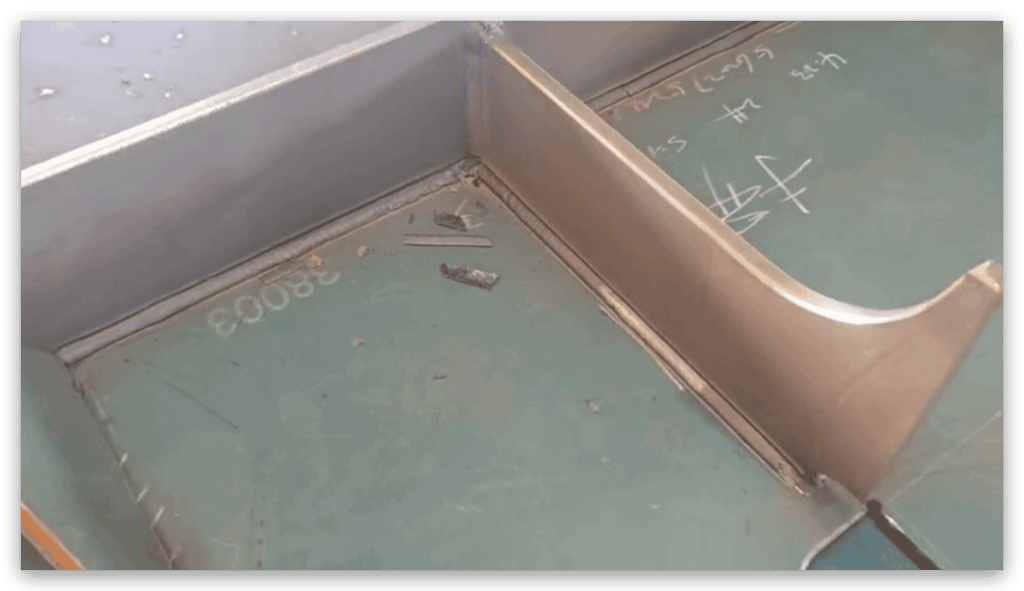
Heavy steel full-penetration welding sounds straightforward until you actually try it. Standard equipment fails. Parameters drift. Experienced welders struggle to maintain consistency across a joint that can exceed 80mm in thickness. If you are sourcing welding systems for heavy structural steel applications, understanding what separates genuinely capable solutions from mediocre ones could save you from costly rework and project delays.
Full-penetration welding on heavy steel plate is one of the most technically demanding processes in industrial manufacturing. It requires complete fusion through the entire joint cross-section, achieved through multi-layer, multi-pass deposition strategies. The core challenges — heat distortion, parameter complexity, and sustained precision over long production cycles — mean that only systems combining advanced process technology, real-time sensing, intelligent decision-making, and high-rigidity execution can consistently deliver compliant welds.
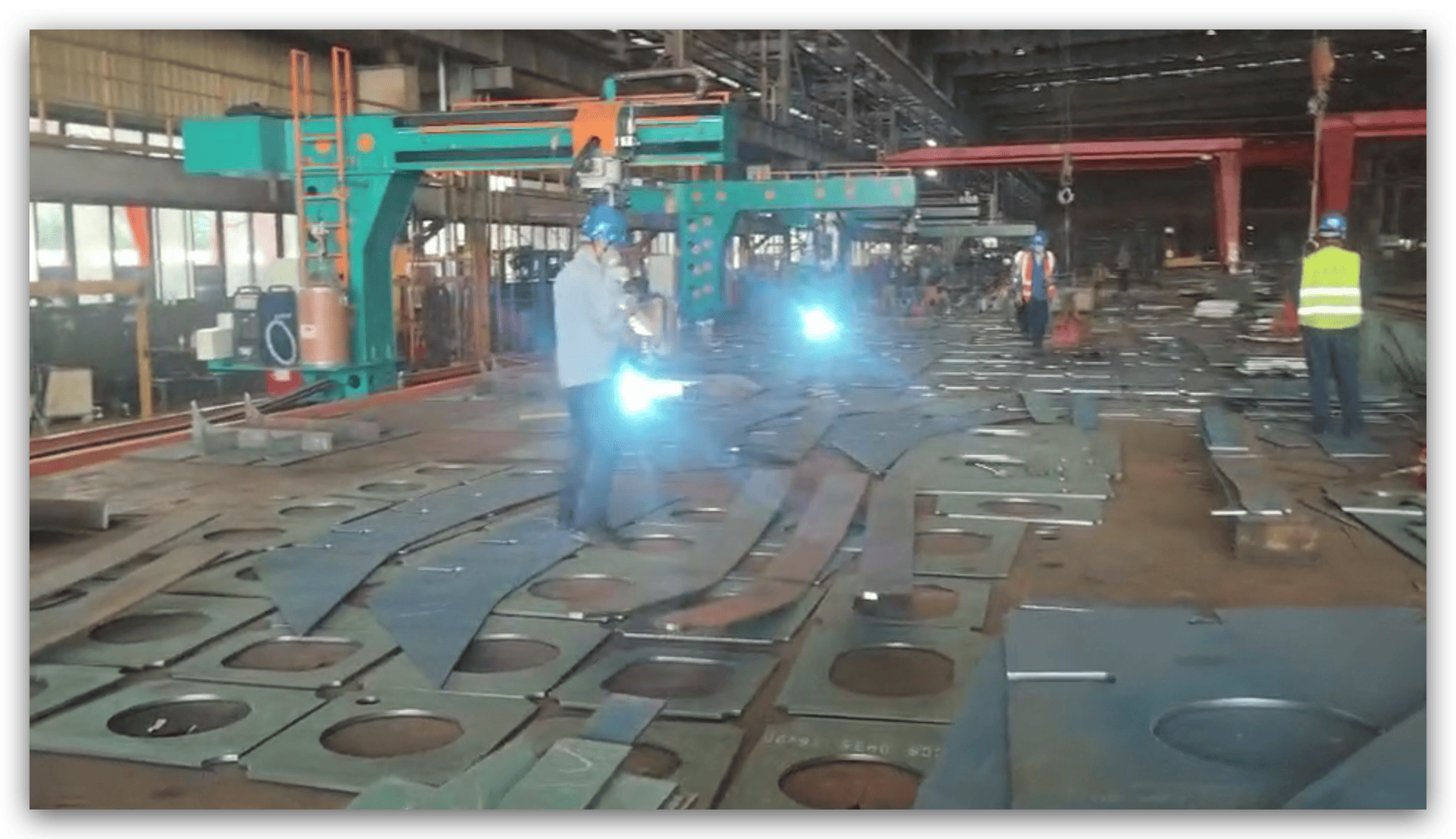
Light steel fabrication is a different world. Drawings are standardized. Parameters are fixed. A well-trained operator or a reasonably configured robotic cell can repeat the process reliably. Heavy steel full-penetration welding does not offer that comfort. Every variable — plate thickness, joint geometry, ambient temperature, heat accumulation across passes — interacts in ways that demand a fundamentally different level of technical integration. The sections below break down exactly what that means for procurement teams evaluating welding systems.
Why Does Thick-Plate Full-Penetration Welding Demand Greater Technical Capability?
Most procurement teams underestimate the difficulty of heavy steel full-penetration welding until they see a failure report. Traditional approaches produce inconsistent fusion, excessive distortion, or joints that fail non-destructive testing — problems that surface late and cost significantly more to fix than to prevent.
Thick-plate full-penetration welding is more technically demanding than light steel welding because it requires multiple deposition layers, each with different thermal conditions. The base metal continuously absorbs and redistributes heat, causing progressive distortion. Each pass must compensate for the state left by the previous one. No single parameter set covers the entire weld sequence, and any deviation compounds across layers.
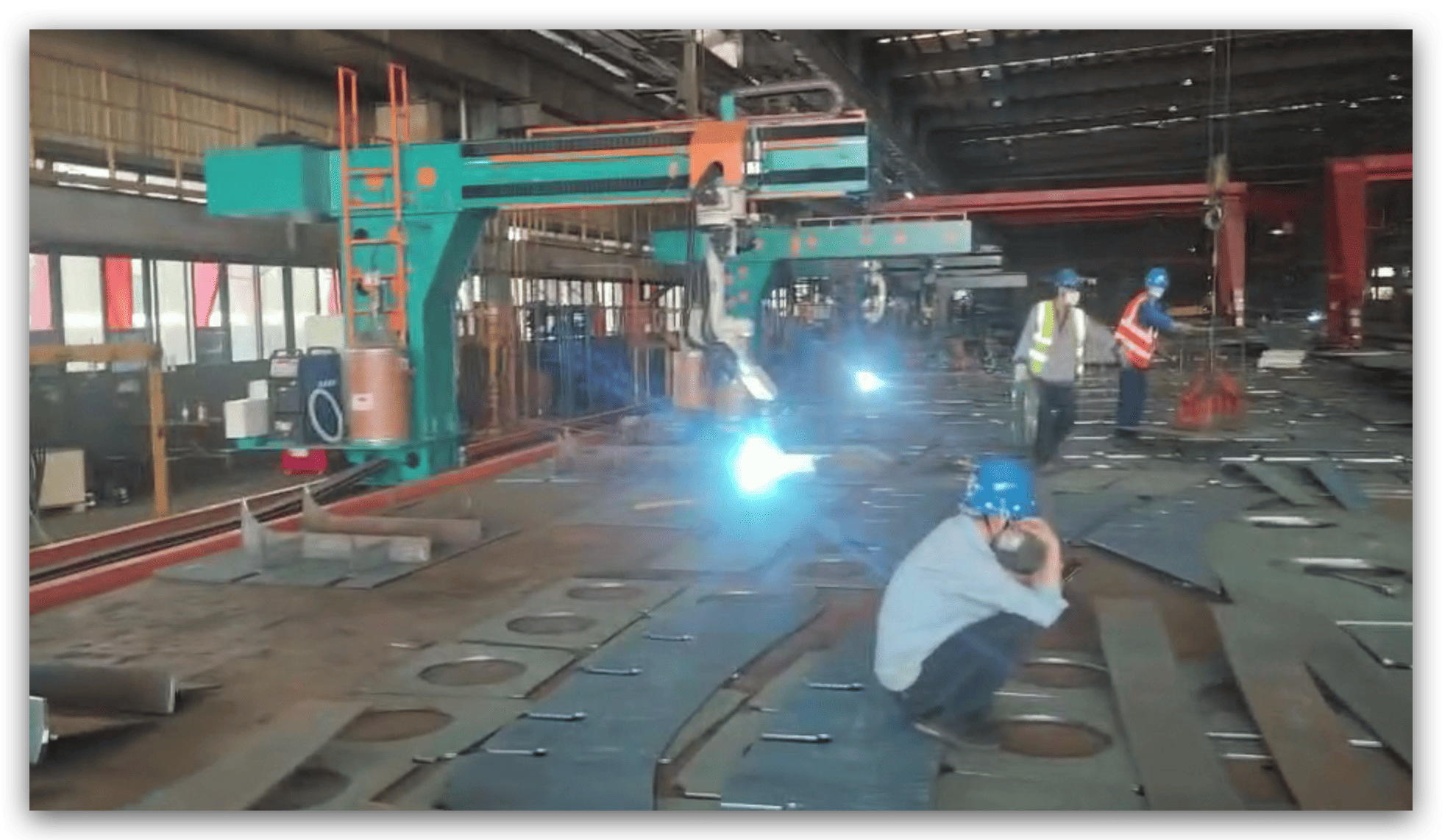
To understand this properly, it helps to compare what happens at the physics level when you weld thin versus thick material.
The Physics of Thick-Section Heat Management
When a welding arc deposits energy into thin plate, the heat dissipates relatively quickly across a small thermal mass. The part cools fast enough between passes that distortion is manageable and predictable. With heavy steel — plates commonly ranging from 40mm to over 100mm — the thermal mass is enormous. Heat does not dissipate cleanly. It accumulates, spreads laterally, and creates a temperature gradient that shifts throughout the entire weld sequence.
This matters for several interconnected reasons:
- Joint geometry changes during welding. The groove you set up before welding is not the groove you are welding into by pass 10. Thermal expansion and shrinkage reshape the opening continuously.
- Mechanical properties depend on thermal history. Too much interpass heat leads to grain coarsening and reduced toughness. Too little causes lack of fusion and cold cracking risk.
- Residual stress accumulates. Each pass deposits stress. By the final layer, the cumulative residual stress profile can cause distortion, delamination, or fatigue failure in service.
Why Traditional Processes Fall Short
The conventional approach to thick-plate full-penetration welding relies on wide groove angles — sometimes 60 degrees or more — to ensure access for the electrode and fusion through the depth. This creates several problems:
| Traditional Approach | Consequence |
|---|---|
| Wide groove angle | Excessive filler metal volume, increased heat input, higher distortion |
| Manual interpass cleaning | Time-consuming, inconsistent, introduces human error |
| Fixed parameter programs | Cannot adapt to real-time geometry or thermal drift |
| Periodic manual inspection | Defects found late, rework is expensive |
I have reviewed technical assessments from fabrication facilities that switched from conventional heavy steel welding to more capable integrated systems. The productivity gains were significant — but more importantly, the first-pass acceptance rate on non-destructive testing improved substantially. Rework is not just expensive in direct cost. It disrupts schedules, consumes floor space, and erodes customer confidence.
What Structural Standards Actually Require
Heavy steel welding in bridge construction, shipbuilding, and large steel structures is governed by demanding standards. Requirements typically specify:
- Complete joint penetration (CJP) verified by ultrasonic testing (UT) or radiographic testing (RT)
- Charpy impact toughness at specified temperature thresholds
- Controlled heat input to preserve heat-affected zone (HAZ) properties
- Dimensional tolerances on distortion and joint alignment
Meeting these requirements with manual or semi-automated processes on plates above 50mm thickness is technically possible but operationally unreliable at production scale. Consistent compliance demands systematic control — not individual skill.
Do Process, Sensing, Decision-Making, and Execution Form the Four Core Capabilities?
When evaluating welding systems for heavy steel full-penetration applications, buyers often focus on one or two headline features — arc energy control, robot payload capacity — without assessing the full technical stack. The most capable systems in this category are strong across all four dimensions simultaneously.
The four core capabilities required for reliable heavy steel full-penetration welding are: advanced process technology to achieve deep fusion efficiently, intelligent sensing to track real-time joint conditions, intelligent decision-making to optimize parameters across every pass, and high-rigidity execution hardware to maintain precision under sustained heavy-load operation. Weakness in any single capability limits the performance of the others.
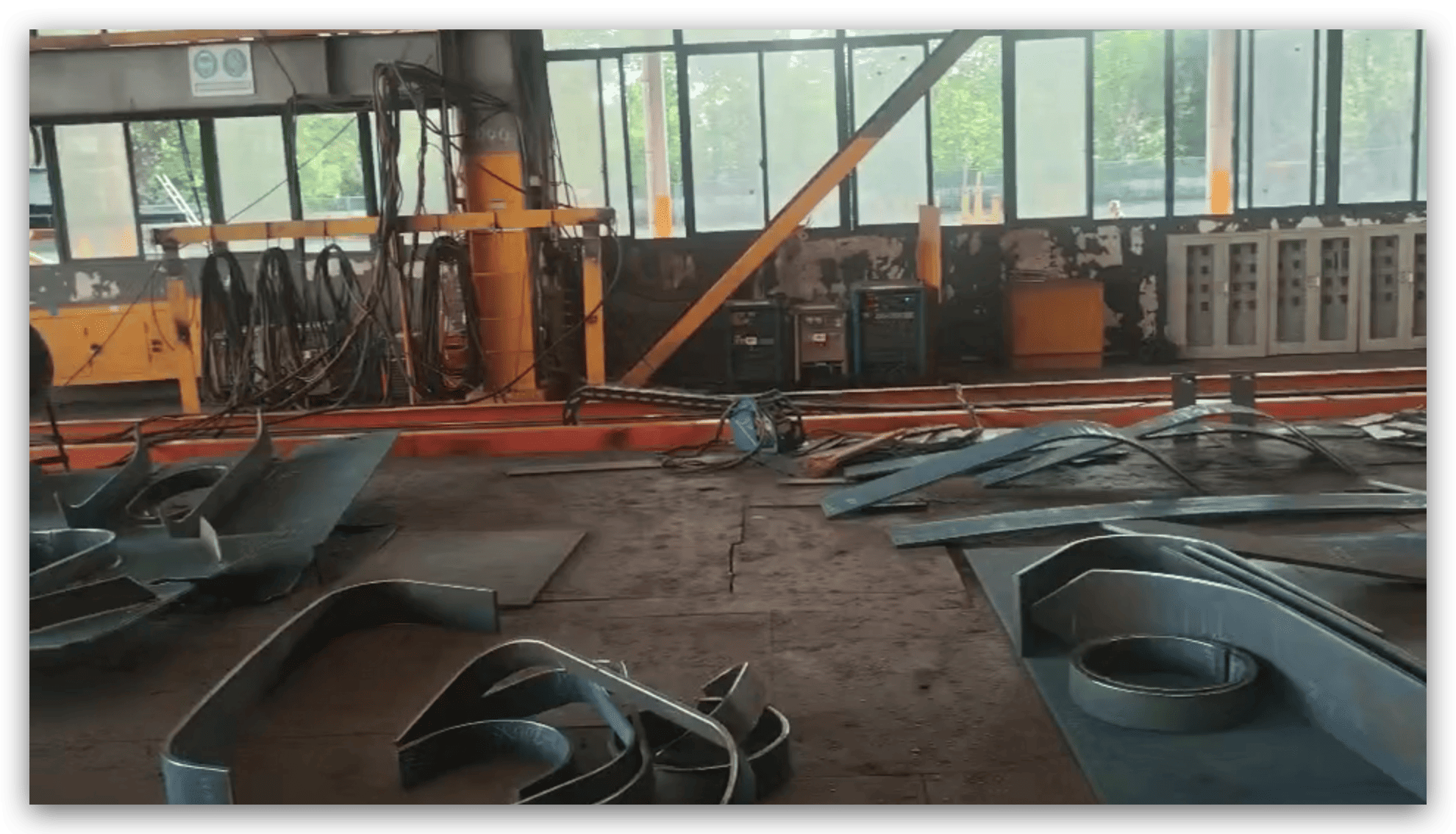
This framework is useful because it gives procurement teams a structured way to ask questions and evaluate supplier responses.
Capability One: Process Technology — Solving the Fusion Problem
The starting point is the welding process itself. Standard MIG/MAG parameters designed for light steel cannot achieve the penetration depth and fill efficiency required for thick-plate full-penetration joints. Leading heavy steel welding systems address this through advanced process variants, including:
- Tandem arc welding: Two wire electrodes in a single torch, independently controlled. This doubles deposition rate without proportionally increasing heat input per unit area.
- High-efficiency hybrid processes: Combining laser energy with arc welding concentrates heat precisely, enabling deeper penetration with a narrower groove.
- Narrow-gap welding: Reducing groove angle to as little as 10–15 degrees dramatically cuts total filler metal volume and weld time, while the process must compensate with precise arc control to avoid sidewall lack of fusion.
The filler material formulation also matters at the process level. The chemical composition of the wire directly influences melt pool stability, fluidity, and the mechanical properties of the deposited weld metal. For demanding structural applications, filler selection is not interchangeable — it is a design decision.
When evaluating process capability, ask suppliers:
- What is the maximum deposition rate at qualified parameters for your target joint geometry?
- What groove geometry is required, and how does that compare to conventional approaches?
- What filler wire specifications are qualified with the system, and what mechanical property data is available?
Capability Two: Sensing — Seeing What Is Actually Happening
Heavy plate welding produces significant thermal distortion. A groove that is geometrically perfect at room temperature will shift dimensions measurably once the first few passes have been deposited. If the welding system cannot detect and respond to this shift, it will continue executing the pre-programmed path into a joint geometry that no longer matches — producing lack of fusion, incorrect bead placement, or surface defects.
The sensing technologies that address this problem include:
- Laser vision seam tracking: A structured light laser stripe ahead of the arc continuously scans the groove. The system compares the detected geometry to the expected profile and adjusts torch position in real time.
- Arc sensing (through-arc tracking): The system monitors variations in welding current and voltage as the arc oscillates across the groove. Since electrical parameters respond to changes in arc-to-workpiece distance and geometry, the system can extract positional feedback directly from the arc signal without additional hardware.
- Infrared thermal imaging: Monitors interpass temperature to prevent both cold starts (where the base has cooled too much) and overheating (where accumulated heat would degrade mechanical properties).
A useful analogy: traditional welding equipment is essentially operating blind after the first programmed pass. Intelligent sensing gives the system real-time situational awareness — the equivalent of equipping a process with both eyes and the ability to use what it sees.
Capability Three: Decision-Making — Optimizing Every Pass
Multi-layer multi-pass welding on heavy plate involves dozens to hundreds of individual passes, each with distinct optimal parameters. The thermal state, groove geometry, and accumulated stress differ at every stage. No human programmer can manually optimize all of these parameters for every joint variation in production. This is where intelligent decision-making separates leading systems from conventional ones.
The most capable systems approach this through:
- Process knowledge databases: Structured libraries of validated parameter sets for specific joint geometries, material grades, and thickness ranges, built from empirical testing and expert input.
- Thermal-mechanical simulation: Finite element models that predict how the joint will distort and what residual stresses will develop, enabling pre-weld parameter planning rather than reactive correction.
- Digital twin integration: A continuously updated virtual model of the actual weld in progress, allowing the system to compare predicted versus actual conditions and adjust accordingly.
The underlying principle is converting experiential knowledge — which resides in skilled welders who cannot be present at every machine simultaneously — into repeatable, documented, machine-executable logic. This is not merely a productivity improvement. It is a quality assurance mechanism.
Capability Four: Execution — Staying Stable Under Load
Heavy steel welding environments are physically demanding. Workpieces are heavy. Fixtures exert significant loads on positioners. Welding robots must maintain arc-to-workpiece accuracy within fractions of a millimeter across joints that may run several meters in length, often over work shifts of 12 to 24 continuous hours.
This demands:
- High-rigidity robot structure: Minimizing deflection under gravity and reaction forces at maximum reach and payload
- Precision servo algorithms: Reducing path-following error, particularly in interpolated motions and at changes of direction
- Thermal compensation in drives: Accounting for temperature-induced dimensional changes in the robot structure itself during extended operation
A robot that performs accurately during a 30-minute demonstration but drifts measurably over an 8-hour production run is not a viable solution for heavy steel fabrication. When evaluating systems, request data on:
- Rated payload capacity and moment capacity at full reach
- Path accuracy specifications under rated load conditions
- Demonstrated duty cycle in continuous heavy-load applications
Is a Truly Intelligent Welding System One That Adapts to Change in Real Time?
The word "intelligent" is used loosely in industrial marketing. Before committing to a significant capital investment, it is worth establishing what real-time adaptation actually means in a heavy steel welding context — and what claims are worth verifying independently.
A genuinely intelligent welding system for full-penetration heavy steel applications is one that integrates sensing, process knowledge, and actuator control into a closed-loop architecture. It does not just execute pre-programmed instructions. It detects deviations from expected conditions — joint geometry shift, thermal drift, distortion — and adjusts parameters within the current pass to maintain weld quality. This closed-loop capability is the functional definition of real-time adaptation.
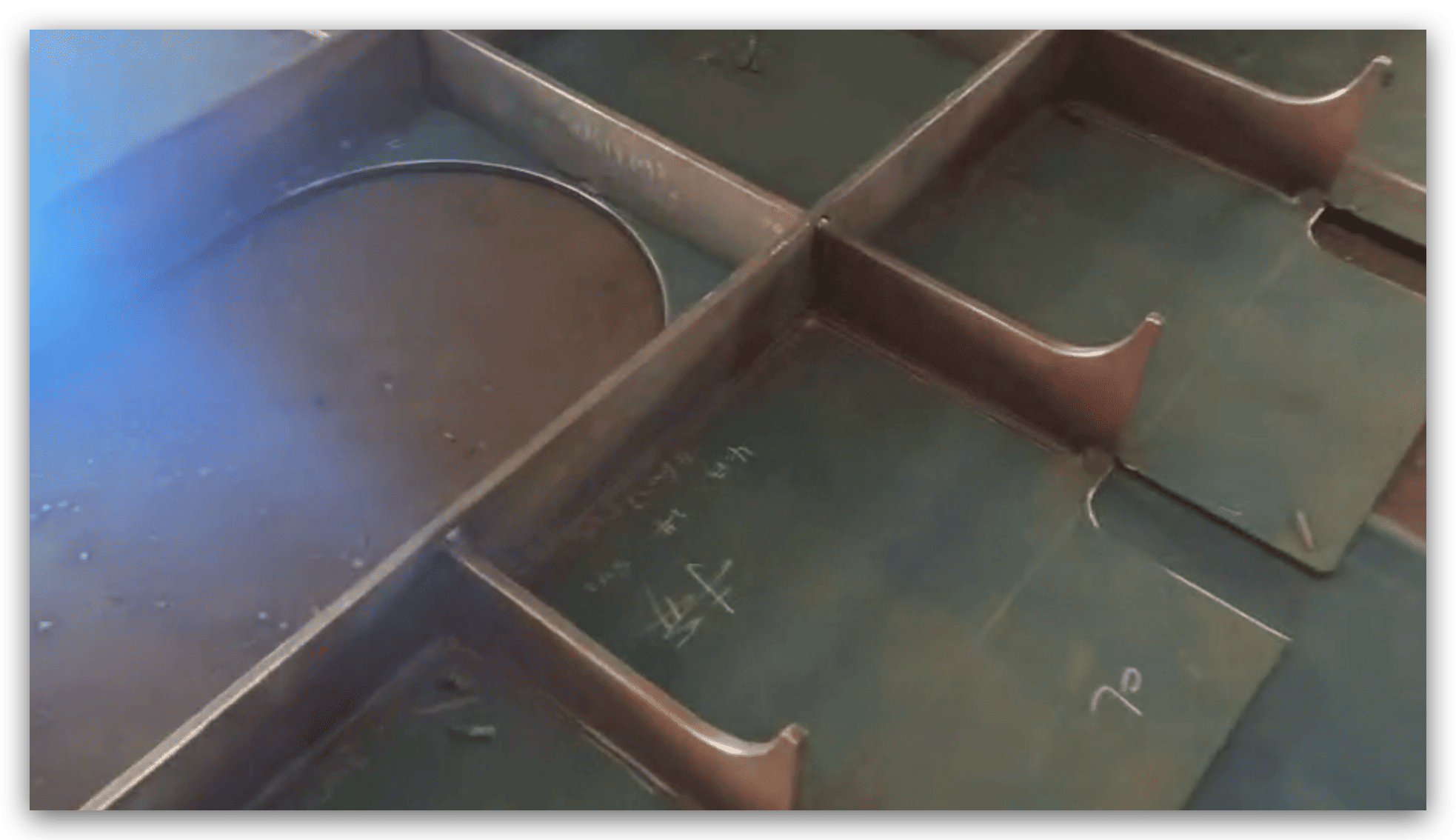
The distinction matters practically. A system with sensing hardware but no integration between the sensor output and the process controller is not adapting — it is just monitoring. Real-time adaptation requires the control architecture to close the loop: sense, decide, act, re-sense.
What Real-Time Adaptation Looks Like in Practice
Consider a practical scenario: a 60mm thick structural steel joint, 2 meters long, with a narrow-gap groove configuration. By pass 15 of a 30-pass sequence, thermal distortion has shifted the groove centreline by 1.5mm and changed the groove width by 0.8mm at the midpoint of the joint.
In a non-adaptive system, the robot continues executing the pass 16 path as originally programmed. The arc deposits metal in the wrong position. Fusion at the sidewall is compromised. The defect will only be found during post-weld UT — at significant cost to repair.
In an adaptive system:
- The laser vision sensor detects the geometry shift ahead of the arc.
- The control system recalculates the optimal torch position and, where necessary, adjusts oscillation width and travel speed.
- The arc is repositioned within the same pass, seamlessly.
- The updated geometry data is fed into the planning model for subsequent passes.
This is not speculative technology. It is the operational standard for advanced heavy steel welding systems. The question for buyers is whether a specific system implements it genuinely or approximates it with post-pass correction only.
How to Evaluate Adaptive Capability During Procurement
When assessing a welding system's adaptive intelligence, structured evaluation is more reliable than accepting demonstrations on ideal test pieces.
Recommended evaluation approach:
- Request a live demonstration on a representative workpiece — not a polished demonstration piece, but a joint geometry and material grade that matches your actual application.
- Introduce a controlled variation mid-weld (with supplier agreement) — a small induced misalignment — and observe how the system responds.
- Review the weld data logging capability — a system with genuine closed-loop control will have detailed logs of how parameters were modified in real time and why.
- Ask for certified weld procedure qualification records (WPQ/PQR) on thick-plate joints using the system's adaptive modes, not only in fixed-parameter mode.
- Verify third-party testing data — independent UT, RT, and mechanical test results on joints produced by the system under production conditions.
The Integration Imperative
The comparison that captures the challenge of heavy steel full-penetration welding most accurately is this: light steel welding is like writing characters on paper — the surface is predictable, and skilled technique is sufficient. Heavy steel full-penetration welding is like writing on rubber clay that deforms as you write. The substrate moves. The geometry changes. The thermal environment shifts. No pre-set program can anticipate all of that.
The systems that reliably deliver compliant welds under these conditions are those that have genuinely integrated materials science, process engineering, sensor fusion, and control intelligence into a single coherent architecture. Each layer reinforces the others. The sensing capability is only useful if the decision-making layer can act on it meaningfully. The process technology is only fully leveraged if the execution hardware can maintain the precision required to realize it.
This level of integration is not achieved by assembling commodity components from multiple vendors. It requires sustained investment in research, testing, and system-level engineering. That investment is visible in the technical documentation, the qualification data, and the production track record of a supplier — and it is exactly what procurement teams should be looking for.
Frequently Asked Questions
What is the difference between full-penetration and partial-penetration welding in heavy steel?
Full-penetration welding achieves complete fusion through the entire joint thickness, verified by non-destructive testing. Partial-penetration welding deposits metal only to a specified depth. Full-penetration joints are required wherever the connection must carry full structural load, including tension, compression, and fatigue loading — common in bridge structures, pressure vessels, and critical steel frame connections.
How many passes are typically required for full-penetration welding on 80mm steel plate?
The number of passes depends on groove geometry, process type, and wire diameter. A conventional V-groove on 80mm plate with 1.2mm wire can require 40 to 60 passes or more. Narrow-gap processes with larger wire diameters can reduce this significantly — sometimes to fewer than 20 passes — which also reduces total heat input and distortion.
What non-destructive testing methods are used to verify full-penetration weld quality?
Ultrasonic testing (UT) and phased array ultrasonic testing (PAUT) are the most common methods for thick-plate full-penetration joints. Radiographic testing (RT) is also used but has practical limitations on very thick sections. Magnetic particle testing (MT) and dye penetrant testing (PT) inspect surface and near-surface discontinuities. Most structural standards require UT as the primary volumetric inspection method.
What causes distortion in multi-pass heavy steel welding, and how is it controlled?
Distortion is caused by non-uniform thermal expansion and contraction as each pass heats and cools the surrounding base metal. Control methods include: pre-setting joint alignment to compensate for anticipated movement, balanced welding sequences that distribute heat symmetrically, controlled interpass temperature management, back-step welding sequences, and — in advanced systems — real-time adaptive correction based on continuous geometry monitoring.
What certifications should buyers verify when procuring heavy steel welding systems?
Buyers should verify: welding procedure qualification records (


