
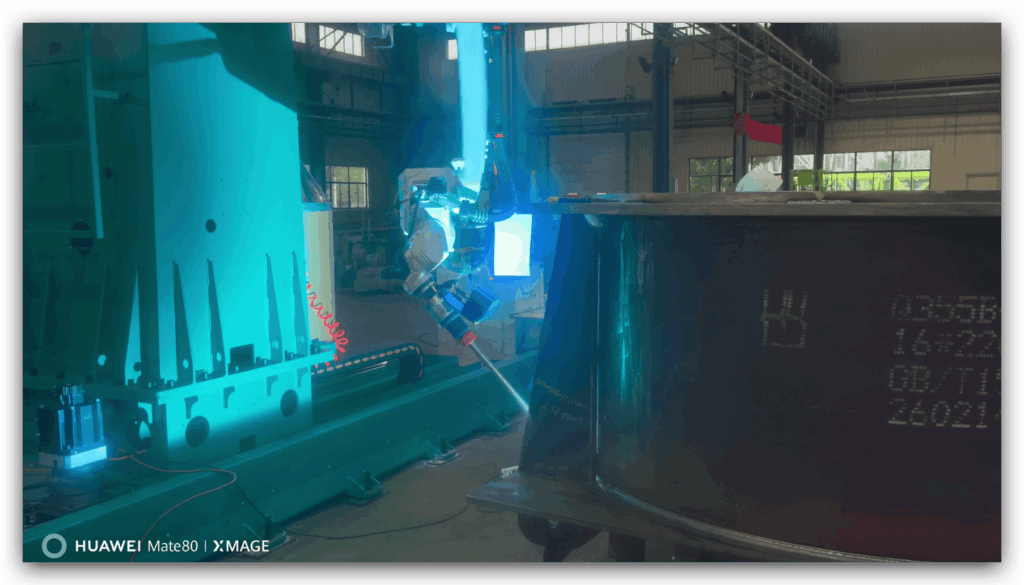
Groove welding on curved medium-thick plates is one of the most demanding challenges in structural fabrication. When the joint geometry curves, the root gap shifts, and heat distribution becomes unpredictable — a failed root pass means the entire weld sequence fails. So how do experienced welders consistently achieve clean backside formation on the first pass alone?
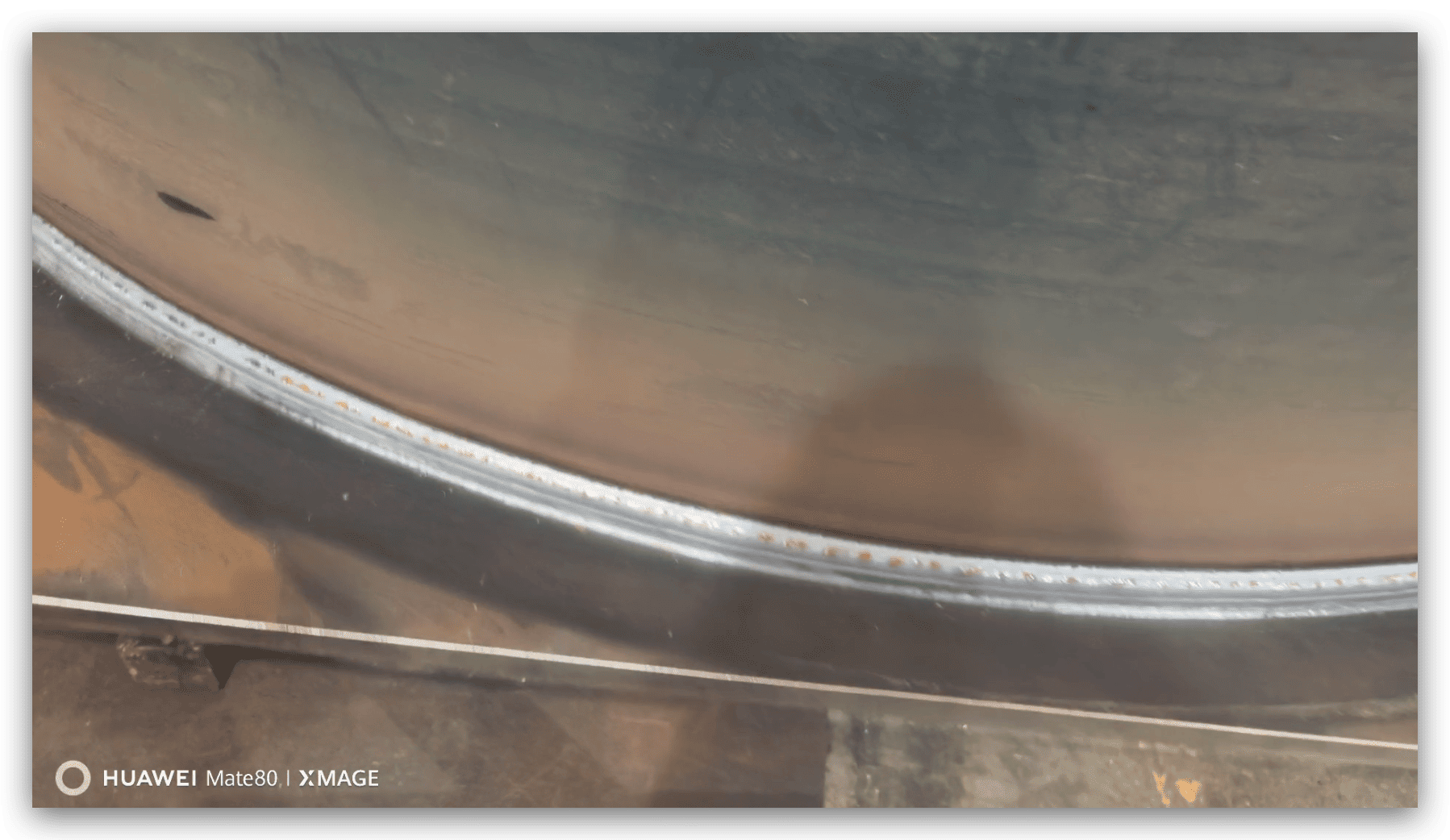
Single-side welding with double-side formation means depositing a root pass from one side of the groove while achieving full fusion and a visually acceptable bead on the back surface—without any back gouging or back welding. On curved medium-thick plates, this requires precise control of groove geometry, heat input, welding sequence, and travel speed. When executed correctly, the root pass penetrates the full plate thickness and forms a smooth, continuous backside bead in a single operation.
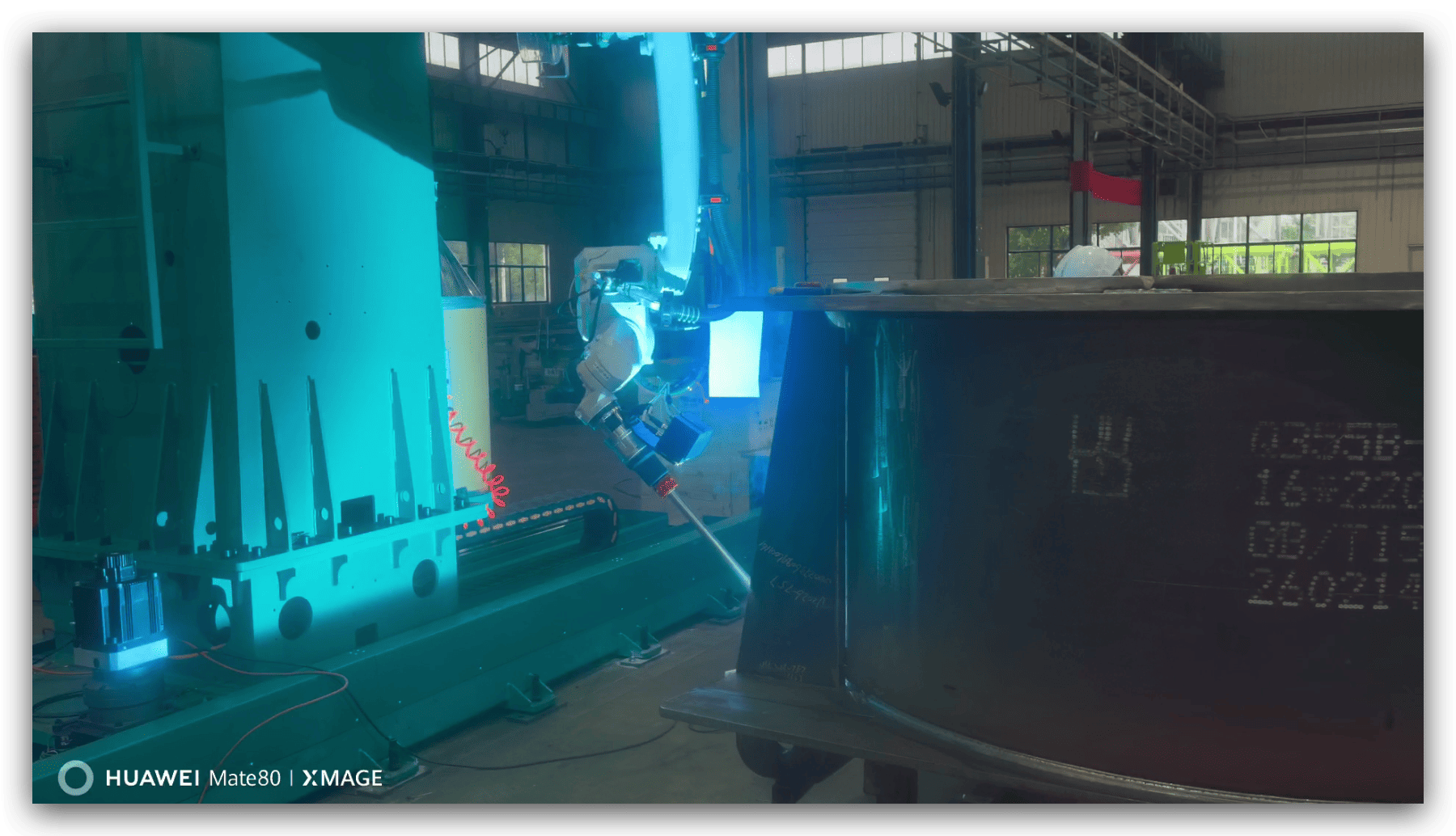
The question most buyers and quality engineers ask next is: what actually separates a successful root pass from a cold lap or burn-through? The answer lives in the details — groove preparation, fit-up tolerance, and the welding process parameters working together. The sections below break each factor down.
What Makes the Root Pass So Critical in Multi-Layer Multi-Pass Welding?
Most fabricators know that a bad fill pass can be repaired. A bad root pass usually cannot — at least not without costly back gouging. On curved plates, the stakes are even higher because joint accessibility from the back side is often physically restricted.
The root pass in multi-layer multi-pass welding sets the foundation for every subsequent bead. It must achieve full root fusion, control the backside bead profile, and resist cracking under the thermal stress of subsequent passes. On curved medium-thick plates, the root pass must also accommodate varying joint angles caused by plate curvature — making consistent penetration harder to maintain than on flat plate.
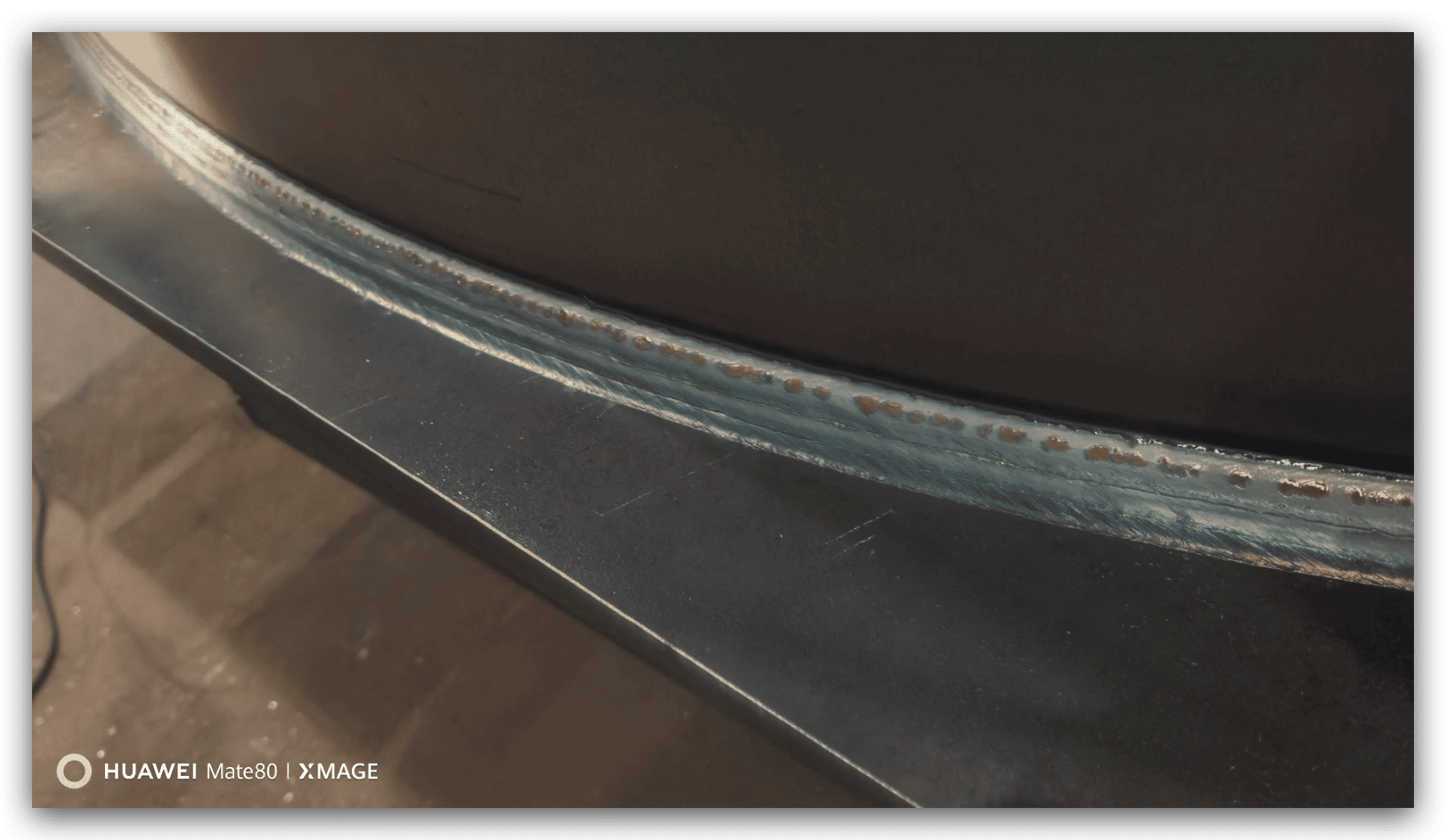
Understanding why the root pass matters so much helps buyers ask better questions when evaluating welding equipment and supplier qualification.
The Root Pass Carries Cumulative Responsibility
Every fill and cap pass is deposited on top of the root. If the root has lack of fusion, porosity, or incomplete penetration, those discontinuities become embedded in the final weld. Ultrasonic testing and radiographic inspection will find them — and rework is expensive.
On curved plates used in structural applications like pressure vessels, bridges, or heavy machinery frames, the following defect types are most common at the root level:
- Incomplete root penetration — weld metal does not reach the back surface
- Cold lapping — metal flows over the root gap without fusing to the base metal
- Burn-through — excessive heat input melts through the plate, creating a hole
- Root cracking — hydrogen-induced or solidification cracking along the root centerline
Why Curvature Adds Complexity
Flat plate groove welding is challenging enough. When the plate curves — as in tank shells, pipe fittings, or curved structural members — several variables shift simultaneously:
| Variable | Flat Plate | Curved Plate |
|---|---|---|
| Root gap consistency | Stable along joint length | Varies with plate radius |
| Gravity effect on weld pool | Predictable | Changes with torch angle |
| Joint accessibility | Generally good | Often restricted on concave side |
| Heat sink behavior | Uniform | Non-uniform due to thickness variation |
A welder working on a curved groove cannot simply set parameters once and run a straight bead. Travel speed, torch angle, and arc positioning must all adjust continuously.
How Is Backside Bead Formation and Root Fusion Quality Controlled?
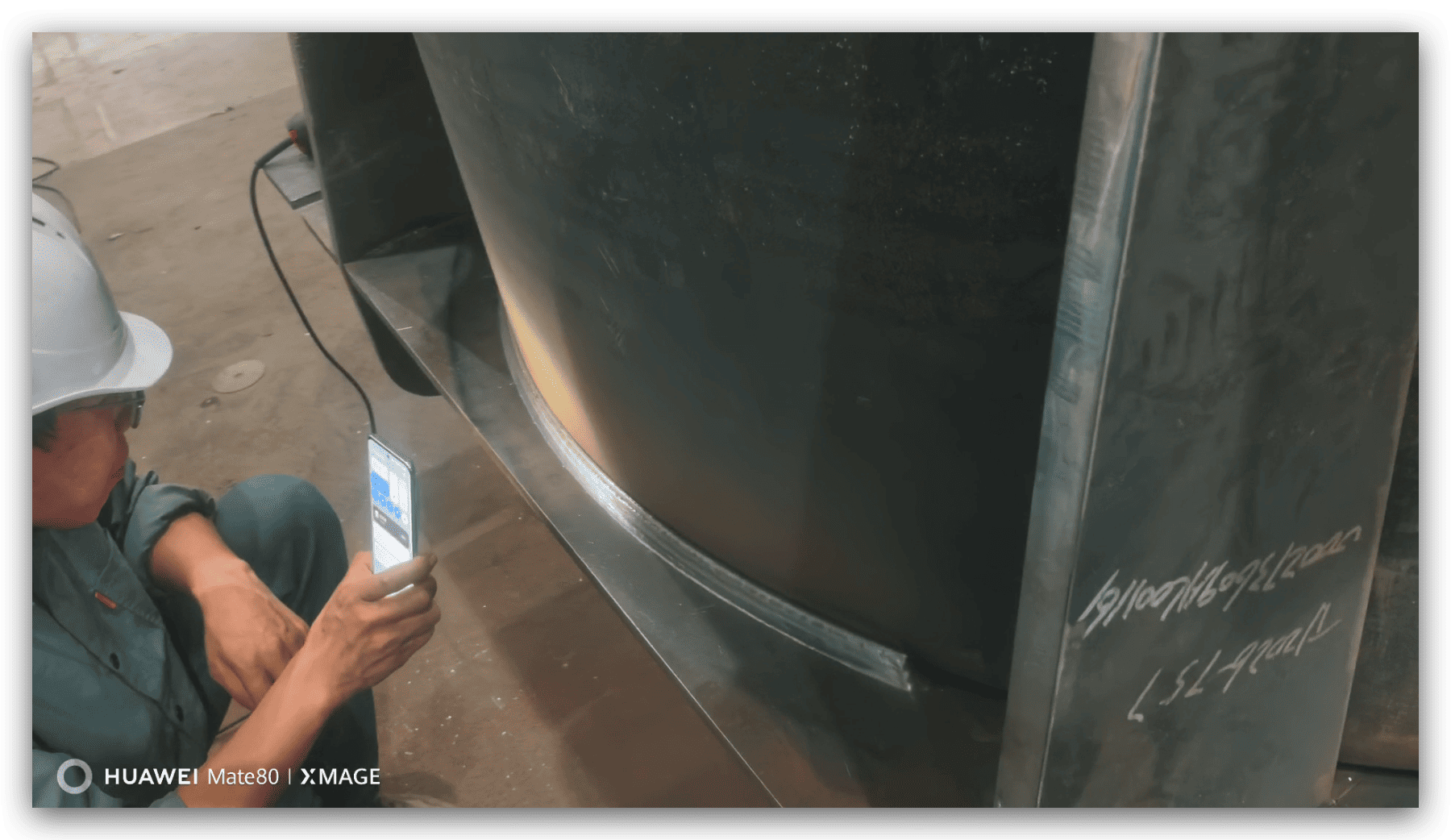
Poor backside formation is one of the most common rejection causes during weld inspection on medium-thick structural plates. The back bead must be continuous, properly fused, and within specified height tolerances — yet the welder cannot directly observe it during welding.
Backside bead formation in single-side welding depends on three interdependent controls: root gap dimension, heat input calibration, and backing method. When the root gap is within tolerance and heat input is correctly matched to plate thickness, the arc melts through the root land and surface tension holds the molten pool against the back surface — forming a bead without mechanical support from behind. Any deviation in these three factors causes either incomplete penetration or burn-through.
Root Gap and Land Dimension
The root gap is the single most influential parameter for backside formation. Most groove weld procedures for medium-thick plates specify a root gap in the range of 2–4 mm, depending on plate thickness and process. The root land (the un-beveled lip at the bottom of the groove) is typically 0–2 mm.
- Too narrow a gap → insufficient heat reaches the back surface → incomplete penetration
- Too wide a gap → weld pool falls through → burn-through or irregular backside bead
- Inconsistent gap along a curved joint → alternating between the two failure modes
Fit-up control on curved plates is harder than on flat plates because spring-back after forming can open or close the gap unevenly. Tack welding sequence and fixturing both play a role in maintaining consistent fit-up before the root pass begins.
Backing Methods and Their Trade-offs
Three backing approaches are common in single-side welding practice:
- Ceramic backing tape — supports the molten pool from behind, allows wider root gap tolerance, easier for less experienced operators, but adds consumable cost and must be removed after welding
- Flux backing — used in submerged arc and some FCAW applications, provides flux support and shielding on the back surface simultaneously
- Open root (no backing) — highest skill requirement, most common in pipe and pressure vessel work, gives the cleanest backside appearance when executed correctly but has the least tolerance for parameter deviation
For curved medium-thick plates in structural fabrication, ceramic backing is widely used because it compensates for minor fit-up variation along the curved joint length.
Heat Input Management
Heat input directly governs penetration depth and backside bead width. The relationship is straightforward:
Heat Input (kJ/mm) = (Current × Voltage × 60) ÷ (Travel Speed × 1000)
Higher heat input increases penetration — up to a point. Beyond that point, the weld pool becomes too fluid to be supported by surface tension, and burn-through results. On curved plates, the optimal heat input window is narrower than on flat plate because the varying joint geometry changes how heat distributes through the cross-section.
Process selection also matters. GTAW (TIG) offers the most precise heat control and is preferred for root passes on critical applications. SMAW and FCAW are faster but require more skill to maintain consistent root penetration on curved joints.
What Are the Technical Key Points for Single-Side Welding with Double-Side Formation on Curved Medium-Thick Plates?
Achieving reliable single-side welding with double-side formation on curved medium-thick plate is not a single technique — it is a system of coordinated controls that must work together.
The technical key points are: verified groove geometry within procedure tolerance, consistent root gap fit-up maintained by proper tack sequence, heat input matched to plate thickness and curvature radius, continuous arc manipulation to compensate for changing joint angle, and real-time monitoring of backside formation where accessible. Each factor alone is insufficient — all must be correct simultaneously for the root pass to succeed.
Groove Preparation Standards
Groove angle, root gap, and root land must be verified before welding begins. Common groove types for medium-thick plate single-side welding include:
- V-groove — suitable for plate thickness 6–25 mm, 60°–70° included angle, simplest to prepare
- Single-bevel groove — used when access is limited to one side, common on T-joints
- U-groove — for thicker plates (>25 mm), reduces total weld volume, requires machining rather than flame cutting
On curved plates, groove preparation by machine cutting produces more consistent geometry than manual flame cutting. Inconsistent groove angle — even by a few degrees — changes the root land dimension and shifts the optimal heat input range.
Tack Welding and Fit-Up Sequence
Tack welds on curved joints must be placed in a sequence that controls distortion and maintains root gap. A common approach:
- Tack at both ends of the joint first
- Add intermediate tacks at the midpoint, then quarter points
- Verify root gap at each tack location before committing to the full weld sequence
- Grind tack starts and stops to prevent cold laps at integration points with the root pass
Welder Technique on Curved Joints
Even with correct parameters, welder technique determines the final result. Key technique factors:
- Torch angle must continuously adjust to maintain perpendicularity to the curved surface — not perpendicularity to the floor
- Arc length stability is more critical on root passes than fill passes — even 1–2 mm variation changes penetration significantly
- Travel speed should be slower at tack weld locations, where heat sink is higher
- Pause technique at the leading edge of the pool helps ensure fusion to the root faces before the pool advances
Inspection and Verification
After the root pass is complete and before fill passes begin, back surface inspection should be performed where accessible. Acceptance criteria typically include:
- Backside bead width: 6–12 mm (process and thickness dependent)
- Backside reinforcement: 0–3 mm above back surface
- No cracks, porosity clusters, or incomplete fusion visible at back surface
- Smooth bead profile without irregular edges
Where direct visual access is not possible, ultrasonic testing of the root zone after a defined number of fill passes provides an alternative verification method.
Frequently Asked Questions
What plate thickness range is suitable for single-side welding with double-side formation?
Single-side welding with double-side formation is most commonly applied to plates in the 6–40 mm thickness range. Thinner plates risk burn-through more easily, while thicker plates may require modified groove designs or process selection. Procedure qualification testing determines the applicable thickness range for any specific application.
Can curved plate groove welding be automated for the root pass?
Yes. Automated GTAW and plasma welding systems with adaptive seam tracking can maintain consistent torch positioning on curved joints. However, root pass automation on complex curved geometries requires qualified programming and setup by experienced engineers. Buyers should verify the supplier's automation qualification records before approving automated root pass procedures.
How does heat input affect distortion on curved medium-thick plates?
Higher heat input increases thermal expansion and residual stress, which drives distortion — especially on curved plates where the geometry amplifies angular distortion effects. Controlling heat input within the qualified procedure range, combined with proper fixturing and welding sequence, is the primary distortion mitigation strategy.
What certifications should buyers look for when evaluating welding procedure qualification?
Buyers should look for welding procedure specifications (WPS) and procedure qualification records (PQR) issued under recognized standards such as AWS D1.1, ISO 15614, or ASME Section IX, depending on the application. Welder qualification records (WQR) should also be verified. All documents should be treated as claims requiring independent verification for critical structural applications.
Conclusion
Achieving single-side welding with double-side formation on curved medium-thick plate groove joints requires more than skill at the torch — it requires a complete system of controlled variables working together. Groove geometry, fit-up accuracy, heat input selection, backing method, and continuous technique adjustment all contribute to whether the root pass succeeds or fails.
For procurement teams and quality engineers evaluating suppliers and welding equipment, understanding these technical key points makes it possible to ask sharper questions, review procedure documents more critically, and set realistic acceptance criteria. If you are sourcing laser welding or intelligent robotic welding solutions for structural fabrication work involving curved medium-thick plate, consult with a qualified welding engineer to match the process to your specific joint geometry and quality requirements.


