
A factory can buy strong machines and still lose time every day. Bad flow, unclear tasks, and poor welding control can turn automation into pressure.
Large-scale intelligent welding workstations need good installation, real production testing, and clear factory management. I am now installing 6 sets of rail, 8-axis, and 9-axis intelligent welding systems at a customer site, and the main goal is stable welding quality, higher efficiency, and easier operation.
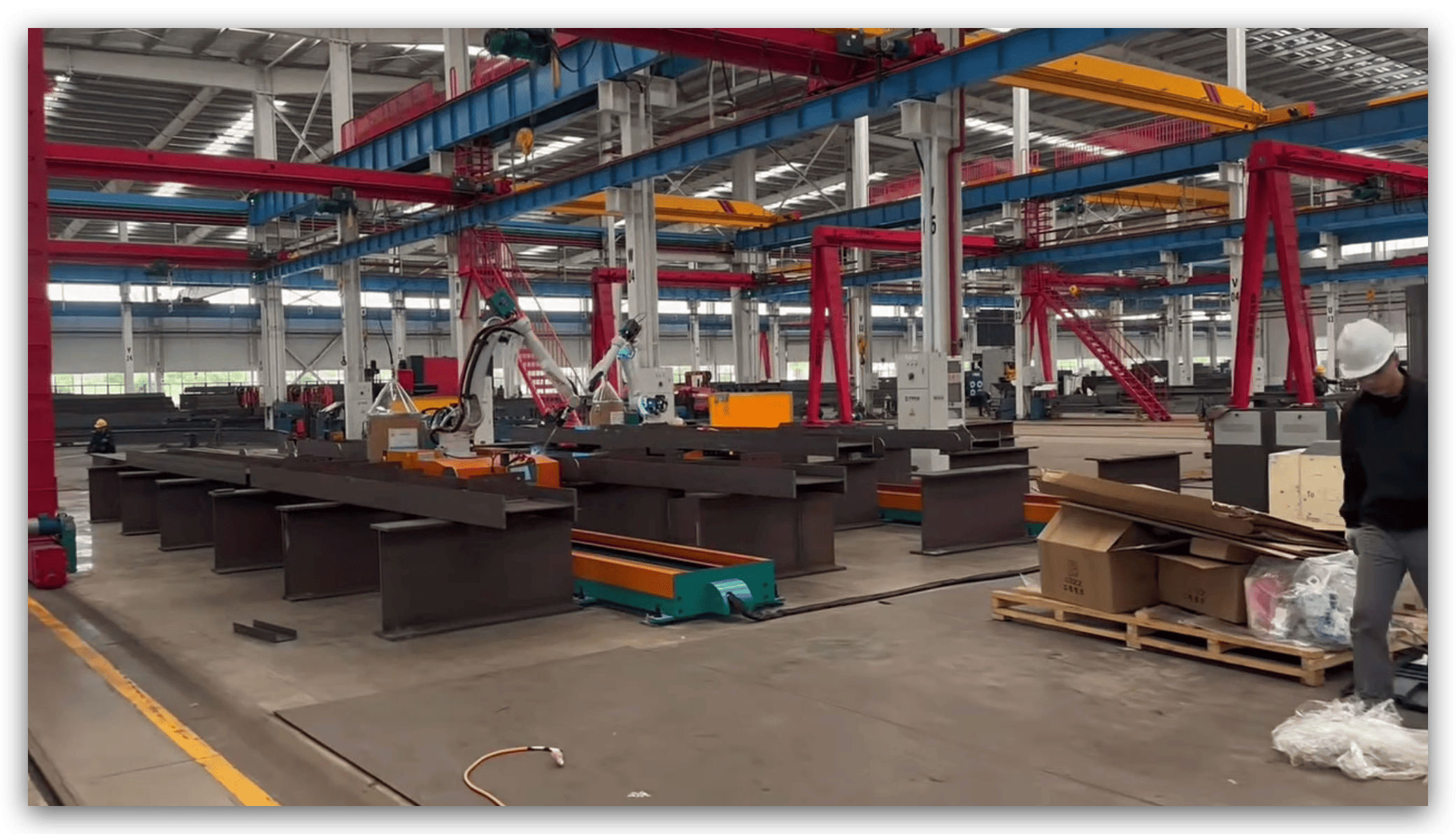
I always feel that a real customer site tells the truth better than any brochure. I can see the floor space. I can hear the cranes. I can see the welders watching the robot for the first time. I can also feel the pressure from the production manager, because every machine must soon become real output. This installation is not a simple equipment delivery. It is a full change in how this factory prepares, welds, checks, and manages metal parts.
The current project includes 2 sets of 12-meter rail intelligent welding workstations, 2 sets of 6-meter 8-axis cantilever intelligent welding workstations, and 2 sets of 6-meter 9-axis cantilever intelligent welding workstations. All 6 sets are now under installation and commissioning. I stand beside the machines every day with our engineers, the customer team, the crane operator, the electrical team, and the workshop manager. I see every cable, every anchor bolt, every test weld, and every small adjustment. I also see something more important. Smart equipment needs a smart factory habit around it. If the factory manages materials, drawings, fixtures, gas, power, workers, and inspection well, the equipment can show its real value.
6 Sets of Rail, 8-Axis, and 9-Axis Intelligent Welding Systems in Commissioning?
A customer can feel excited when six intelligent welding systems arrive, but that excitement can quickly become stress without a clear commissioning plan.
These 6 intelligent welding systems include 12-meter rail stations, 6-meter 8-axis cantilever stations, and 6-meter 9-axis cantilever stations. I commission them step by step, including mechanical installation, electrical checks, robot movement tests, laser or arc welding tests, safety checks, and operator training.
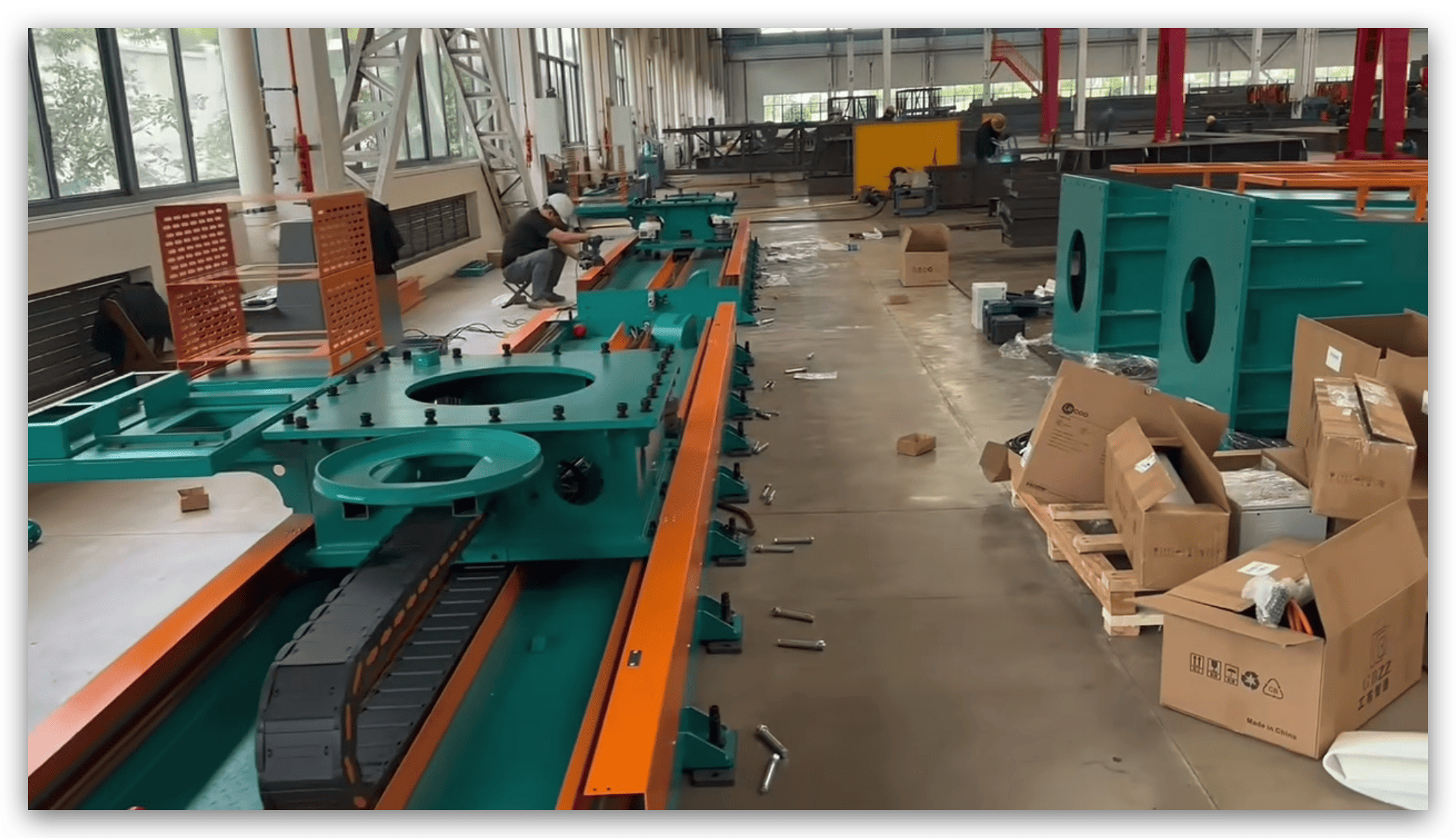
I remember the first morning of this installation very clearly. I arrived at the customer factory before the main door was fully open. The workshop floor was already active. Forklifts moved steel parts from one area to another. Workers checked drawings near a long table. The customer had cleared a large area for the six workstations, and the floor markings were already painted. That small detail gave me confidence, because a clean layout usually means the factory has prepared well.
The six systems were not placed randomly. Each system had a clear role. The 12-meter rail workstations were planned for longer and heavier parts. The 8-axis cantilever systems were planned for flexible access to medium parts. The 9-axis cantilever systems were planned for workpieces that needed more movement freedom and better torch or laser head posture. I always explain this to customers in simple words. More axes do not only mean a more expensive system. More axes mean more ways for the robot to reach the weld seam with a good angle.
What I Check First on Site
I do not start welding on the first hour. I first check the foundation, the working space, the power supply, the gas line, the safety area, and the material flow. If these things are weak, the best robot will still wait.
| Commissioning Item | What I Check | Why I Care |
|---|---|---|
| Floor and foundation | Flatness, anchor position, load capacity | The robot and rail need stable movement |
| Power supply | Voltage, grounding, cabinet connection | Welding quality needs stable power |
| Gas and air | Flow, pressure, pipe layout | Weld protection must stay stable |
| Workpiece area | Loading direction, crane access, fixture position | The operator must load parts safely |
| Safety system | Fence, light curtain, emergency stop | The system must protect people |
| Software and control | Robot, welding source, vision, programs | The full system must work as one unit |
For the 12-meter rail workstations, I pay special attention to straightness and movement smoothness. A long rail gives the robot a much larger working range. It also asks for better installation accuracy. If the rail is not aligned well, the robot movement may be slightly different at one end and the other end. That small difference can affect welding on long seams. I ask the team to check the rail level more than once. I do not mind spending extra time here. Time spent on alignment is not wasted time. It is a direct investment in welding stability.
For the 8-axis and 9-axis cantilever workstations, I focus on the relationship between the robot, the cantilever axis, the workpiece positioner if used, and the fixture. The extra axes help the system reach more seams, but they also need careful coordination. I watch the robot move slowly at first. I check if the arm has enough space. I check if the torch angle stays right. I check if the cable package moves smoothly. A cable issue may look small during dry running, but it can stop production later.
How I Move From Installation to Real Welding
I treat commissioning like climbing stairs. I do not jump. I start with mechanical checks. I then move to electrical checks. I then test the robot alone. I then test the welding source. I then test the full process without welding. I then make trial welds. I then adjust parameters. I then let the customer operator try under our guidance.
| Stage | Main Action | Result I Want |
|---|---|---|
| Mechanical setup | Rail, robot base, cantilever, fixture | Stable structure |
| Electrical setup | Cabinet wiring, grounding, safety loop | Safe power and control |
| Robot dry run | Slow movement and position check | No collision risk |
| Process test | Gas, wire, laser, arc, seam tracking | Welding system response |
| Trial welding | Sample parts and real parts | Acceptable bead and penetration |
| Operator practice | Customer team uses the system | Real handover ability |
On this site, the customer did not just ask for a robot that can move. The customer wanted real production value. This is why I asked for real workpieces during commissioning. A sample plate is useful, but a real part is more honest. Real parts have gaps, tack welds, cutting errors, oil marks, deformation, and different surface conditions. I want to see how the workstation handles those details before we say the installation is complete.
I also talk with the operators while we test. Some workers feel nervous when they see automation. I understand that feeling. A robot can look like it is replacing people. I explain that the system still needs good people. It needs people to prepare parts, choose jobs, check weld quality, maintain the system, and improve fixtures. The operator changes from holding a torch all day to managing a welding process. That change is not always easy, but it gives the worker a better role when the factory supports training.
During one test, I watched a welder stand quietly behind the safety fence. He had worked by hand for many years. He looked at the robot bead and then looked at the control screen. He asked if the robot could handle different seam positions without programming line by line. I showed him how the intelligent system could generate or adjust the path after scanning or after selecting the prepared job. His face changed. He was still careful, but he was no longer against it. That moment matters to me. Equipment is not only steel, motors, and software. Equipment also changes how people believe in the next production method.
Smart Equipment Performs Better in a Well-Managed Factory?
A smart welding system can wait idle if parts are late, fixtures are wrong, or drawings are unclear. Poor management can hide the value of automation.
Smart equipment performs better in a well-managed factory because the system needs stable inputs. I look for clean material flow, correct fixtures, trained operators, clear inspection rules, and planned maintenance. These habits allow intelligent welding equipment to deliver higher speed, more stable quality, and better return on investment.
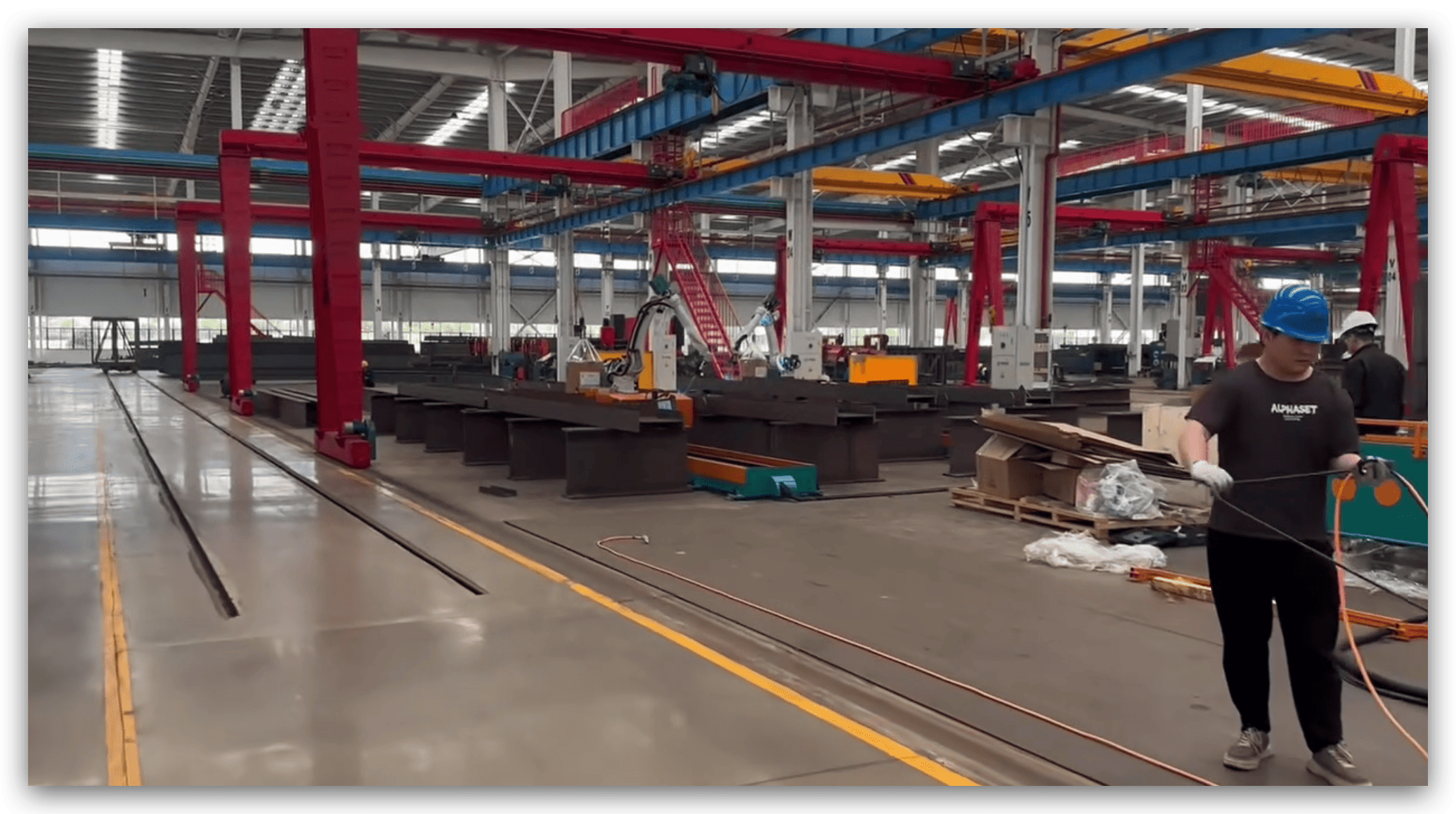
I have visited many factories in different countries. Some factories buy advanced equipment and then treat it like a single isolated machine. I have also seen smaller factories get great results from one or two systems because their management is clear. This customer site belongs to the second direction. The team is still learning the new equipment, but they are serious about management. They prepared the installation area. They assigned electricians. They arranged crane time. They collected workpiece drawings. They also brought production supervisors to our commissioning meetings. These details make the project smoother.
I often tell customers that intelligent welding is not magic. It is a strong tool. A strong tool needs good material, good clamping, good parameter control, and good people. If the gap between parts changes every time, the welding result will change. If one fixture is accurate and another fixture is bent, the robot will not know the reason unless the system has enough sensing and the process has enough rules. If the operator chooses the wrong job, the robot may follow the wrong path. If the gas bottle pressure drops and nobody checks it, the bead may have pores. These are not robot problems. These are factory management problems.
What Good Management Looks Like During Installation
When I walk through a factory during installation, I can quickly see if the future production will be smooth. I do not only look at the equipment area. I look at the whole path from material arrival to finished weldment.
| Factory Area | Good Management Sign | Risk If It Is Missing |
|---|---|---|
| Material storage | Parts are marked by order and drawing | Operators may load wrong parts |
| Cutting and bending | Size accuracy is checked before welding | Robot path may not match the part |
| Fixture area | Fixtures are labeled and maintained | Clamping error may cause poor welds |
| Welding workstation | Operators follow a job list | The robot may stop or run wrong work |
| Inspection area | Clear standards and records exist | Quality problems may repeat |
| Maintenance corner | Spare parts and tools are ready | Downtime may last too long |
At this customer site, I saw workers move parts in batches. The batches were not thrown randomly near the workstation. They were placed in prepared areas. This simple action helps a lot. A rail workstation has a large working range, but it still needs loading space. The crane must have a safe path. The operator must know which part enters first. If two different orders are mixed, the operator loses time and the robot waits. Waiting time is expensive, even if nobody writes it down.
I also paid attention to drawings. Intelligent welding systems depend on part information. Some systems work with 3D vision scanning. Some systems use selected job programs and path correction. Some systems use offline data. In each case, the drawing and part standard still matter. I asked the customer team to keep updated drawings near the production office and not only on one engineer’s computer. This is a small habit, but it prevents many mistakes. When the operator, the engineer, and the inspector look at the same standard, the factory becomes calmer.
Why Fixtures Still Matter With Intelligent Welding
Some customers ask me if intelligent welding means they no longer need fixtures. I always answer honestly. The fixture can be simpler in many cases, but it still matters. The robot needs repeatable part position. The scanner or sensing system can correct some errors, but it should not fight poor preparation all day.
| Fixture Condition | Effect on Welding | My Practical Advice |
|---|---|---|
| Strong and repeatable | Stable path and stable weld bead | Keep it and maintain it |
| Adjustable but loose | Path may shift during welding | Add locking points |
| Too heavy to change | Long changeover time | Design modular support |
| No clear reference point | Operator loads parts differently | Add pins, stops, or marks |
| Dirty with spatter | Part position changes over time | Clean it on schedule |
On one of the 6-meter cantilever stations, we tested a medium-size welded structure. The first dry run looked acceptable. The robot could reach the main seams. The second test with real clamping showed a small problem. One side of the workpiece lifted slightly after tack welding. The robot still followed the path, but the torch angle became less ideal near the end. We stopped and discussed the fixture with the customer. The answer was not to blame the robot. The answer was to add a better support point and adjust the clamping order. After that, the welding became more stable.
This is why I like customer-site installation. It shows real process problems early. A showroom demonstration can look perfect because the sample is perfect. A factory installation is different. The part may be long, hot, oily, heavy, or slightly deformed. The operator may have only a few minutes to load it. The production manager may ask for speed. The quality inspector may ask for penetration. The equipment must work inside this real world. Good factory management gives the equipment a fair chance to perform.
How I Train the Customer Team
I never believe that handover is only a signature. I need the customer team to feel able to use the workstation. During training, I use real production words, not only robot words. I explain start-up, job selection, part loading, safety reset, parameter checking, alarm handling, nozzle cleaning, wire checking, lens protection if laser is used, and daily maintenance.
| Training Topic | What I Teach | What I Ask the Operator to Do |
|---|---|---|
| Safety | Fence, emergency stop, safe distance | Repeat the safe start process |
| Job operation | Select correct workpiece task | Run a dry cycle first |
| Welding setting | Check current, speed, gas, focus, wire | Compare setting with standard |
| Quality check | Look at bead shape and penetration signs | Mark defects and report them |
| Daily maintenance | Clean torch, check cable, check gas | Follow a simple checklist |
| Alarm handling | Read alarm, stop safely, call support | Do not guess or force movement |
I also tell operators that they should not hide problems. A small problem today can become a large stoppage tomorrow. If the robot pauses, they should record when it happened. If the bead looks different, they should keep the sample. If the part does not fit the fixture, they should report it instead of forcing it. This habit is part of good management. It protects the equipment and the production target.
The best moment during training is when the customer operator runs the system by himself for the first time. I stand nearby, but I do not touch the control panel. I watch his hands. I listen to his questions. I see if the screen language makes sense to him. I see if he understands the sequence. If he hesitates, I explain again. I would rather repeat the training slowly than leave a customer with fear. A confident operator is one of the most important parts of an intelligent welding project.
Intelligent Welding + Excellent Management Builds Stronger Manufacturing Competitiveness?
A factory can face rising labor cost, unstable manual quality, and tight delivery pressure. Without better tools and better management, competitiveness becomes weaker.
Intelligent welding plus excellent management builds stronger manufacturing competitiveness because it improves welding speed, quality stability, labor use, and order response. I see the best results when automation is connected with part preparation, production planning, quality control, and operator training.
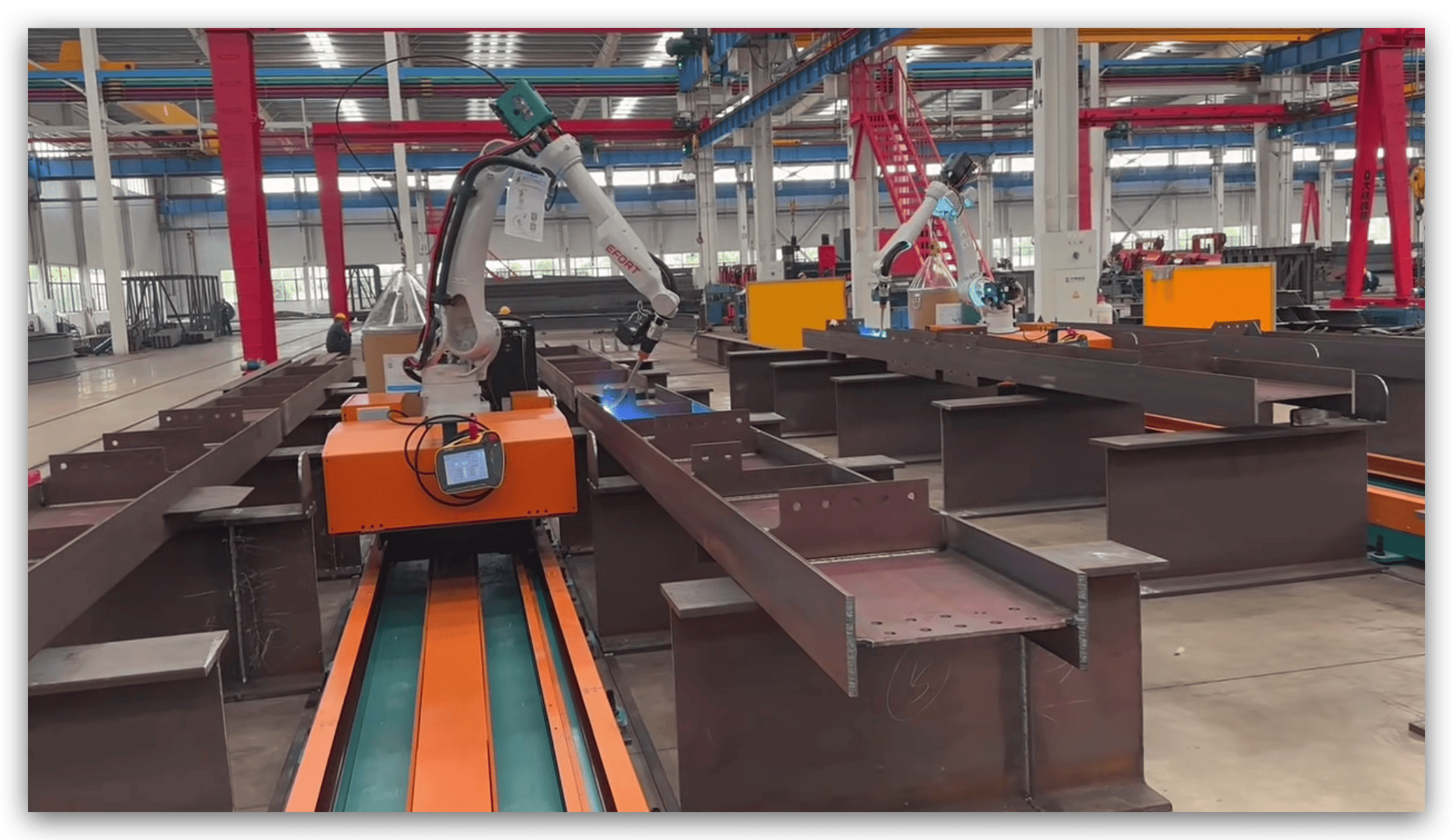
I believe many metal fabrication factories are now standing at a turning point. Skilled welders are harder to hire. Young workers do not always want heavy welding jobs. Product types change more often. Customers ask for faster delivery and better appearance. In this situation, a factory cannot only depend on old habits. It needs equipment that can reduce manual pressure. It also needs management that can turn equipment capacity into shipment.
This project gives me a strong feeling of that change. Six intelligent welding systems under one installation project show that the customer is not testing automation as a small experiment. The customer is building a new production method. The 12-meter rail workstations can handle long structural parts. The 8-axis and 9-axis cantilever systems can serve flexible production needs. The whole layout can support different part sizes and different order types. This matters a lot for high-mix and low-volume production, where traditional robot programming may be too slow.
Where Competitiveness Really Comes From
Many people think competitiveness comes only from welding speed. I think speed is important, but it is not the whole answer. A factory wins when it can deliver stable parts on time with controlled cost. Intelligent welding helps this goal, but management connects all parts.
| Competitiveness Factor | How Intelligent Welding Helps | How Management Makes It Stronger |
|---|---|---|
| Welding efficiency | Robot welds with stable speed | Production plan keeps the robot loaded |
| Quality stability | Parameters and paths repeat well | Inspection finds root causes fast |
| Labor cost | One operator can manage more output | Training raises operator skill |
| Delivery time | Less rework and faster welding | Material flow prevents waiting |
| High-mix production | Vision and flexible axes reduce programming work | Job data and fixtures are organized |
| ROI | More output per shift | Downtime and waste are controlled |
I often discuss ROI with customers. I do not like simple promises. I prefer to calculate based on real production. I ask about part thickness, seam length, daily output, number of shifts, labor cost, rework rate, and current bottleneck. A 3000W handheld laser welding machine has one type of ROI. A robotic welding station has another type of ROI. A rail intelligent welding workstation has a larger system value because it changes how large parts are welded. The return comes from less manual work, faster welding, more stable quality, lower rework, and better schedule control.
At this site, the customer cared about production value, not only machine price. That is the correct view. A cheaper system that stops often is not cheaper. A powerful system without training is also not valuable. The best solution is not always the most expensive. The best solution is the one that matches the material, thickness, seam type, production batch, factory space, and operator level. This is why I always ask many questions before recommending a system.
How 12-Meter Rail Workstations Support Large Parts
The two 12-meter rail workstations are very important in this project. They give the robot a long working range. They are suitable for long beams, steel structures, frames, tanks, and other large metal parts. A fixed robot may not reach all seams. A rail robot can move along the workpiece and weld multiple areas without repeated repositioning.
| Feature | Practical Value |
|---|---|
| 12-meter rail travel | The robot can cover long workpieces |
| Stable robot base movement | The weld path can extend across long seams |
| Large working envelope | The system can handle bigger structures |
| Less manual repositioning | The operator saves time and reduces risk |
| Better process repeatability | Long welds can become more consistent |
When we installed the rail system, I watched the robot move from one end to the other during dry running. I always enjoy this moment. The robot looks calm, but the system is doing many things at once. The rail axis, robot axes, welding source, safety signals, and control program must all work together. The movement must be smooth. The stopping point must be accurate. The cable system must follow without pulling. The operator must be able to see the working area clearly.
Large parts have another challenge. They often deform during welding. Heat input can pull the part. Manual welders often adjust by experience. Intelligent welding systems need process planning. The weld sequence matters. The clamping position matters. The tack weld quality matters. The parameter choice matters. I talk with the customer engineers about these points because the machine alone cannot cancel physics. We need to design the process so the robot can do its job well.
How 8-Axis and 9-Axis Cantilever Systems Add Flexibility
The 8-axis and 9-axis cantilever systems are different from the rail systems. They give strong flexibility in a compact working area. The cantilever structure allows the robot to access parts from useful angles. The extra axes help with reach, posture, and movement around the workpiece. These systems are very useful when the factory has many different products.
| System Type | Best Use Case | Main Benefit |
|---|---|---|
| 6-meter 8-axis cantilever | Medium parts with several weld positions | Good reach and flexible angle |
| 6-meter 9-axis cantilever | More complex parts or harder access seams | More posture control |
| Rail workstation | Long and large structures | Long working range |
| Programming-free intelligent system | High-mix production | Less programming time |
I saw the value of the 9-axis system during one test with a part that had seams in different directions. A standard robot could reach some seams, but the torch angle would not be ideal for all of them. The extra axis helped the robot keep a better posture. This improved the chance of stable fusion and a good bead shape. I explained to the customer that access is not only about touching the seam. The robot must reach the seam with the correct welding angle, the correct stick-out or focus distance, and enough clearance.
For factories that produce many product types, programming time can become the hidden cost. A robot that needs long programming for every small batch may not fit high-mix work. This is why intelligent welding with automatic path generation, 3D vision scanning, or simplified job creation becomes valuable. The operator does not need to be a senior robot programmer for every task. The system still needs setup and process control, but the daily barrier becomes lower.
What I Feel When I See the First Good Weld
I have installed many welding systems, but I still feel something special when the first good weld appears on a real customer part. The workshop becomes quiet for a few seconds. People look at the bead. Someone checks the back side. Someone takes a photo. The production manager asks about speed. The welder asks about adjustment. The engineer asks about repeatability. I listen to all of them because each person sees the same weld from a different job position.
A good weld on the first day does not mean the project is finished. It means the direction is right. After that, I still need to test more parts. I need to watch the system run for longer time. I need to help the customer build operation rules. I need to check maintenance points. I need to answer small questions that appear only after real use starts. This is the human side of installation. It is not only a technical handover. It is a period where trust is built through work.
What I Want the Customer to Gain After Commissioning
I want the customer to gain more than six machines. I want the customer to gain a stronger production system. I want the operators to feel less physical pressure. I want the quality team to see fewer unstable welds. I want the production manager to plan orders with more confidence. I want the factory owner to see that intelligent equipment can create value when management supports it.
| Customer Goal | What I Expect After Good Commissioning |
|---|---|
| Higher welding output | More seams completed per shift |
| Stable weld quality | Less difference between operators and shifts |
| Easier operation | Operators use guided processes and less manual programming |
| Lower labor pressure | Skilled welders focus on key process control |
| Better delivery ability | Production plans become more reliable |
| Stronger competitiveness | The factory handles complex orders better |
This is also why I respect factories that invest in both machines and people. A robot cannot replace management. A scanner cannot replace process thinking. A welding source cannot replace training. But when all these parts work together, the factory becomes stronger. The equipment gives speed and repeatability. The management gives order and control. The people give judgment and improvement.
I often think about the sentence I told the customer during this installation: smart equipment plus excellent management equals stronger manufacturing competitiveness. This sentence sounds simple, but I see it every day on site. When the material arrives on time, the robot works. When the fixture is accurate, the weld is stable. When the operator understands the system, the alarm time becomes shorter. When the inspector gives clear feedback, the process improves faster. Every small management action becomes part of the final weld.
The six workstations are still under installation and commissioning as I write this. There are still parameters to adjust. There are still operators to train. There are still test parts to run. I know there will be small problems, because every real project has them. I am not afraid of those problems. I prefer to solve them on site with the customer team. This is how an intelligent welding project becomes real.
Conclusion
I see real competitiveness when intelligent welding equipment, good factory management, trained people, and stable processes work together on the customer production floor.


