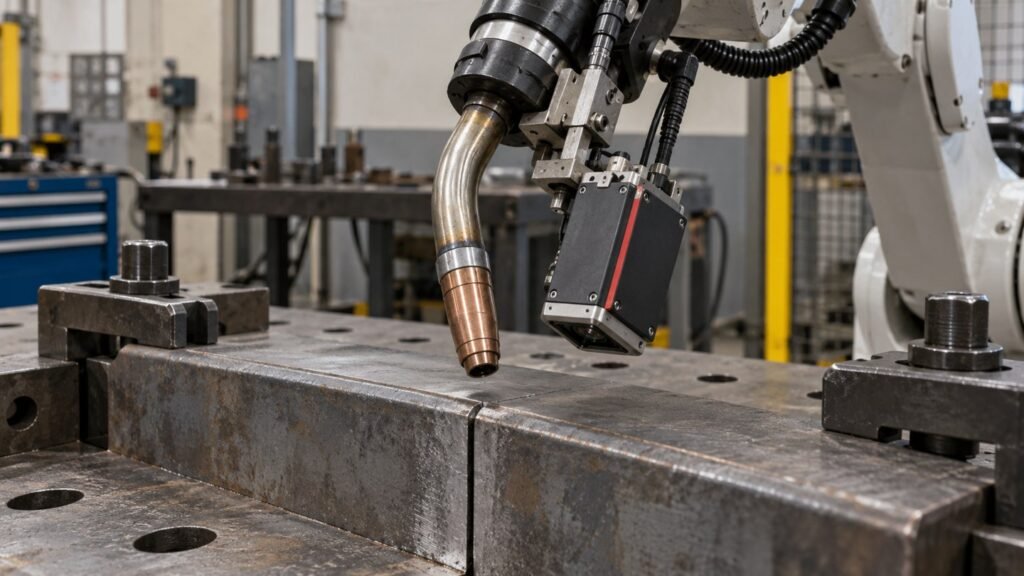
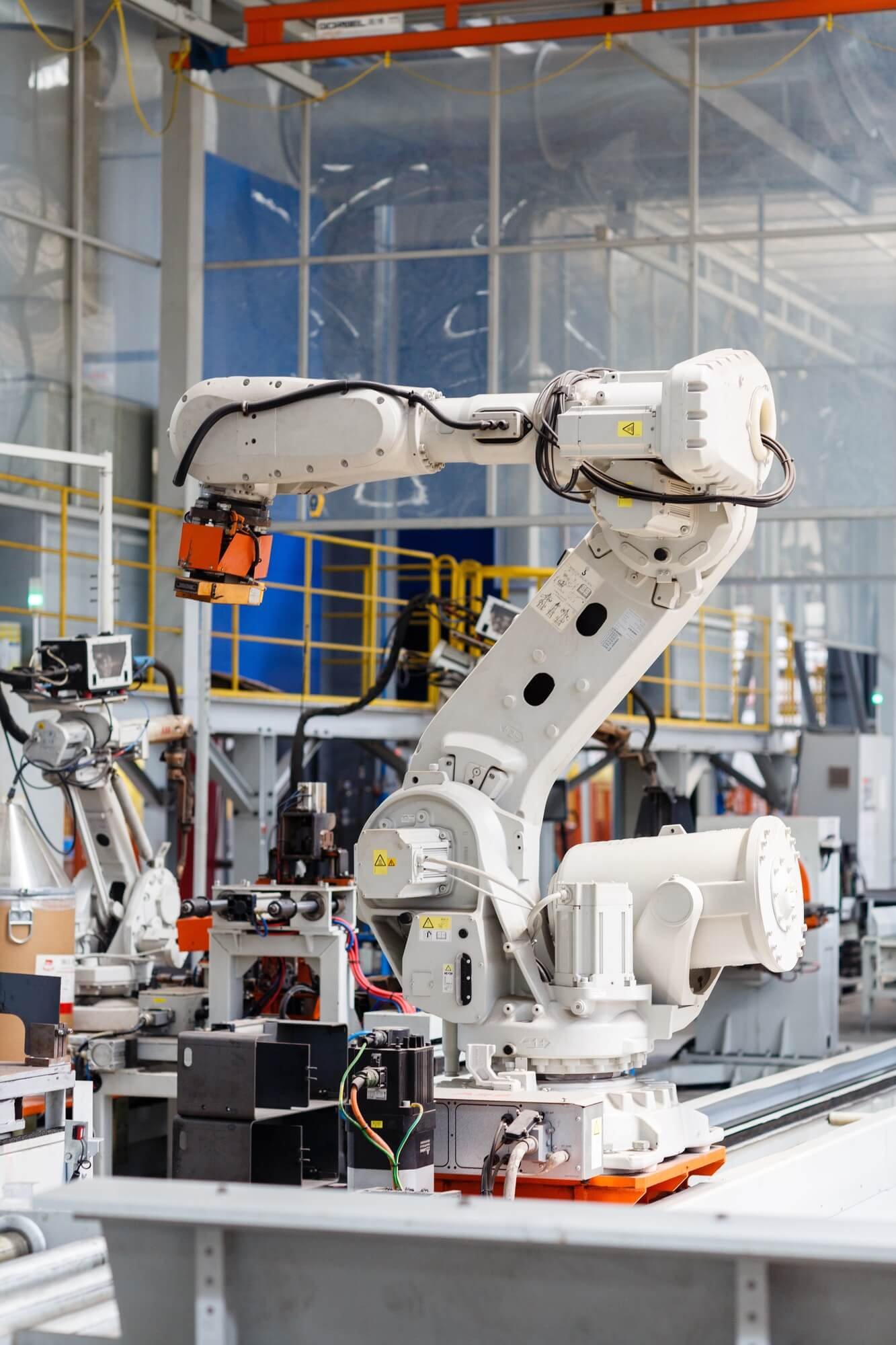
A robotic seam sensing retrofit should begin with the variation an existing cell cannot handle, then match a sensor and controller interface to that problem. Check joint visibility, tool access, calibration, communication, correction limits, process quality, and recovery before accepting the upgrade. Seam finding, pre-weld scanning,…
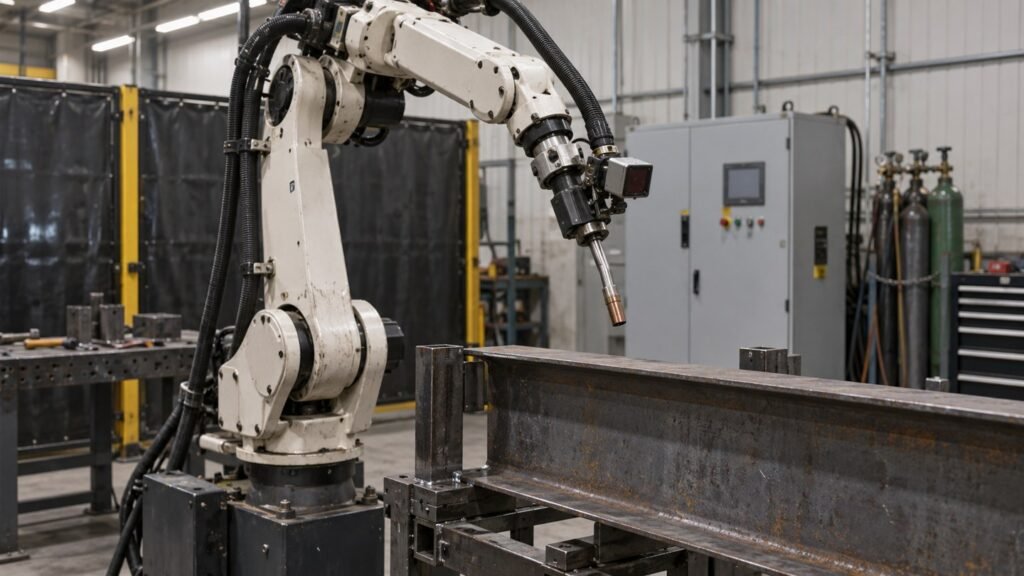
Multimodal welding sensor integration combines different measurements so a controller can make a better-defined welding decision than one signal alone would support. The project needs a clear control objective, synchronized data, confidence limits, validated responses, safe fault handling, and inspection feedback. Adding cameras or collecting more…
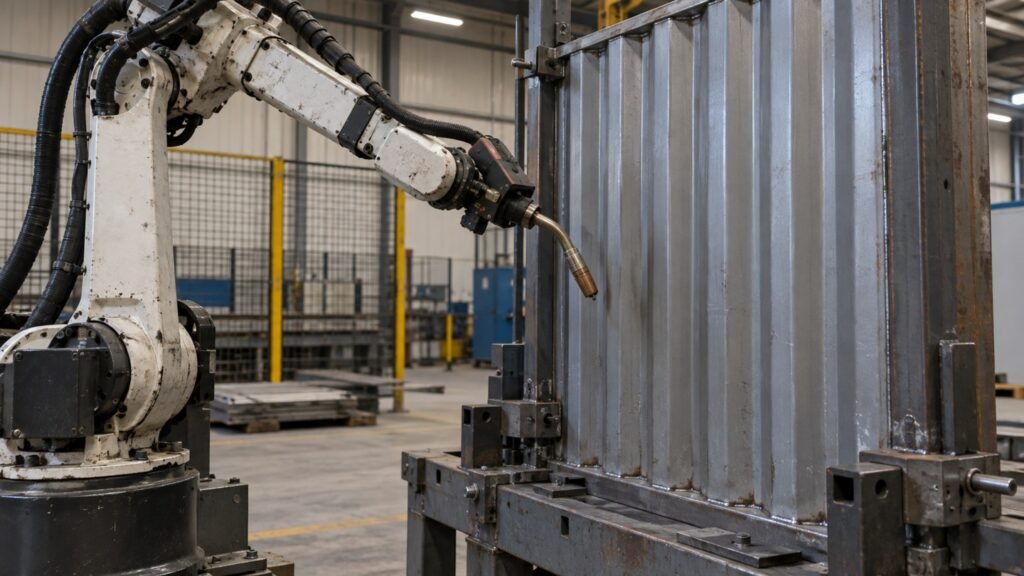
Corrugated panel welding automation requires a usable view of the joint, sufficient tool clearance through the wave profile, controlled fit-up, and a qualified welding process. Laser scanning or 3D vision can supply geometry, but the complete scan-to-path-to-weld workflow must be tested. Thickness and angle limits belong…
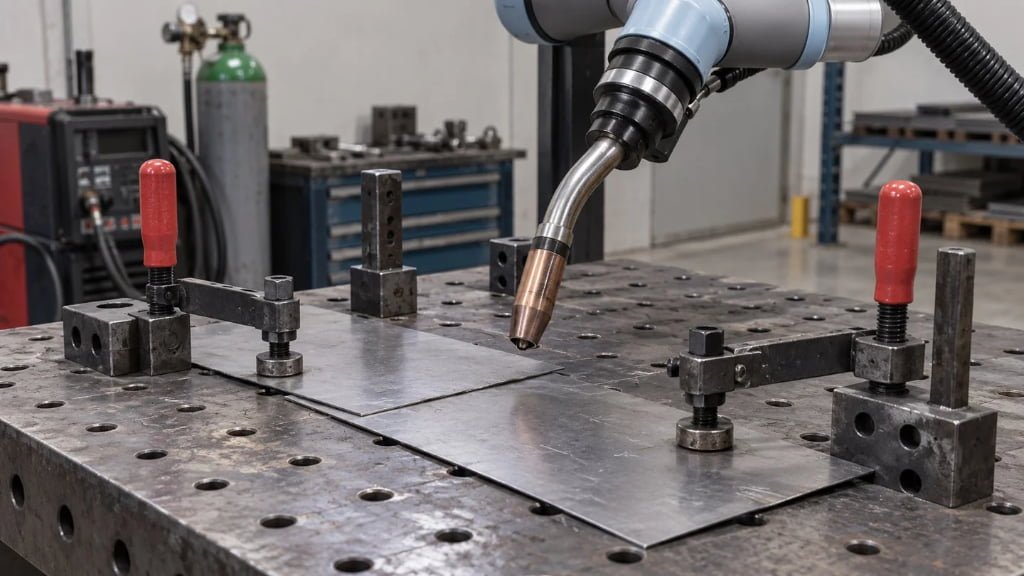
Thin sheet lap joint welding automation is feasible only when the selected process, fixture, sensing, and robot access can meet the actual joint requirements. Mixed thicknesses need separate process evaluation, and a lap joint may contain a fillet weld. Test representative fit-up, heat effects, detection, full-cycle…
No teach fillet welding qualification should verify a defined combination of material, thickness, joint geometry, visibility, tool access, fit-up, and process quality. Test representative parts, automatic task creation, inspection, recovery, and configuration control. A supplier's carbon-steel or thick-plate restrictions describe that package's scope; they do not…