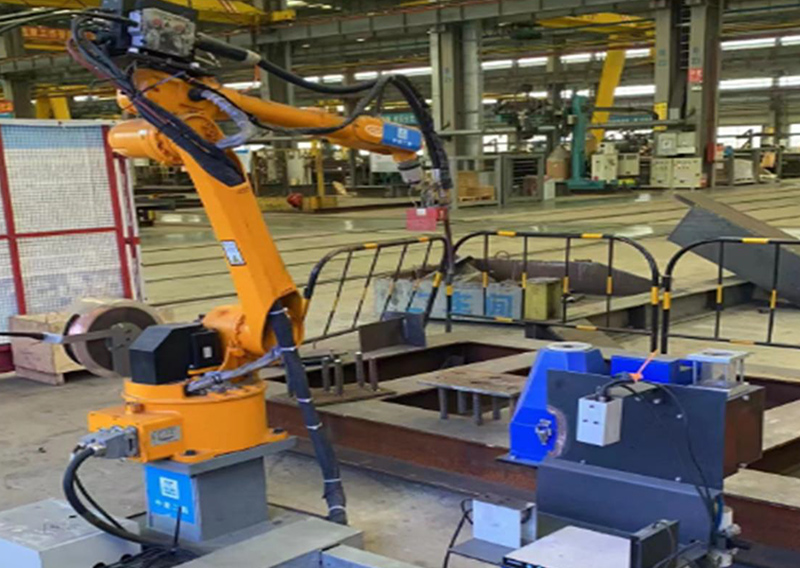
Teaching-free mobile welding
Mobile Crawler Welding Robot
Bring the welding robot to the workpiece — for large, heavy or fixed steel structures that cannot be moved to a welding cell.
A rubber-track crawler chassis carries a six-axis welding robot, a digital welding power source, a 3D vision camera and an intelligent welding operating system. The robot scans the part, recognizes the seams and generates the welding program automatically — no rails, no foundations and no robot programming.
Discuss your workpiece →Two models are available: the Ground-Rail Type for ground-level and low-profile parts, and the Lifting Type for high and multi-layer seams.
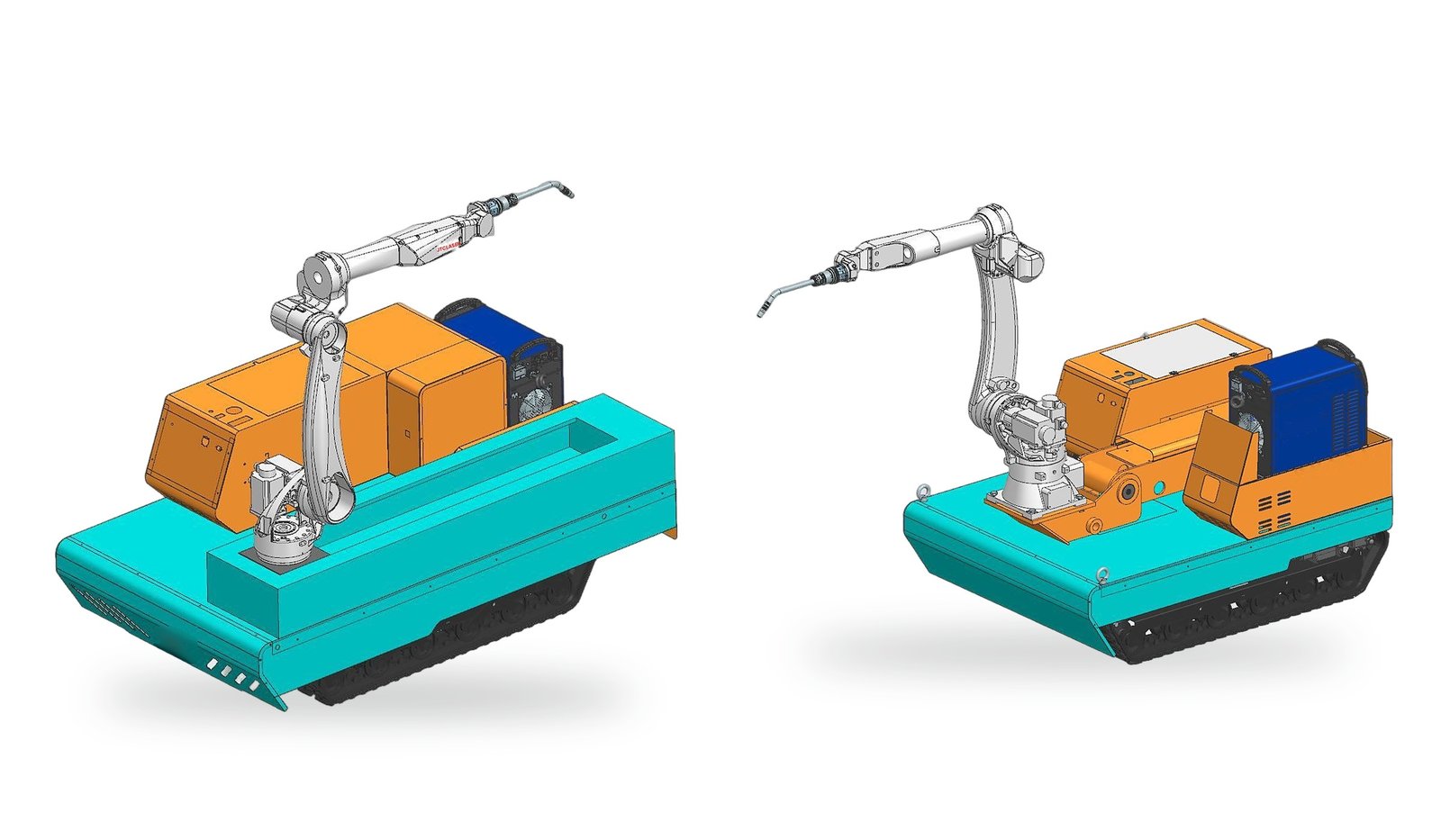
Two models, one platform
Choose the reach your parts need.
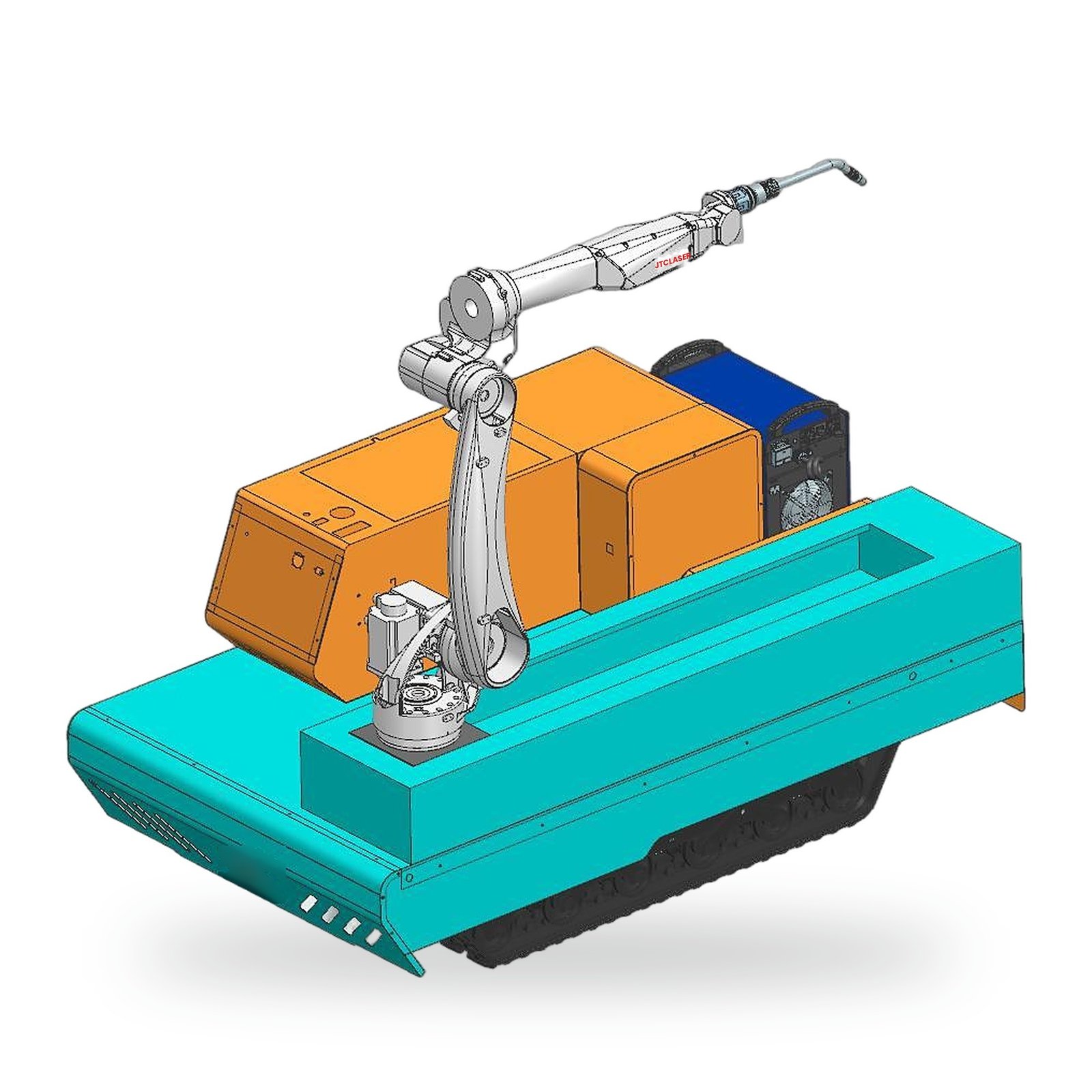
Crawler Ground-Rail Type
Low, compact and cost-effective. A linear rail on the chassis extends the robot's reach along the part, so long seams on ground-level and low-profile workpieces are welded in one positioning.
- Rail travel
- 1,700 mm
- Max. horizontal weld width
- 1,200 mm
- Max. horizontal weld length
- 3,500 mm
- Dimensions (L × W × H)
- 2,520 × 1,450 × 2,400 mm
- Weight
- ≥ 1.5 t
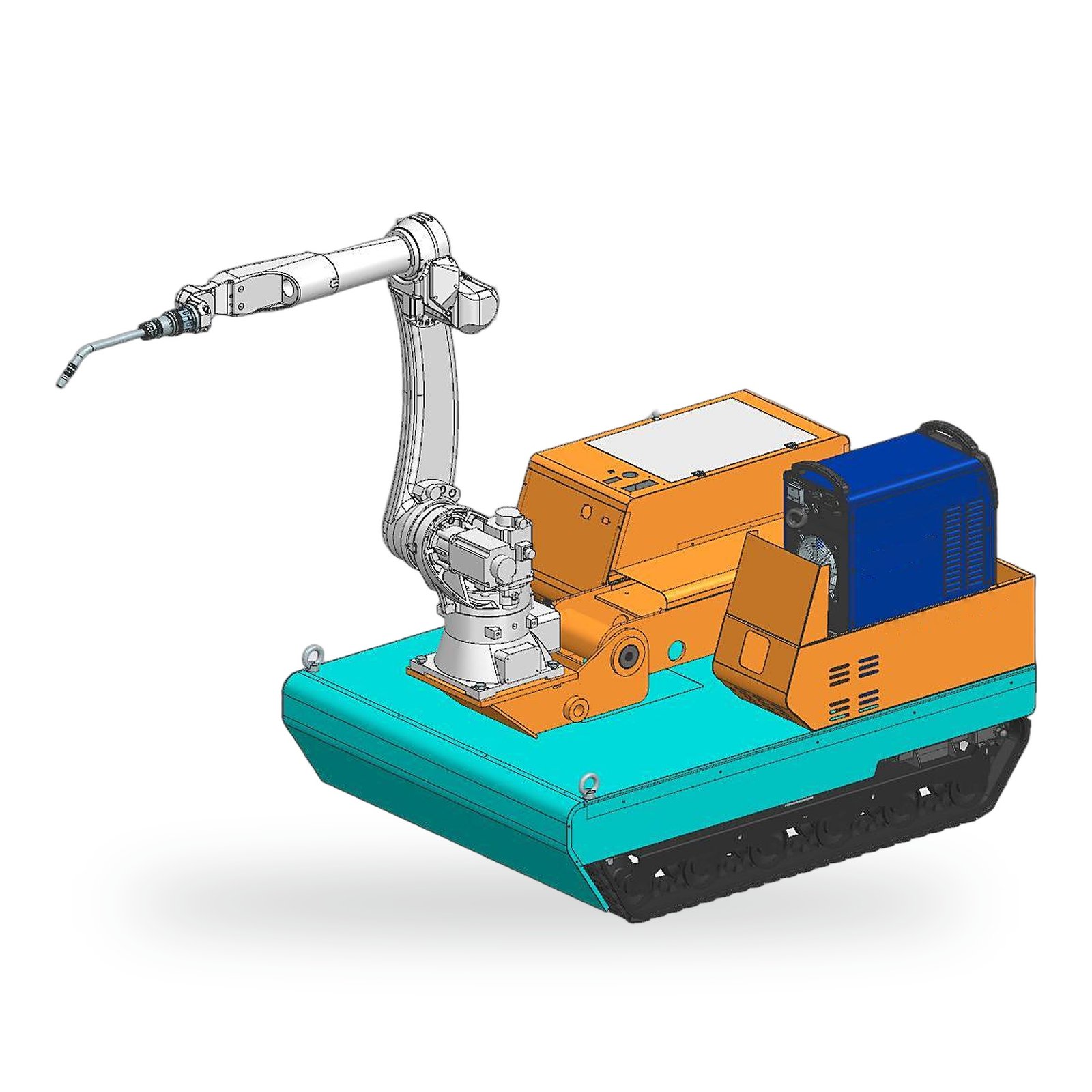
Crawler Lifting Type
An electric / hydraulic servo lifting column with a dual safety lock raises the robot for high, deep and multi-layer seams — fewer moves and no manual welding at height.
- Lifting height
- 1,500 mm
- Max. horizontal weld width
- 1,200 mm
- Max. vertical weld height
- 3,000 mm
- Dimensions (L × W × H, excl. robot)
- 1,840 × 1,450 × 1,430 mm
- Weight
- ≥ 1.8 t (incl. lifting unit)
Intelligent welding operating system
From scan to weld without programming.
Drive to the part
Move the crawler to the workpiece with the wireless remote control and lower the support legs. No rails or foundations are needed.
Scan & model
The 3D camera builds a point-cloud model of the part (visual reverse modelling). TEKLA, IFC and STEP models can also be imported.
Recognize the seams
Weld seams are identified automatically and the robot path is calculated, including multi-layer, multi-pass sequences.
Match the process
The welding expert library assigns current, voltage, speed and weaving for every seam. Parameters can be tuned and saved.
One-click welding
Press start. Laser vision or arc tracking compensates part deviation and distortion on long seams.
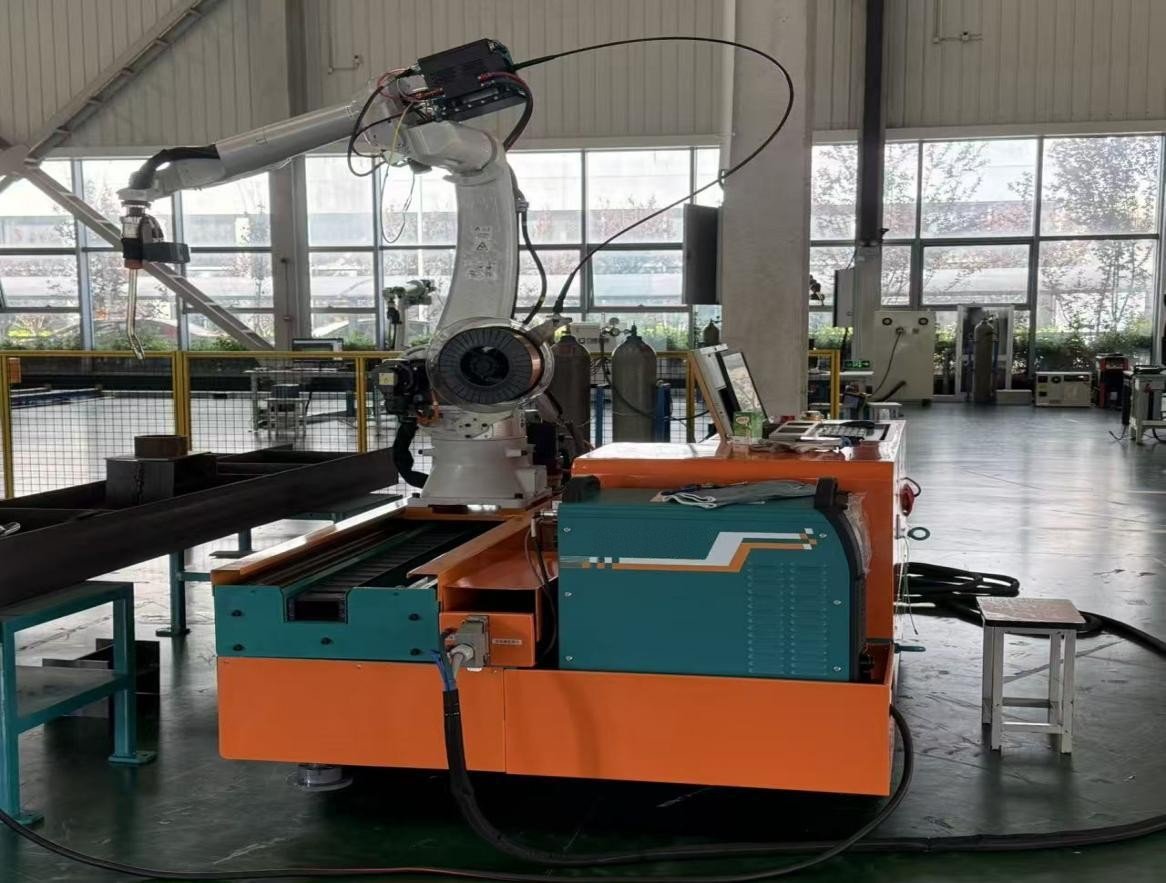
- Programming
- No programming, no teaching
- Weld types
- Flat fillet, vertical fillet, multi-pass fillet, groove butt welds
- Seam tracking
- Laser vision tracking or arc tracking
- Remote control
- TCP/IP, cloud process sync
Core configuration
Matched components, from vision to torch maintenance.
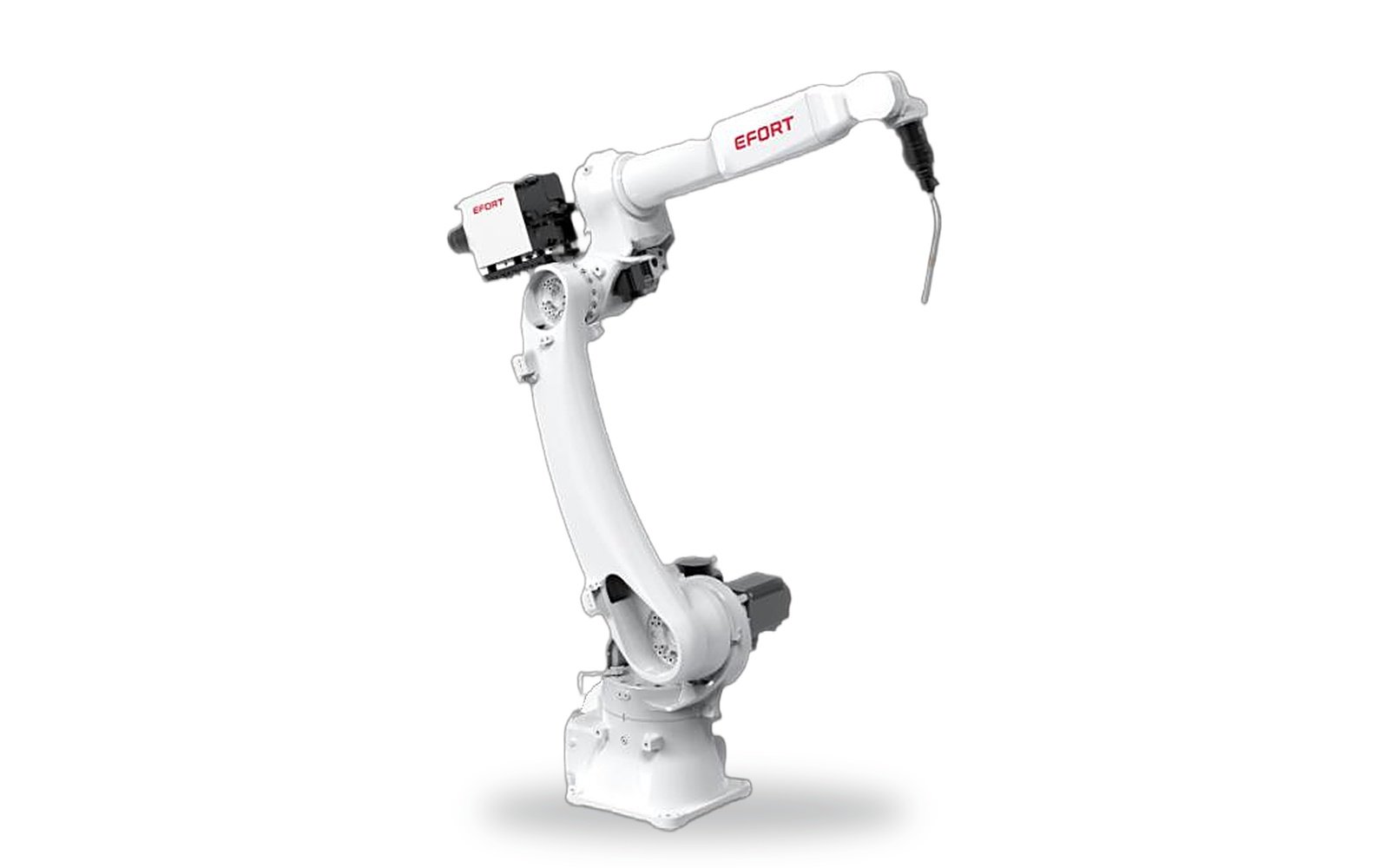
Six-axis welding robot
Choose the robot brand that suits your parts and service network.
| Parameter | EFORT ARC12-2000 | KUKA KR 16 R2010-2 | FANUC M-10iD/8L |
|---|---|---|---|
| Max. payload | 12 kg | 16 kg | 8 kg |
| Reach | 2,025 mm | 2,013 mm | 2,032 mm |
| Repeatability | ±0.03 mm | ±0.04 mm | ±0.03 mm |
| Robot weight | 185 kg | 260 kg | 180 kg |
| Protection | IP54 / IP67 · AC servo · floor, ceiling or wall mounting | ||
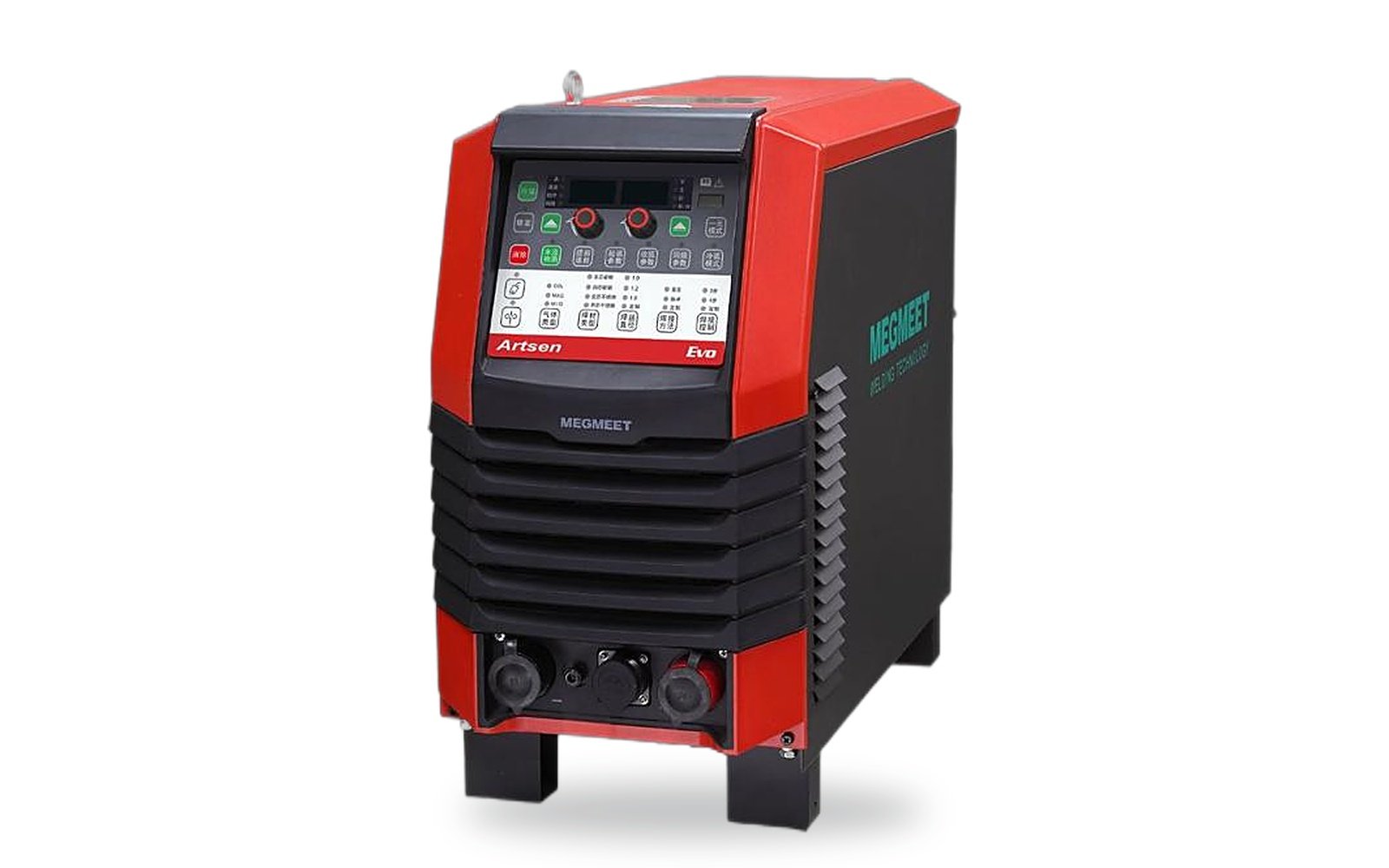
Digital welding power source
Fully digital inverter welders with a stable arc and low spatter for CO₂ and mixed-gas welding.
| Parameter | Aotai | Megmeet | Panasonic |
|---|---|---|---|
| Input | 3~380 V ±10% | 3~380 V ±15% | 3~AC 380 V |
| Rated output | 500 A / 39 V | 500 A / 45 V | 500 A / 39 V |
| Duty cycle | 100% | ||
| Protection | IP23 | IP23S | IP23S |
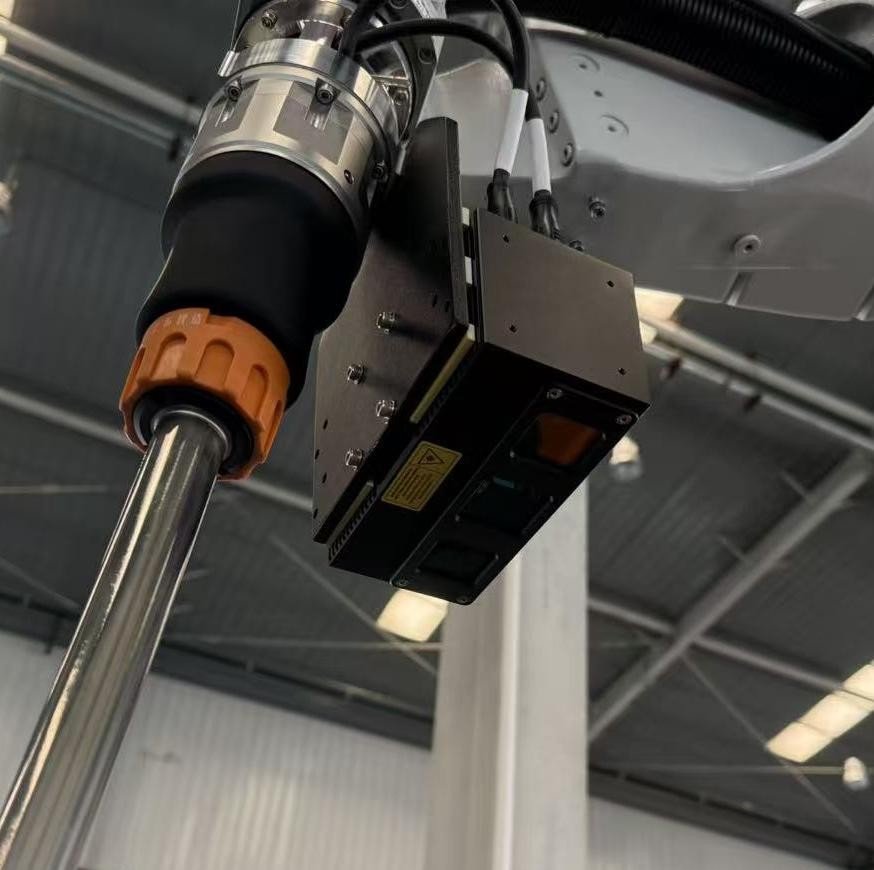
3D vision system
Structured-light + binocular laser camera mounted at the torch. One camera handles part positioning, fine seam location and seam tracking, with ambient light resistance above 400,000 lux for reflective steel.
- Options
- RVBUST RVC-M2600 / Weijing VZ-AR-2048
- Working distance
- 400–1,000 mm / 300–800 mm
- Capture time
- 1.7 s / 0.2–0.8 s per frame
- Protection
- IP65 · Gigabit Ethernet
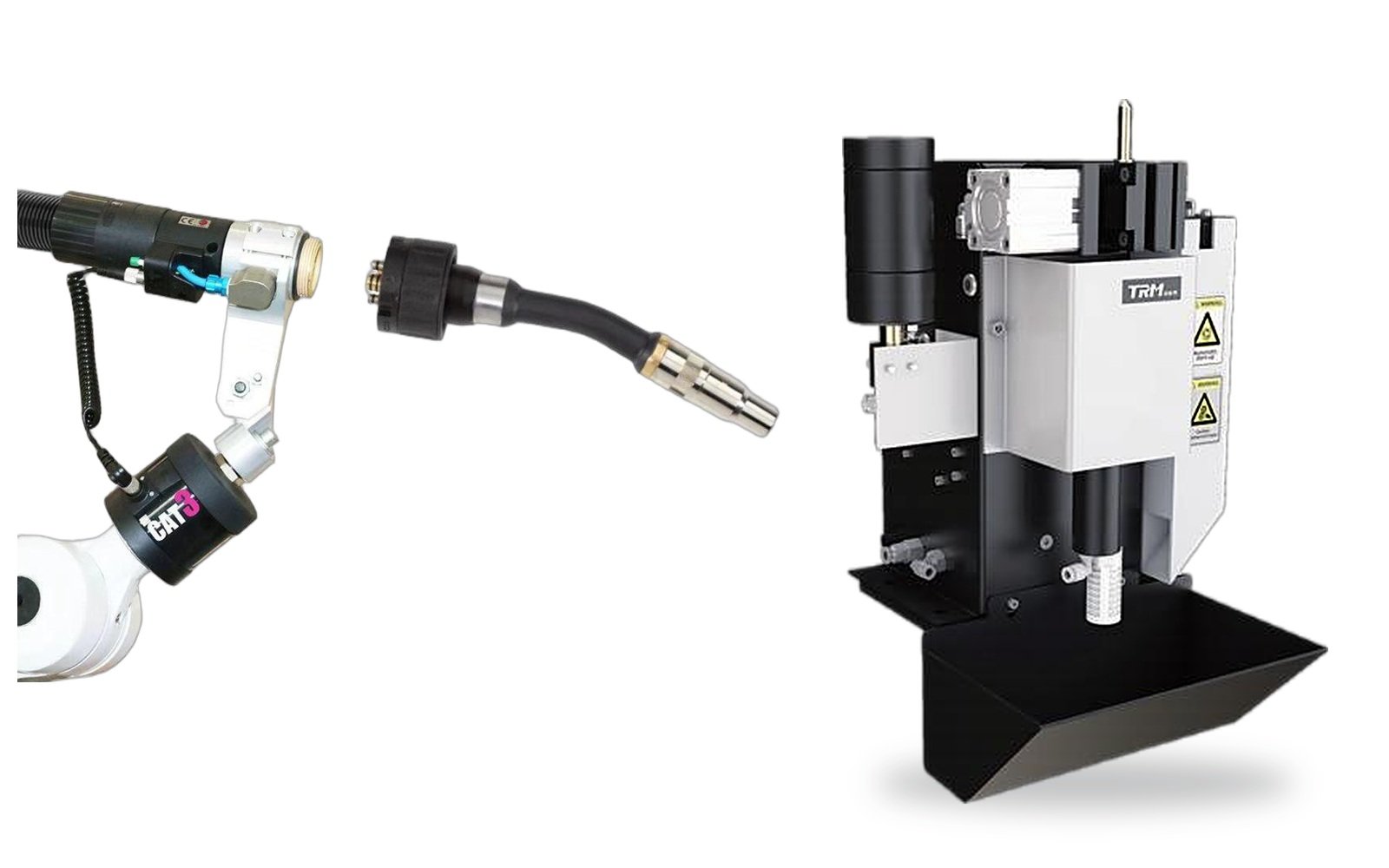
Torch & gun cleaning station
Liquid-cooled robotic torch with dual gas shield, plus an automatic station for nozzle reaming, anti-spatter spraying and wire cutting — for stable, continuous production.
- Torch
- TRM602WHD or Binzel ABIROB W500
- Rated current
- 550 A CO₂ / 500 A mixed gas, 100% duty
- Wire diameter
- Φ0.8–1.6 mm
- Neck angle
- 22° / 36° / 45°
- Gun cleaning station
- TRM SC230A or Binzel SE TCS
Technical specifications
Side-by-side comparison.
| Item | Crawler Lifting Type | Crawler Ground-Rail Type |
|---|---|---|
| Dimensions (L × W × H) | 1,840 × 1,450 × 1,430 mm (excl. robot) | 2,520 × 1,450 × 2,400 mm |
| Weight | ≥ 1.8 t (incl. lifting unit) | ≥ 1.5 t |
| Working range | Lift 1,500 mm · horizontal width 1,200 mm · vertical height 3,000 mm | Rail travel 1,700 mm · horizontal width 1,200 mm · length 3,500 mm |
| Lifting mechanism | Electric / hydraulic servo column with dual safety lock | — (fixed height, linear rail) |
| Robot | Six-axis articulated welding robot (EFORT, KUKA or FANUC) | |
| Welding power source | Digital multi-function welder, 500 A, 100% duty cycle (Aotai, Megmeet or Panasonic) | |
| Vision | Structured-light + binocular 3D camera, arc-light and reflection resistant, reverse modelling | |
| Wire / shielding gas | Φ0.8–1.6 mm solid or flux-cored carbon steel wire · 100% CO₂ or 80% Ar + 20% CO₂ | |
| Weld types | Flat fillet, vertical fillet, multi-layer multi-pass fillet, groove butt welds (full penetration) | |
| Chassis | Independent-drive rubber crawler, lithium battery powered · climbing angle ≤ 20° · obstacle height < 70 mm | |
| Protection / control | IP54 · indoor and outdoor use · TCP/IP remote control | |
Specifications are for the standard configuration and may be adjusted to the workpiece and site conditions.
Applications
Built for steel structure fabrication.
Steel structures, bridges, towers, equipment supports and weighbridges — small and medium parts on the shop floor, or large parts that cannot be moved. Several units can work together on one large workpiece.
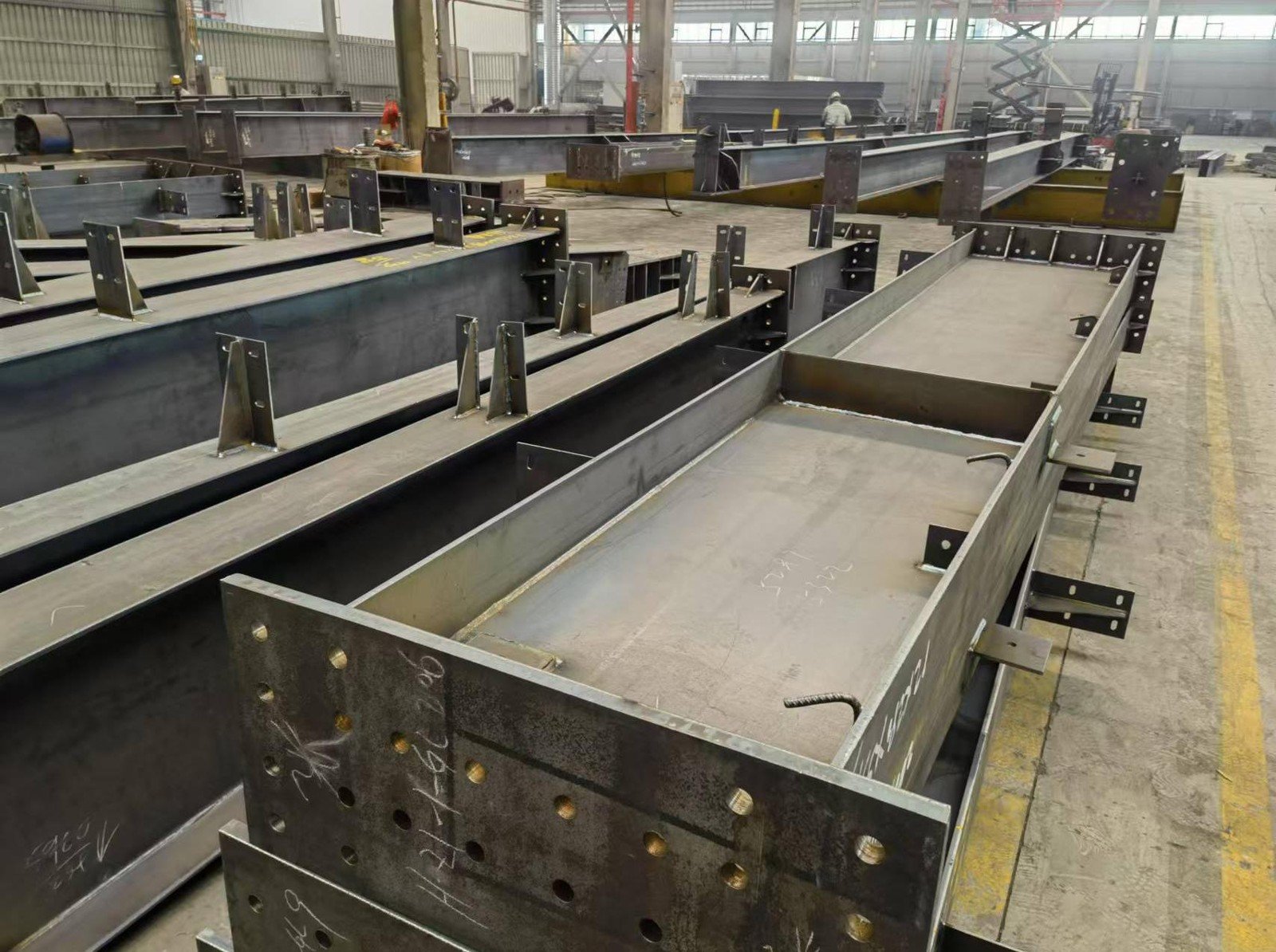
Lattice columns & H-beams
Stiffeners, cleats and long fillet welds on beams and built-up columns.
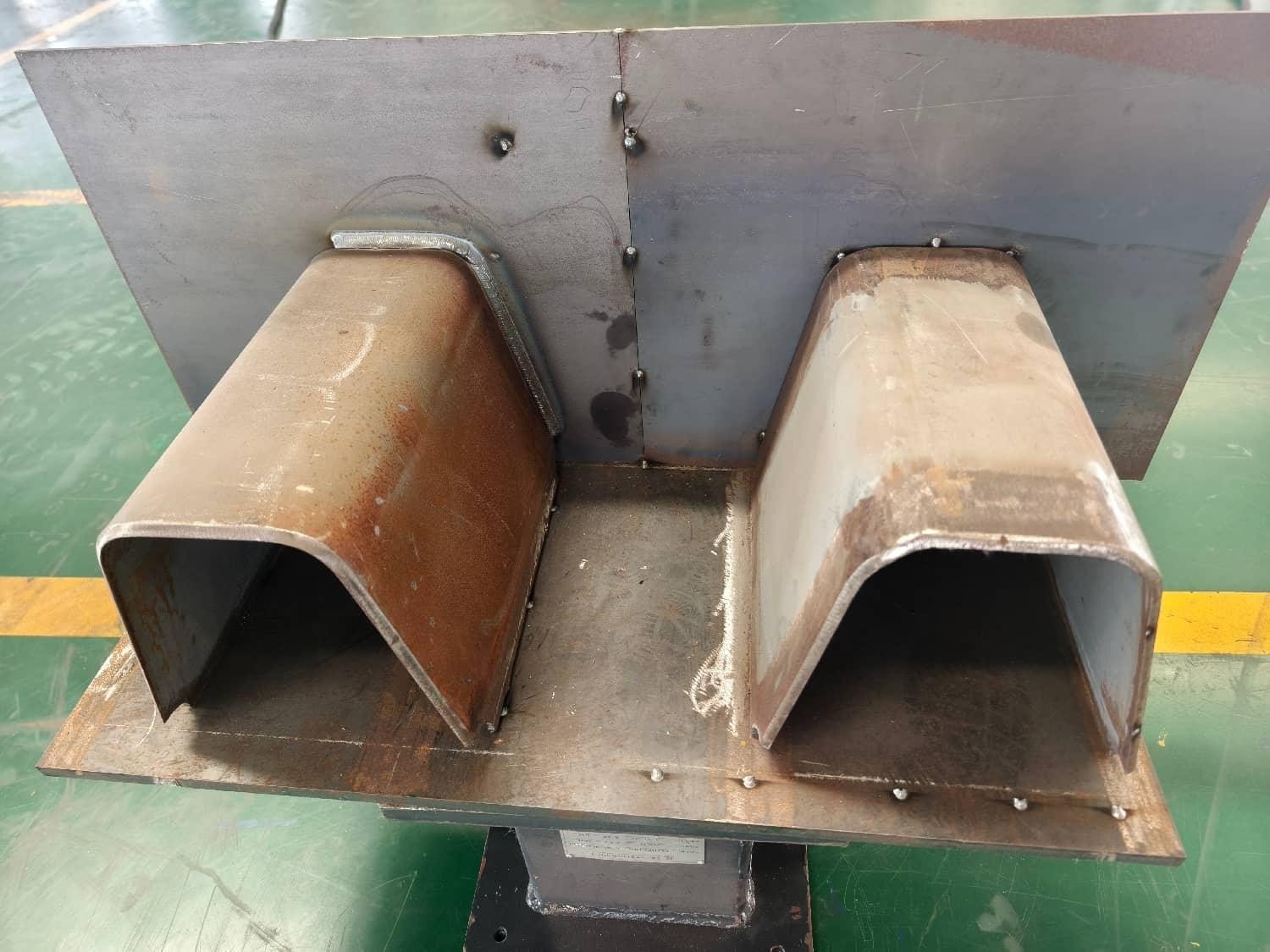
Weighbridge end plates
Box-section ends and closing plates with multi-pass fillet welds.
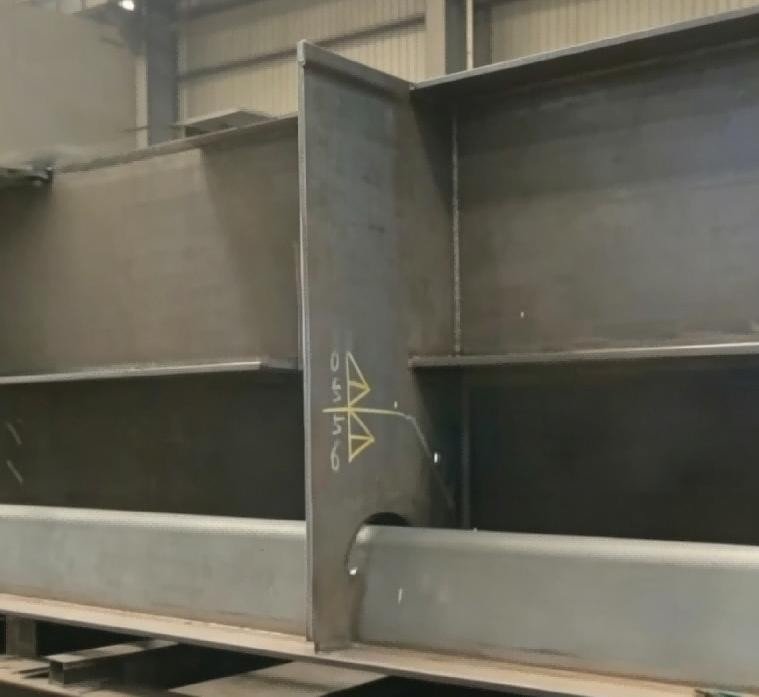
Corbels & brackets
Brackets and corbels on columns, welded where the column lies.
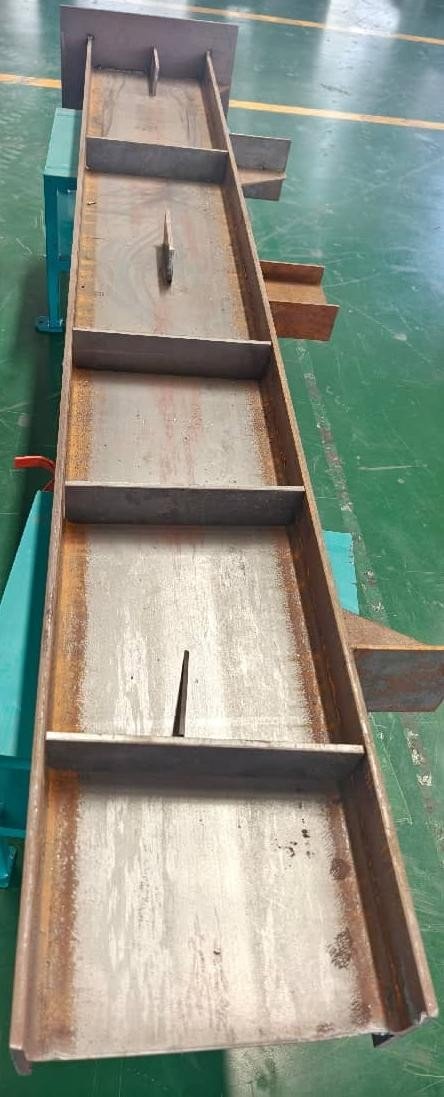
Chord members & purlin cleats
Repetitive short seams on chords, purlin cleats and connection plates.
Easy to run, easy to maintain
Simple routine maintenance.
| Item | Interval | Action |
|---|---|---|
| Crawler tracks | Before each use / every 30 days | Visual check; adjust track tension |
| Rail slides & rack | Monthly | Clean and grease with 00# grease |
| Gearbox | Every 3 months / yearly | Check; change 100# gear oil yearly |
| Hydraulic system (Lifting Type) | Every 3 months | Check level and leaks; 46# anti-wear hydraulic oil |
| Lithium battery | Monthly during storage | Recharge; charge below 68 V in use |
What you get
Every workstation ships with an operation manual, an installation guide and a full maintenance manual. On-site installation, commissioning and operator training are available, and our engineers support remote diagnosis over the network.
Request a quotation →FAQ
Common configuration questions.
Do operators need robot programming skills?
No. The operator drives the unit to the part, starts the scan, confirms the recognized seams and the task template, and presses start. Welding paths and parameters are generated automatically.
Which model should I choose?
Choose the Ground-Rail Type for ground-level and low-profile parts with long horizontal seams. Choose the Lifting Type when seams are high (up to 3,000 mm) or on several levels.
Can it work outdoors or on an uneven floor?
Yes. The IP54 crawler chassis is battery powered, climbs slopes up to 20° and crosses obstacles below 70 mm. Shield the arc from strong wind for gas-shielded welding.
Which materials and processes are supported?
Carbon steel with Φ0.8–1.6 mm solid or flux-cored wire, using 100% CO₂ or 80% Ar + 20% CO₂. Send us your drawings for other materials.
Submit Your Sourcing Request
Tell us your component dimensions, material, plate thickness, weld requirements and available floor space. Our team can discuss a suitable working range and equipment configuration.
For the fastest response, we recommend submitting your request through the form. If you experience any issues with submission, you may also contact us directly at dxk@jtclaser.com .