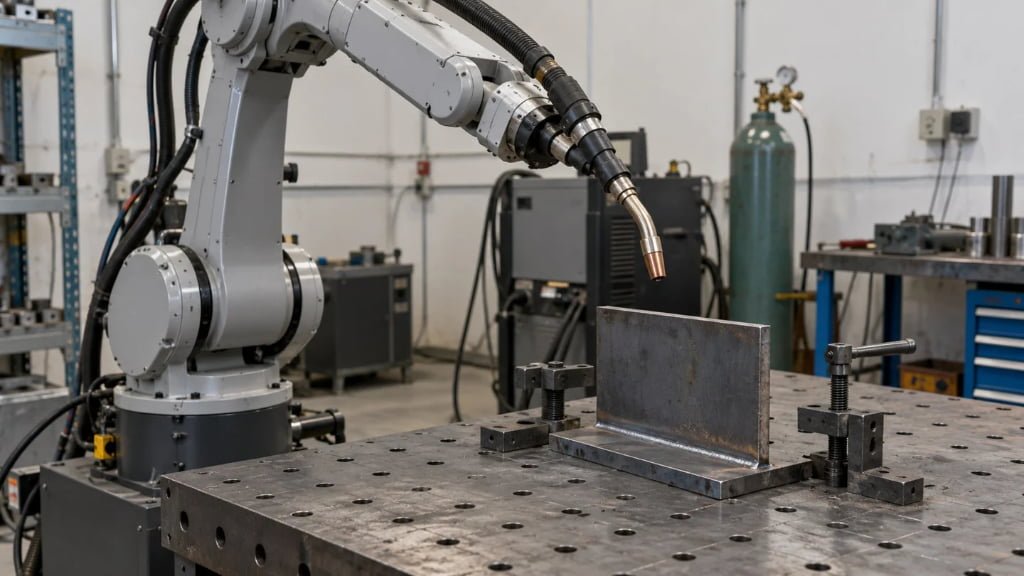
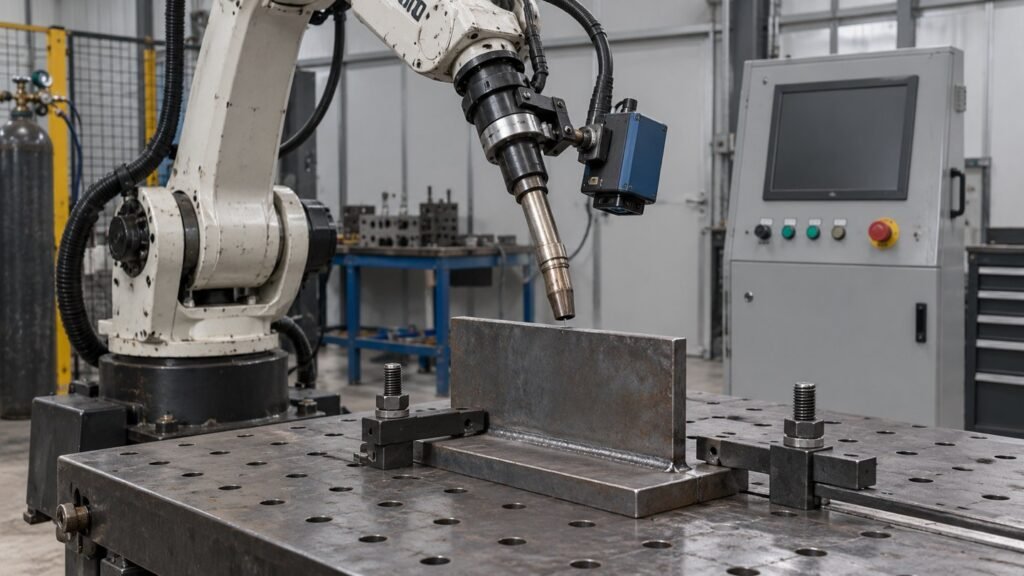
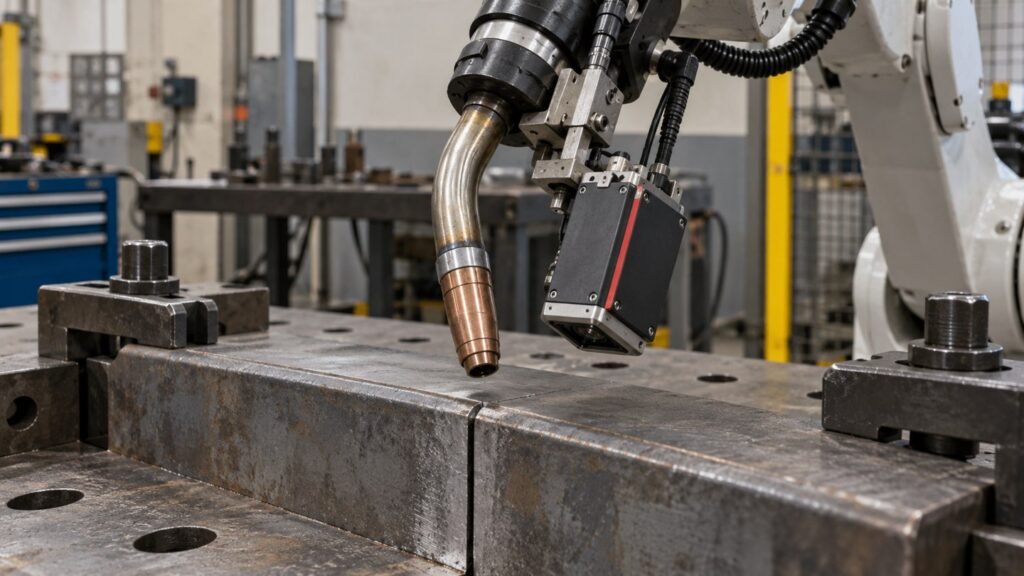
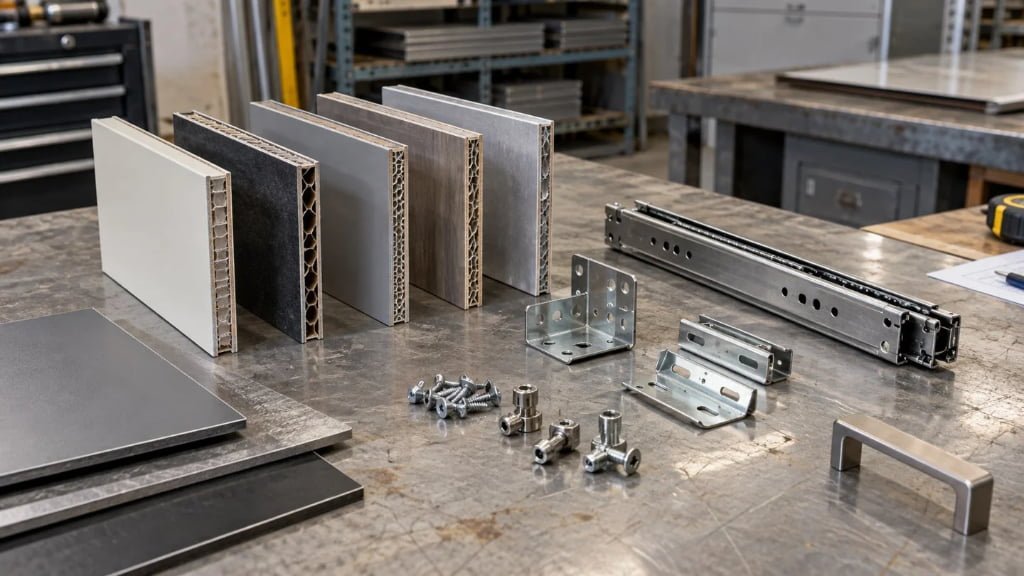
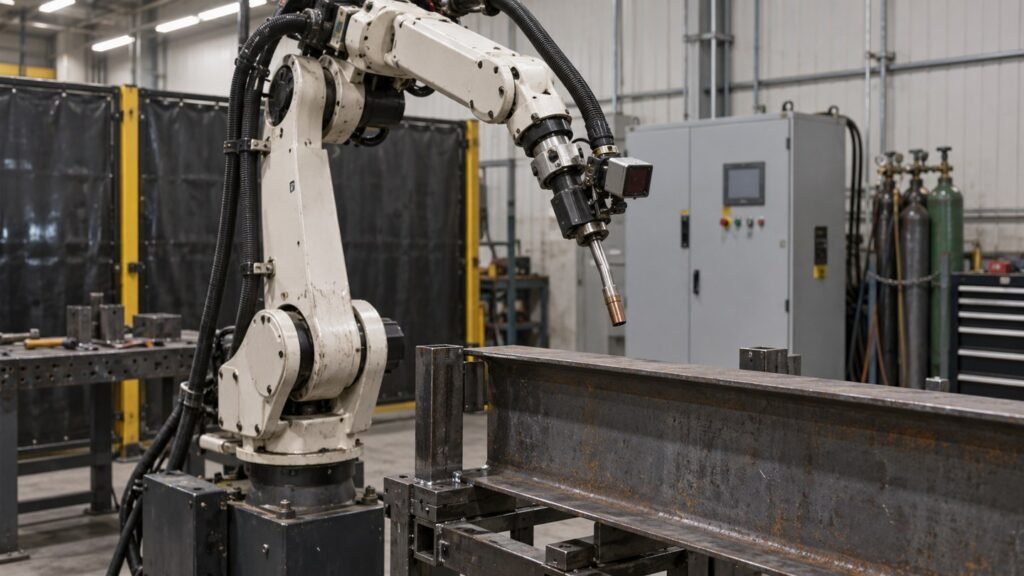
A robotic welding feasibility study determines whether a defined part family can be welded safely, consistently, and economically by a proposed cell. It should assess joint access, fit-up variation, fixtures, sensing, the approved welding process, total cycle time, and acceptance evidence. A successful demonstration is useful,…
An adaptive welding acceptance test checks whether a system detects a defined change, decides on an allowed response, and executes that response with traceable results. Test the sensing range, correction limits, response delay, weld quality, fault handling, recovery, and data records. Automatic motion alone is insufficient;…
A robotic seam sensing retrofit should begin with the variation an existing cell cannot handle, then match a sensor and controller interface to that problem. Check joint visibility, tool access, calibration, communication, correction limits, process quality, and recovery before accepting the upgrade. Seam finding, pre-weld scanning,…
Metal furniture panel selection should evaluate the complete panel, not its visible metal face alone. Confirm the face material, core, adhesive, coating, edge design, emissions evidence, moisture performance, load behaviour, and fastener retention. Compare test conditions with the intended cabinet or furniture use. A water display…
Multimodal welding sensor integration combines different measurements so a controller can make a better-defined welding decision than one signal alone would support. The project needs a clear control objective, synchronized data, confidence limits, validated responses, safe fault handling, and inspection feedback. Adding cameras or collecting more…