
5.5 Robot Interface
1. Analogue control socket X5
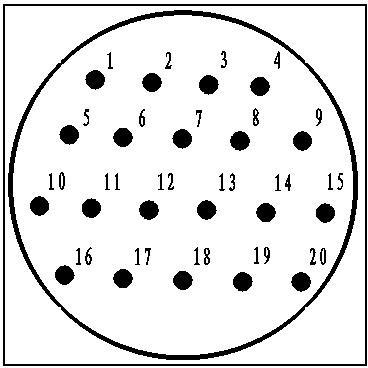
Analogue control socket can use analogue control cable to connect, low cost, high reliability, can perform basic welding process by robot, but cannot use expertdatabase.
| NO | Description | Function | Direction | Signal State |
|---|---|---|---|---|
| 1~3 | Null | ——- | —— | —— |
| 4 | External power supply | Power supply for wire feeder relay | R→W* | +24VDC |
| 5 | Preset Voltage signal | Automatic data correction value of preset welding voltage, 0~10V corresponds to arc length correction -50% ~ 50% | R→W | 0–10VDC |
| 6 | Preset Current signal | Preset value of welding current (wire feed speed), 0~10V corresponds to 0~500A | R→W | 0–10VDC |
| 7 | Inch | Manual wire feeding, wire detection, initial wire installation | R→W | “0” is valid |
| 8 | Gas test (purge) | Open/close gas solenoid valve, preset gas flow | R→W | “0” is valid |
| 9 | Trigger (Start/Stop) | Instruction to start and stop welding | R→W | “0” is valid |
| 10 | Manual withdrawal wire signal | Realize manual wire withdrawal | R→W | “0” is valid |
| 11 | Signal ground | Analog signal ground | R→W | |
| 12–13 | Successful arc start signal (relay) | Detects current status to determine arc ignition success | W→R | Relay output (closed: valid) |
| 14–15 | Start-end (start point) feedback signal (relay) | Wire touches workpiece, sends signal to robot | W→R | Relay output (closed: valid) |
| 16–17 | Null | Reserved | R→W | Relay output (open: valid) |
| 18–19 | Start-point detection enable signal | Robot gives enable signal; 28V is generated at wire front end | R→W | Relay output (closed: valid) |
| 20 | Null |
Table 5-5-1: Analogue Connector
Note: R→W*,R:Robot,W:Welding machine.
2. Digital control socket X6
Digital control function is powerful, with strong universality, can match with most robots in market. But this robot needs to have digital communication module, and need to purchase digital communication controller from specified manufacturer.
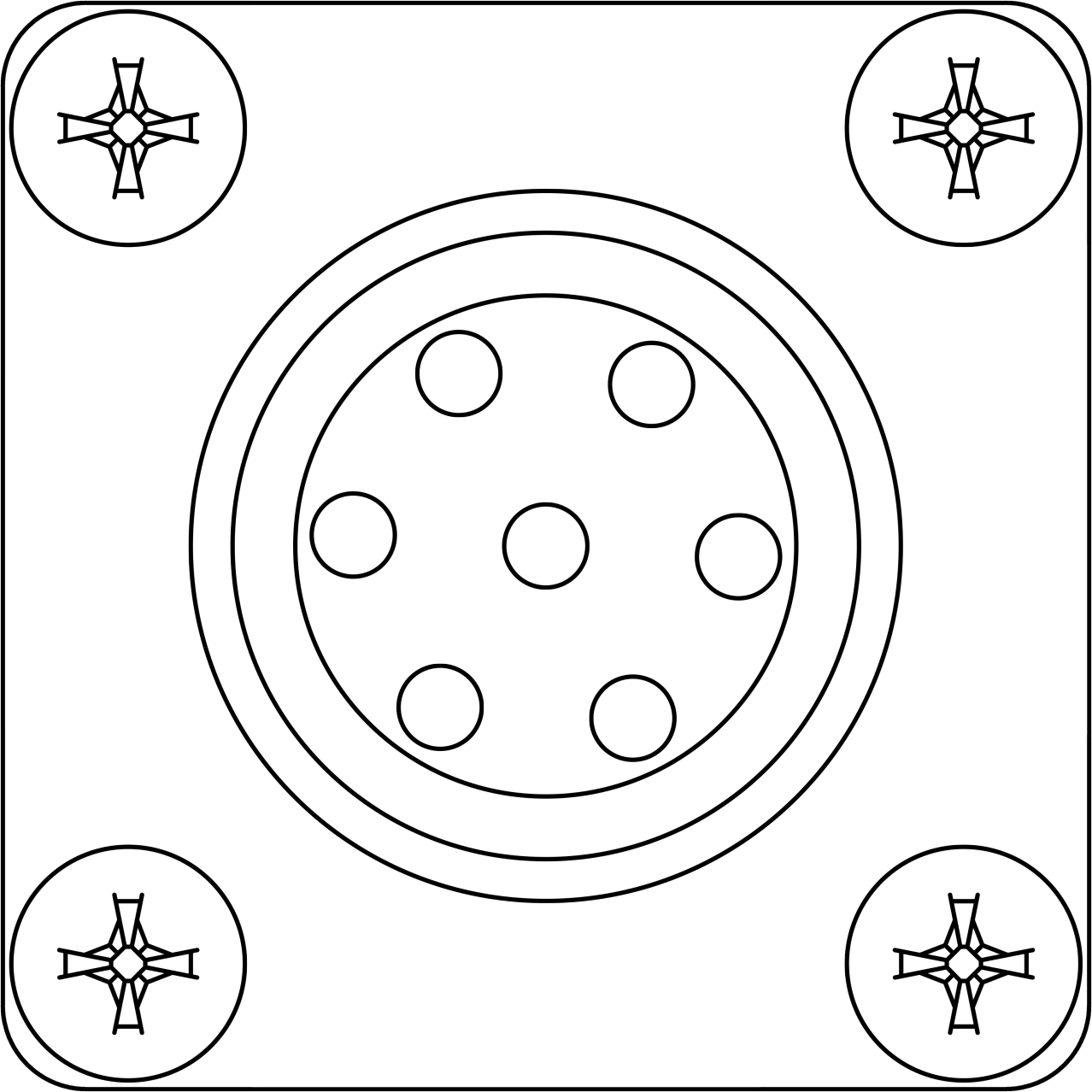
|
NO. | Description |
|---|---|---|
| 1 | Power supply: 38VAC | |
| 2 | ||
| 3 | Transmit line (Y / T+) | |
| 4 | Transmit line (Z / T-) | |
| 5 | Receiving line (A / R+) | |
| 6 | Receiving line (B / R-) |
Table 5-5-2: Digital Connector
3. Communication controller
At present, digital interfaces include EtherNetIP,CANOPEN,CAN,DeviceNet,RS485, and EtherCAT. There are 7 communication methods, which use standard communication protocols. The communication controller is connected to the digital interface control socket X6 on the rear panel of the welding power source.
3.1 EtherNetIP communication controller
EtherNetIP communication controller is specially designed for robot matched welding machine, communication controller can realize conversion between robot EtherNetIP protocol and welding machine protocol. EtherNetIP adopts standard Ethernet technique, includes IEEE 802.3 standard and TCP/IP protocol. It adopts common industrial protocol (CIP) as its application layer protocol. 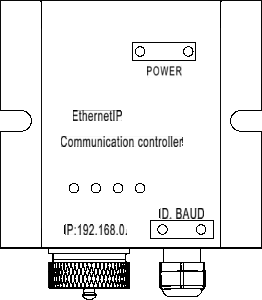
Fig. 5-5-2 EtherNetIP communication controller
Ethernet physical interface
EtherNetIP communication controller Ethernet connector adopts water-proof RJ45 standard interface.
Internet parameter setting
IP address: 192.168.0.2 ~ 192.168.0.99
Sub net mask: 255.255.255.0
Default gateway: 192.168.0.1
Last bit of IP address can be adjusted by knob on communication controller, other parameters cannot adjust.
3.2 CANOPEN communication controller
CANOPEN is used to realize conversion between CANOPEN and welding machine communication protocol. It adopts standard CANOPEN interface, conforms to CIA301, CIA401, CIA402 standard. 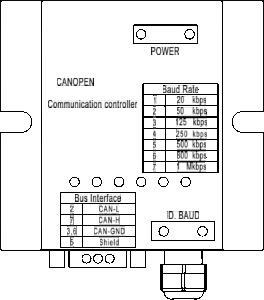
Can bus physical interface
CANOPEN communication controller CAN bus physical interface adopts DB9 pin type socket which conforms to CAN bus standard, pin 2 is CAN-L, pin 7 is CAN-H, pin 3, 6 are CAN-GND, pin 5 is shielding layer.
Fig. 5-5-3 CANOPEN communication controller
Address, baud rate selection
Bus address and baud rate of BINR CO v001/CANOPEN communication controller can be set by knob on panel, bus address is 1-9, baud rate is 20Kbps, 50Kbps, 125Kbps, 250Kbps, 500Kbps, 800Kbps, 1Mbps.
3.3 CAN communication controller
CAN communication controller is used to realize conversion between CAN bus and welding machine communication protocol. Product meets needs of CAN2.0 protocol standard. 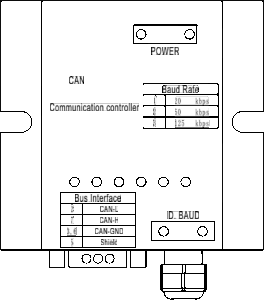
Can bus physical interface
CAN communication controller CAN bus physical interface adopts DB9 pin type socket which conforms to CAN bus standard, pin 2 is CAN-L, pin 7 is CAN-H, pin 3, 6 are
CAN-GND, pin 5 is shielding layer.
Fig. 5-5-4 CAN communication controller
Address, baud rate selection
Bus address and baud rate of BINR CN v001/CANO interface box can be set by knob on panel, bus address is 1-9, baud rate is 50Kbps, 125Kbps, 250Kbps.
3.4 DeviceNet communication controller
DeviceNet communication controller is used to realize conversion between DeviceNet bus and welding machine communication protocol. Product meets needs of CAN2.0 protocol standard. 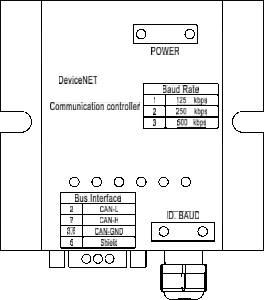
Can bus physical interface
DeviceNet communication controller CAN bus physical interface adopts DB9 pin type socket which conforms to CAN bus standard, pin 2 is CAN-L, pin 7 is CAN-H, pin 3, 6 are CAN-GND, pin 5 is shielding layer,and pin 9 is CAN-V+.
Fig. 5-5-5 DeviceNet communication controller
Address, baud rate selection
Bus address and baud rate of DeviceNet communication controller can be set by knob on panel, bus address is 1-9, baud rate is 125Kbps, 250Kbps, 500Kbps.
3.5 RS485 communication controller
RS485 communication controller adopts standard modbus RTU method to output data. 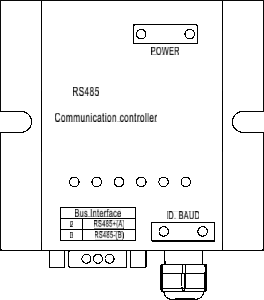
Fig.5-5-6 485 communication controller
Can bus physical interface
BINR 485 v001/RS485 communication controller adopts DB9 pin type socket, pin 2 is RS485+ (A), pin 3 is RS485- (B).pin 3, 6 are CAN-GND, pin 5 is shielding layer.
3.6 Ethercat communication controller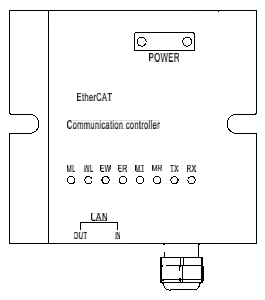
Fig. 5-5-7 Ethercat communication controller
Ethercat communication controller realizes the conversion between the Ethercat protocol of the special machine or the robot and the communication protocol of the welding machine.
The Ethercat interface of this product uses the Ethercat protocol chip, which complies with international standards and specifications.
Ethernet physical interface
Ethercat communication controller Ethercat connector adopts water-proof RJ45 standard interface.
| Name | Logogram | State |
|---|---|---|
| Master connection status | ML | Blinks when the controller and the master are in handshake state; lights up when EtherCAT connection is successful. |
| Welder connection status | WL | Lights up when the controller is connected to the welder correctly. |
| Chip write status | EW | Lights up when EtherCAT data is written to the master chip correctly. |
| Chip read status | ER | Lights up when EtherCAT data is read from the master chip correctly. |
| Communicating with master – Controller sends | MT | Indicates the controller is sending data to the master station; flashes quickly during normal operation. |
| Communicating with master – Controller receives | MR | Indicates the controller is receiving data from the master station; flashes quickly during normal operation. |
| Communicating with welder – Controller sends | TX | Indicates the controller is sending data to the welding machine; flashes quickly during normal operation. |
| Communicating with welder – Controller receives | RX | Indicates the controller is receiving data from the welding machine; flashes quickly during normal operation. |
Table 5-5-3: EtherCAT Communication Controller
4. Wirefeeder control socket X7
For connecting with the wirefeeder,please reference wirefeeder 6-1.
5.6 Technical Data
| Model | AMIG500PR Plus |
|---|---|
| Voltage/Frequency (3~) | 380/400/415V ±10%, 50/60Hz |
| Rated input capacity (KVA) | 24 |
| Rated input current (A) | 38 / 36.1 / 34.8 |
| Range of welding current (A) | 60–500 |
| Range of welding voltage (V) | 17–39 |
| OCV (V) | 76 |
| Duty cycle (%) | 100 |
| Full-load efficiency (%) | ≥87 |
| Power factor | ≥0.95 |
| Wire diameter (mm) | Ф0.8, Ф1.0, Ф1.2, Ф1.4, Ф1.6 |
| Gas flow (L/min) | 15–20 |
| Dimensions (mm³) | 660 × 320 × 560 |
| Weight (kg) | 55 |
| Insulation class | H |
| IP class | IP23 |
Table 5-6-1: Technical Data
5.7 Disassembly and reassembly
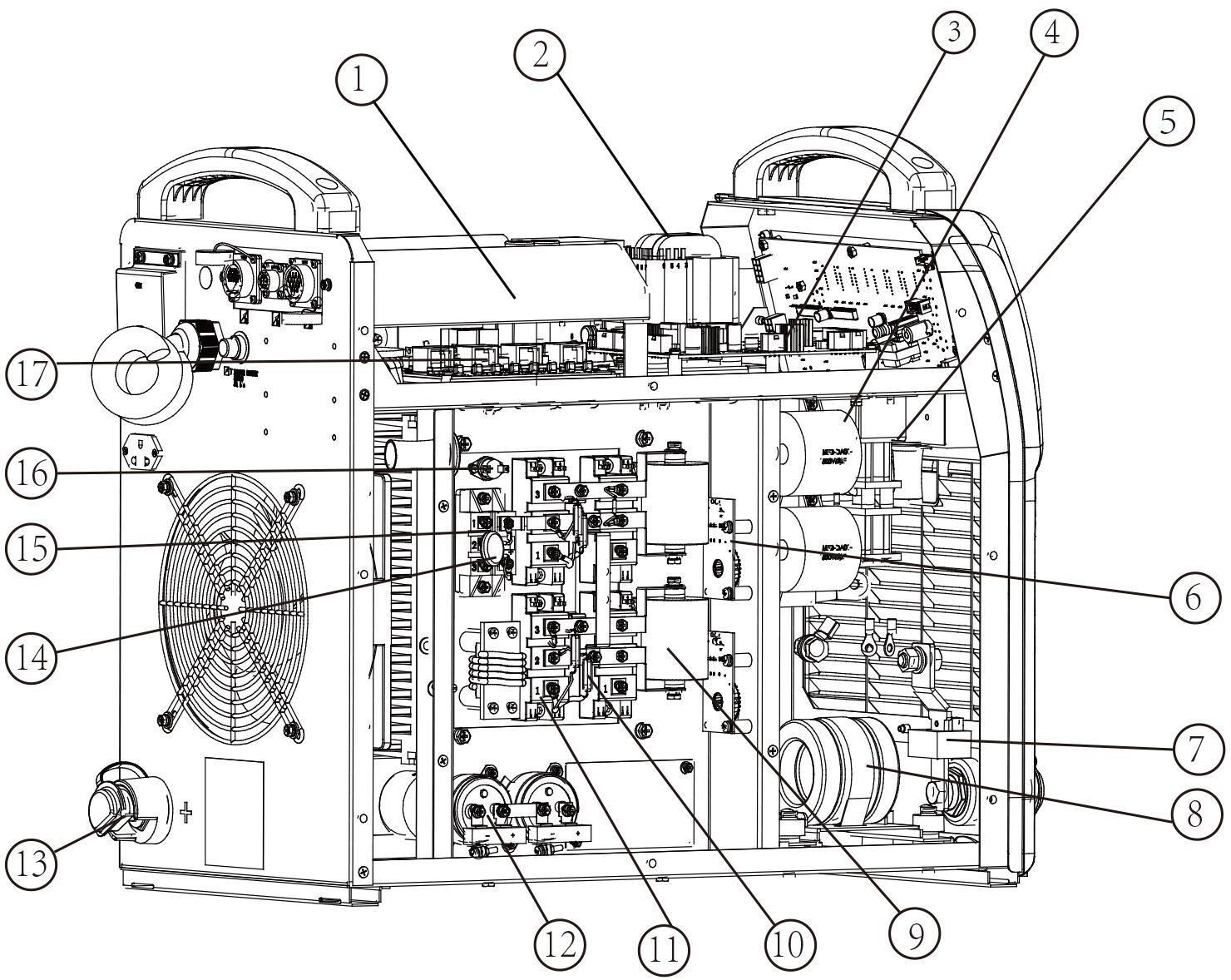
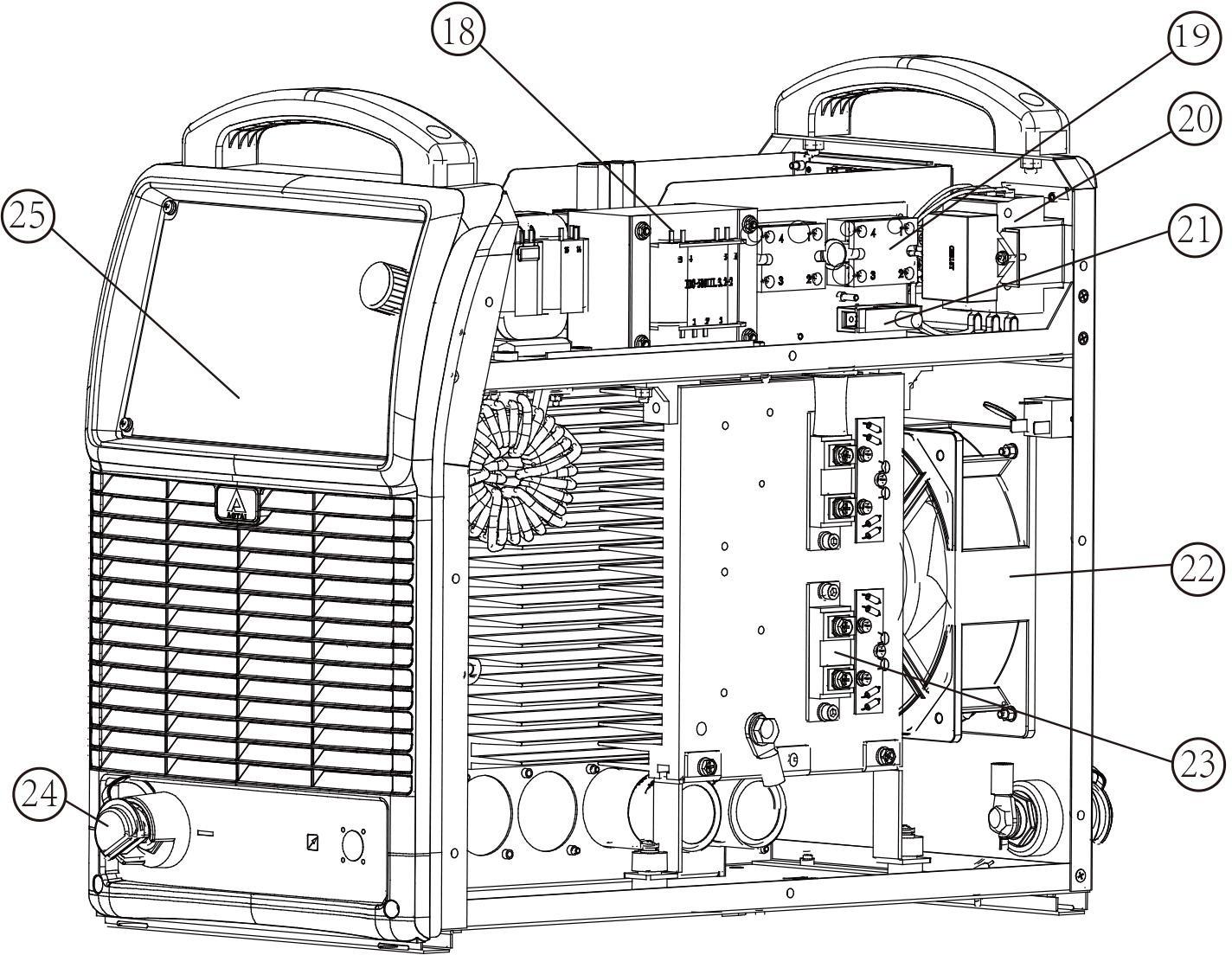
Fig. 5-7-1: Disassemble and reassembly
| No. | Item | Stock No. for 500 | Remarks |
|---|---|---|---|
| 1 | Wirefeeder control box | 220900-00810 | |
| 2 | Power transformer I | 763001-00368 | 380/415V |
| 763001-00048 | 400V CE | ||
| 3 | Main control board | 210580-01591 | |
| 4 | Polypropylene capacitor | 722001-00071 | |
| 5 | Current exchange inductor | 220281-00048 | |
| 6 | Current sensor | 753001-00020 | |
| 7 | Current transformer | 220149-00210 | |
| 8 | Output reactor | 220443-00037 | |
| 9 | Polypropylene capacitor | 722001-00070 | |
| 10 | Polypropylene capacitor | 722001-00064 | |
| 11 | IGBT module | 735007-00143 | |
| 12 | Electrolytic capacitor | 722004-00101 | |
| 13 | Cable socket (red) | 740004-00053 | |
| 14 | Varistor | 720021-00017 | |
| 15 | Three phase rectifier module | 735005-00002 | |
| 16 | Temperature relay | 745008-00045 | |
| 17 | Drive board | 210310-00153 | |
| 18 | Power transformer II | 763001-00062 | 380/415V |
| 763001-00049 | 400V CE | ||
| 19 | Solid state relay | 715004-00003 | |
| 20 | Main circuit breaker | 745011-00022 | |
| 21 | Time delay fuse | 745007-00022 | |
| 22 | Fan | 746001-00087 | |
| 23 | Fast recovery diode module | 735006-00029 | |
| 24 | Cable socket (black) | 740004-00052 | |
| 25 | Display board | 220503-00377 |
Table 5-6-2: Spare Parts for AMIG500PR Plus
Table 5-7-1: Main components list
Note: This table is for reference only, and the detail of actual product shall prevail. If no special remarks, the input voltage mentioned in above table is three phase.