
You may want robot welding, but your parts keep changing. The cost of teaching grows fast. I see many factories lose confidence before they start.
Smart robotic welding for flexible manufacturing uses 3D vision and intelligent weld path generation to reduce manual programming. The operator places the workpiece, starts the system, and the robot scans, recognizes, plans, and welds. This helps factories handle custom parts, small batches, and changing production tasks.
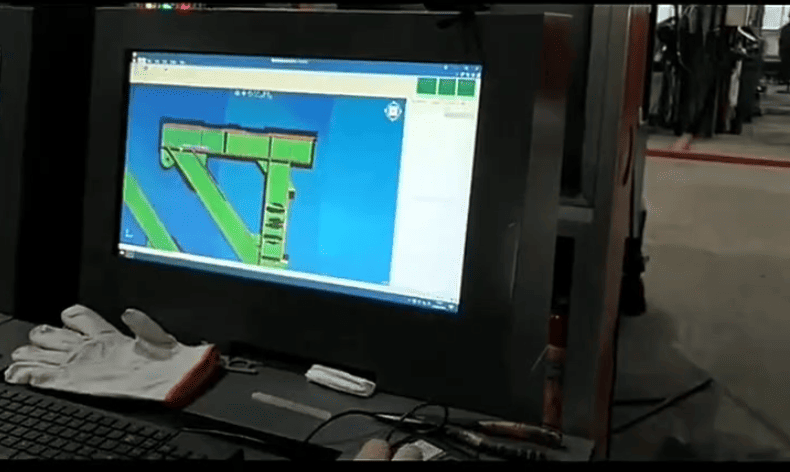
I work with many metal fabrication factories, machinery manufacturers, steel structure plants, and equipment builders. I see the same problem again and again. The customer does not lack welding orders. The customer does not lack skilled people only. The real problem is that every order looks different. One day the factory welds brackets. The next day it welds machine frames. After that, it welds large steel structures, boxes, beams, or non-standard assemblies.
This is why I believe flexible robotic welding matters more than simple robotic welding. A normal robot can weld well after careful teaching. But many factories do not have stable, repeated products. They need a welding system that can adapt to different parts. They need a system that can scan the workpiece, understand the weld seam, and generate the path without heavy manual work.
I do not see smart robotic welding as only a machine purchase. I see it as a change in the way a factory handles production. It helps the factory reduce dependence on repeated teaching. It helps the team move from manual experience to controlled process data. It also helps the owner accept more different orders without fearing that every new workpiece will become a programming project.
How Does 3D Vision Scanning Generate Automatic Weld Paths?
You may have a robot, but the robot cannot see. If the workpiece position changes, the weld path may fail. This makes automation feel risky.
3D vision scanning creates a point cloud model of the real workpiece. The intelligent welding system reads this data, finds weld seam features, and generates the robot welding path. The robot then follows the real part position instead of relying only on fixed teaching points.
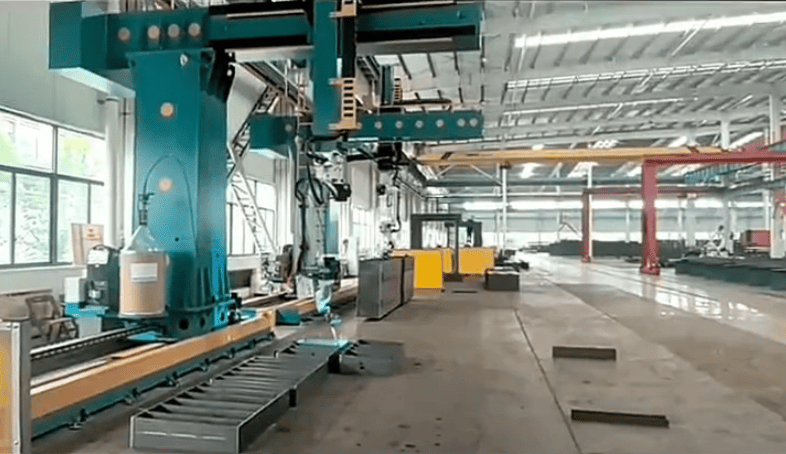
Why does a robot need eyes in real production?
I often tell customers that a welding robot without vision is like a skilled worker with closed eyes. The robot may move with high repeat accuracy, but it does not know if the workpiece has shifted. It does not know if the gap has changed. It does not know if the part is slightly bent after cutting, bending, or fitting.
In a perfect world, every fixture is accurate. Every part has the same size. Every worker places the workpiece in the same position. Every weld seam stays in the same place. But I rarely see this perfect world in machinery manufacturing. I see large parts. I see custom parts. I see small batches. I see parts that are cut, drilled, bent, assembled, and tack welded by different workers.
3D vision scanning helps the robot connect with the real workshop. The system captures the shape of the workpiece. It builds a point cloud model from the scan. The software then analyzes the data and extracts weld seam information. This can include seam position, seam direction, starting point, ending point, and sometimes gap or offset data.
I think this is the key difference between a fixed automation line and a flexible welding station. A fixed automation line depends on repeated production. A smart welding station depends on recognition, calculation, and adjustment.
What happens during the scan-to-weld process?
I usually explain the process in simple steps. The operator does not need to understand all algorithms. The operator needs to understand the workflow and the result.
| Step | What the system does | What the operator does | Why it matters |
|---|---|---|---|
| 1 | The 3D camera scans the workpiece | The operator places the part | The system reads the real shape |
| 2 | The software creates a point cloud | The operator confirms the task | The system gets usable geometry |
| 3 | The system finds weld seam features | The operator does not teach points | The path is based on actual data |
| 4 | The system generates the welding path | The operator clicks start | The robot can begin welding faster |
| 5 | The robot welds along the path | The operator checks the result | The process becomes easier to repeat |
This process is important because many factories have no time to build complete 3D models for every new product. Some customers have drawings. Some customers have rough sketches. Some customers receive samples from end users. Some products are changed during fitting. If the robot must wait for perfect CAD data every time, the automation project becomes slow.
Our smart robotic welding solution can work without importing a 3D model in many use cases. The system scans the actual part and uses the real data. This lowers the barrier for factories that produce many different parts. It also helps factories that do not have a large offline programming team.
Why is point cloud data useful for welding?
A point cloud is a group of many points that describe the surface of the scanned workpiece. Each point has a position in space. When the system collects enough points, it can understand the shape of the part. It can find edges, corners, grooves, planes, and seam lines.
I do not want customers to feel that point cloud data is a difficult technical idea. In daily language, it is a digital copy of the real workpiece surface. It is not always a beautiful solid model. It is not always like a CAD file. But it is very useful because it comes from the actual workpiece in front of the robot.
For welding, actual data is often more valuable than ideal design data. A CAD model may show the perfect part. The real part may have cutting error, assembly error, heat distortion, or fixture variation. The robot must weld the real part, not the drawing.
| Data type | Main source | Main strength | Main weakness |
|---|---|---|---|
| CAD model | Engineering design | Clean geometry | May not match real part |
| Manual teaching | Operator experience | Direct and flexible | Slow for many products |
| Point cloud scan | Real workpiece | Shows actual position | Needs smart software |
| Fixed program | Repeated production | Fast after setup | Poor for changing parts |
When I visit factories, I often see a robot cell sitting in a corner. The owner bought it for one product. The product changed later. The team did not want to teach new paths every day. The robot became underused. This is not because the robot is bad. This is because the robot was not matched with the production type.
3D vision changes this situation. It helps the robot face variation. It gives the robot updated information before welding. It allows the system to generate or adjust paths in real time. This is why I see 3D vision as a practical tool, not just a high-end feature.
What weld features can the system recognize?
The system can recognize different seam types based on the workpiece shape, camera setup, software configuration, and welding process. The exact ability depends on the part and the project. I always suggest testing real samples before final project confirmation. This is the honest way to build trust.
Common weld features may include fillet welds, lap joints, butt joints, corner seams, groove seams, straight seams, and some curved seams. For non-standard parts, the system can also be trained or configured for repeated feature types. This is useful for machinery frames, steel structures, equipment housings, agricultural machinery parts, vehicle parts, and engineering machinery components.
| Weld feature | Typical workpiece | Vision value | Welding benefit |
|---|---|---|---|
| Fillet seam | Frames, brackets, supports | Finds intersection line | Reduces teaching time |
| Lap joint | Sheet metal assemblies | Finds overlap edge | Improves path stability |
| Butt joint | Plates, panels, sections | Finds joint line | Helps handle position shift |
| Corner seam | Boxes, housings, frames | Finds corner geometry | Supports fast path creation |
| Groove seam | Thick plates, structural parts | Reads groove location | Helps robot follow the joint |
| Curved seam | Special components | Tracks shape data | Supports flexible welding tasks |
I have seen many customers worry about accuracy. This worry is reasonable. Welding is not only movement. Welding also needs correct torch angle, wire position, welding speed, power settings, gas protection, and workpiece preparation. A smart system must combine vision data with welding process rules. It cannot only draw a line and ask the robot to follow it.
This is why we develop the solution as a complete welding system. The robot, 3D vision, welding power source, fixture design, safety protection, process database, and control software must work together. If one part is weak, the final result may suffer.
Why does scanning improve project delivery?
I have worked on many automation projects. I know one painful point. The robot may work well during a demonstration, but the real factory has more part variation. If the project depends only on a fixed program, the commissioning team must spend long hours adjusting points. The customer also needs trained workers who can modify programs later.
With 3D vision, the delivery logic becomes different. The project team can focus more on part recognition rules, welding process settings, workpiece loading methods, and standard operation steps. The customer can reduce repeated manual teaching after the system is installed.
This does not mean there is no engineering work. Smart welding still needs serious project design. We must check part size, material, seam type, tolerance, production rhythm, welding quality standard, robot reach, camera position, and safety layout. But the long-term use becomes much easier when the system can scan and generate paths.
I also believe scanning helps communication between the supplier and the customer. The point cloud data makes the workpiece visible to the system. It makes hidden variation easier to discuss. The team can see if the part is not placed well. The team can see if the seam is blocked. The team can see if the camera cannot capture one area. This makes problem solving more direct.
What should a buyer check before choosing a 3D vision welding system?
I always ask buyers to check real conditions before making a decision. A smart welding system is not a magic box. It is an engineering solution. The better the input information, the better the final result.
| Check item | Question I ask | Why I ask it |
|---|---|---|
| Part range | What are the smallest and largest parts? | Robot and camera layout depend on size |
| Seam type | What weld seams appear most often? | Software rules depend on seam features |
| Batch size | How many pieces per type? | Return on investment depends on usage |
| Material | What metals and thicknesses are used? | Welding process must match material |
| Accuracy | What weld quality is required? | Vision and fixture design must match standard |
| Loading method | How will workers place parts? | Production flow affects cycle time |
| Fixture level | Can the workpiece be roughly fixed? | Vision reduces error but cannot replace all holding |
| Safety need | What space is available? | Robot cells need safe operation design |
When a customer sends us sample drawings, photos, or videos, I can judge the project faster. If the customer can send real sample parts, the project becomes more reliable. I prefer to test real seams before promising too much. This is how I protect both sides.
I also tell customers to think about the next three years, not only the current order. If the factory will keep producing many different parts, a vision-based welding solution can bring more value. If the factory only produces one simple repeated part, a traditional robot welding station may be enough. The correct choice depends on real production.
How Can I Use Robot Welding With No Complex Programming And No Repeated Teaching?
You may fear that robot welding needs a high-level programmer. You may also fear that every new part needs teaching again. This fear stops many factories.
A smart welding system reduces complex programming by using 3D vision, automatic seam extraction, welding templates, and simple operator commands. The operator places the workpiece, selects or confirms the task, and starts welding. The system handles path generation and robot movement planning.
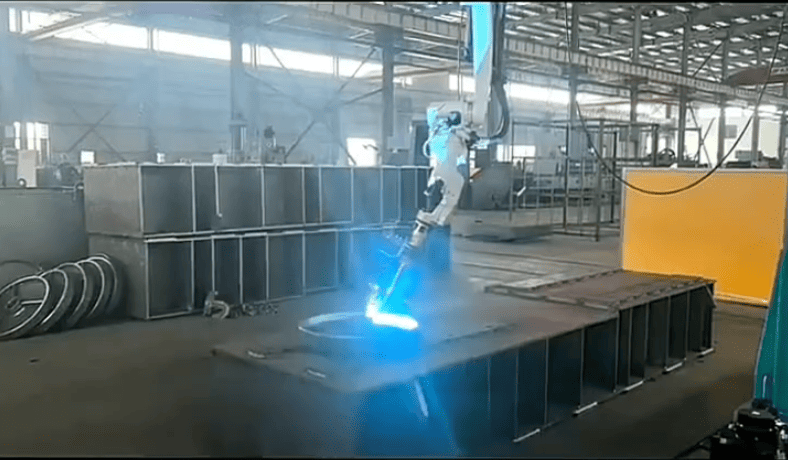
Why does traditional robot teaching become a burden?
I have met many factory owners who bought a robot because they wanted to reduce labor pressure. Then they found a new pressure. They needed someone who could teach the robot. They needed someone who understood robot coordinates, tool center point, approach angle, welding path, arc start, arc end, weaving, and safety zones.
For repeated products, this is acceptable. The team teaches the path once. The robot repeats it many times. The cost of teaching is spread across thousands of parts. But machinery factories often do not work this way. One order may have 10 parts. Another order may have 50 parts. The shape may change next month. The fixture may also change.
In this case, traditional teaching becomes a hidden cost. It takes time. It needs skilled labor. It stops production when a new part arrives. It also creates risk because different operators may teach in different ways.
| Production type | Traditional teaching result | Practical problem |
|---|---|---|
| Large batch, same part | Teaching cost is acceptable | Robot works well after setup |
| Small batch, many parts | Teaching cost becomes high | Robot may sit idle |
| Non-standard parts | Teaching is repeated often | Skilled programmer becomes bottleneck |
| Large welded structures | Teaching takes long time | Setup time may exceed welding value |
| Custom machinery parts | Product changes often | Automation becomes hard to scale |
This is why I say the difficulty is not the robot arm. The real difficulty is the gap between changing parts and fixed robot programs. Smart welding tries to close this gap.
What does “no complex programming” really mean?
I want to be clear. “No complex programming” does not mean there is no logic inside the system. It means the operator does not need to write or edit complex robot programs for every part. The intelligence moves from the operator’s hands into the software workflow.
The system can use a simple interface. The operator can load the workpiece, choose a task type, press scan, confirm the seam if needed, and press start. In some projects, the system can recognize the component automatically. In other projects, the operator may select a part family or welding template. The exact workflow depends on the production scene.
| Traditional step | Smart system approach | Operator benefit |
|---|---|---|
| Teach start point | System finds seam start | Less manual jogging |
| Teach end point | System finds seam end | Faster setup |
| Teach middle points | System calculates path | Less repeated work |
| Set torch angle manually | Template applies process rules | More stable welding |
| Adjust for position error | Vision reads actual placement | Less fixture pressure |
| Save many programs | System uses data and templates | Easier part management |
I have seen operators become more willing to use robots when the interface becomes simple. They do not need to feel like robot engineers. They can work more like process operators. They still need training. They still need to understand welding quality. But they do not need to spend their whole day moving the robot point by point.
This matters because many factories face a shortage of skilled welders and robot programmers at the same time. A system that is too difficult will not be used. A system that is easy enough can become part of daily production.
How does the system avoid repeated teaching?
The system avoids repeated teaching by using three main ideas. It scans the real workpiece. It extracts the weld path automatically. It uses welding rules or templates for similar seam types.
I often explain this with a simple example. A factory makes different machine frames. Each frame has different length, width, or bracket position. In traditional robot welding, the team may teach each frame separately. With smart welding, the system can scan the frame, find the seam, and generate a path based on actual geometry. The operator does not need to repeat the whole teaching process for each small change.
This is powerful for product families. A product family means different parts share similar welding logic. The size changes, but the seam type stays similar. For example, a bracket may become longer. A support plate may move. A machine base may use different hole positions. The welding logic stays close enough for the system to apply a template.
| Product situation | Repeated teaching? | Smart welding response |
|---|---|---|
| Same seam, different length | Often needed in traditional systems | System measures real length |
| Same joint, different position | Often needed in traditional systems | Vision finds actual joint |
| Same part family, small changes | Often needs program edits | Template handles variation |
| Part placed with slight offset | May cause weld failure | Vision corrects path |
| Different custom parts | Heavy teaching workload | System scans and creates path |
The result is not only time saving. The result is also management improvement. The factory no longer depends so much on one programmer. The welding knowledge can be built into the system. The process can become more repeatable across shifts.
Why is simple operation important for factories?
I have learned that the best machine is not always the machine with the most functions. The best machine is the machine that the factory team can use every day. If a welding robot needs one expert for every change, the system will stop when the expert is not available. If the interface is simple, more workers can operate it after training.
Simple operation is also important for overseas customers. Many of our customers are in Europe, North America, South America, the Middle East, and Southeast Asia. Their teams may have different language backgrounds. Their production may be under delivery pressure. Their engineers may not want to call the supplier for every small new part.
A good smart welding system should support clear daily operation. The screen should show the scan result. The weld seam should be visible. The operator should know what the robot will do before it starts. The system should also include safe start logic, alarm messages, process records, and maintenance reminders.
| Operation need | Why it matters | Good system behavior |
|---|---|---|
| Clear start process | Workers need confidence | The steps are visible |
| Seam display | Workers need to check path | The system shows planned welds |
| Easy parameter use | Workers need stable quality | Templates store welding data |
| Alarm guidance | Workers need fast recovery | The system shows simple messages |
| Safety control | Workers need protection | Robot cell follows safe logic |
| Training support | Workers need to learn fast | Supplier provides practical training |
I do not believe automation should make workers feel useless. I believe automation should help workers move to better tasks. A skilled welder can become a process leader. A fitter can become a robot cell operator. A production manager can use data to plan work better. This change does not happen in one day, but the right equipment makes it possible.
What role does welding process knowledge still play?
Smart path generation does not replace welding process knowledge. I need to say this clearly. Welding is still welding. The robot must use the correct current, voltage, wire feed speed, travel speed, torch angle, stick-out, shielding gas, weaving method, and arc start method.
The smart system can store welding templates. These templates can match seam type, material thickness, welding position, and quality requirement. The operator can select or confirm the proper template. The system can then apply process rules to the generated path.
| Process item | Why it matters | How the system helps |
|---|---|---|
| Current and voltage | They affect penetration and bead shape | Templates store tested settings |
| Travel speed | It affects heat input | System applies stable speed |
| Torch angle | It affects fusion and bead direction | Software plans angle from seam data |
| Weaving | It helps cover wider seams | Template applies weaving style |
| Arc start and end | They affect defects | System controls start and crater fill |
| Seam tracking | It helps handle variation | Vision data improves path accuracy |
I have seen buyers focus only on the robot brand. I understand why. Robot brand is visible. But welding quality depends on the full system. The welding power source must be suitable. The wire feeder must be stable. The ground connection must be reliable. The gas protection must be correct. The fixture must hold the part well enough. The path planning must respect welding rules.
This is why we build robot welding workstations as integrated systems. We do not only sell a robot arm. We design the station, select the welding process, install the vision system, develop the software flow, test the sample parts, and train the customer team. This one-stop approach reduces project risk.
How does this lower the barrier for small and medium factories?
Many small and medium factories think robot welding is only for large manufacturers. I understand this idea because old robot welding projects often required large batches, stable products, and strong engineering teams. But the market has changed. Customers demand more product types. Skilled welders are harder to find. Delivery time is shorter. Quality standards are higher.
A smart robotic welding system can help smaller factories enter automation step by step. They do not need to automate the whole workshop at once. They can start with one flexible robot welding station. They can choose the most common part families. They can train a few operators. They can measure time saving, quality improvement, and labor change.
| Factory concern | Smart welding answer |
|---|---|
| I have too many different parts | The system is built for variation |
| I do not have robot programmers | The interface reduces complex teaching |
| My parts are not always in the same position | 3D vision reads actual placement |
| I cannot make CAD models for every part | The system can scan real workpieces |
| I worry about after-sales support | We provide installation, training, and service |
| I worry about return on investment | We help select the right applications first |
I always suggest a practical start. The factory should not choose the most difficult part as the first automation target. The factory should choose parts that repeat enough, have clear seams, and cause real labor pressure. After the team gains confidence, the factory can add more part types.
This is how many successful automation projects grow. They start with a focused application. They build internal skill. They expand to more workpieces. The robot cell becomes a production tool, not a showroom machine.
Why Is Smart Robotic Welding Built For High-Mix, Low-Volume Production?
You may not produce one product all year. Your orders may change weekly. Fixed automation may feel too rigid and too costly.
Smart robotic welding is suitable for high-mix, low-volume production because it can adapt to different workpieces with scanning, automatic path generation, and reusable welding logic. It reduces the time needed for new product setup and makes robotic welding practical for custom parts.
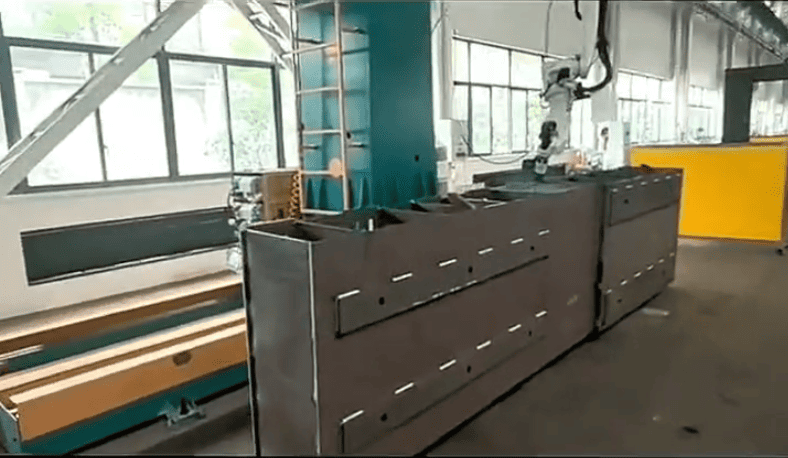
What does high-mix, low-volume really mean in welding?
High-mix, low-volume means the factory produces many product types, but each type may have a small quantity. This is common in machinery manufacturing, steel structure, shipbuilding parts, construction machinery, bridge components, agricultural equipment, metal fabrication, and custom industrial equipment.
I see this production mode more often than pure mass production. A customer may weld 20 sets of one frame, 35 sets of another support, and 8 sets of a special machine base. The next month may be different. The parts may share welding processes, but the dimensions and seam positions change.
This production mode creates pressure. Manual welding can handle change, but it depends on skilled welders. Traditional robot welding can handle repeatability, but it struggles with change. The smart robotic welding station tries to combine the flexibility of human decision with the stability of robot motion.
| Production mode | Main feature | Welding challenge | Best automation direction |
|---|---|---|---|
| High-volume, low-mix | Same part repeated | Speed and uptime | Fixed robot line |
| High-mix, low-volume | Many parts, small batches | Setup and teaching time | Smart flexible station |
| Project-based production | Large custom structures | Part variation and access | Vision-guided robot system |
| Repair and maintenance | Unstable workpieces | Unclear geometry | Case-by-case evaluation |
| Batch custom manufacturing | Similar families with changes | Program reuse | Template-based smart welding |
I believe many factories have delayed automation because they thought robots only fit mass production. This was true in many older projects. But it is not the full picture now. Vision, software, and welding data make flexible automation more realistic.
Why do machinery factories need flexible production?
The machinery industry has one big feature. Products are diverse. Custom parts are common. A factory may serve many industries at the same time. The same workshop may produce frames, guards, hoppers, tanks, brackets, arms, and bases. The parts may be made from carbon steel, stainless steel, aluminum, or special alloys.
This diversity is good for business because the factory can serve more customers. But it is hard for production. The workshop needs to switch tasks fast. The team needs to control quality across different orders. The manager needs to keep delivery time short. The owner needs to control labor cost.
I remember one machinery customer who told me that his best welders were always busy with urgent custom jobs. The simple repeated welds also needed these welders because the factory had no stable automation path. The owner wanted robots, but he feared that programming would take longer than welding. This is exactly the case where smart welding should be considered.
Flexible robotic welding helps the factory separate work by logic. The robot can take over suitable welds that have clear seams and repeatable process needs. Skilled welders can focus on difficult positions, repair work, special assemblies, and process improvement. This is a better use of human skill.
| Workshop problem | Effect on business | Smart welding value |
|---|---|---|
| Many product types | Hard to standardize | Vision handles variation |
| Small batch orders | Teaching cost is high | Automatic path generation saves setup time |
| Skilled welder shortage | Delivery risk increases | Robot supports stable output |
| Quality difference by worker | Rework cost rises | Robot keeps motion consistent |
| Frequent design changes | Programs become outdated | Scan-based paths adjust faster |
| Large and non-standard parts | Manual work is heavy | Robot station improves repeatability |
A flexible production system also helps the sales team. When the factory can handle different products with more confidence, the sales team can accept more custom orders. This does not mean the factory should accept every difficult job. It means the factory has better tools to judge and produce suitable jobs.
How does smart welding help with non-standard parts?
Non-standard parts are common in real industry. A non-standard part may not have a stable history. It may not have a perfect digital model. It may be made for one project. It may change after customer feedback. Traditional automation has a hard time with this because every part looks like a new engineering task.
Smart welding helps by reducing the need for full reprogramming. The system can scan the part and generate the weld path from actual geometry. If the part belongs to a known seam family, the software can apply existing rules. If the part is new, the setup is still more direct than manual point-by-point teaching in many cases.
The important word is “suitable.” Not every non-standard part is suitable for robot welding. If the seam is hidden, if access is poor, if the gap changes too much, or if the part cannot be held safely, the project needs more design work. I prefer to say this early because honest evaluation saves money.
| Non-standard part condition | Suitability for smart welding | Reason |
|---|---|---|
| Clear and visible seams | High | Camera can detect geometry |
| Similar joint types repeat | High | Templates can be reused |
| Workpiece can be roughly positioned | High | Vision can correct placement |
| Seam access is blocked | Low to medium | Robot torch may not reach |
| Gaps vary too much | Medium | Process and fit-up must improve |
| Part is unsafe to hold | Low | Fixture design is needed first |
| Material and thickness are stable | High | Process templates work well |
I see smart welding as a bridge between manual flexibility and robot productivity. The system does not remove all preparation. The factory still needs good cutting, fitting, tack welding, and fixture habits. But the system makes automation more possible when parts are not identical.
What production gains can a factory expect?
I am careful with promises because every factory has different parts and different management. But I can describe the main areas where customers often see value.
The first gain is reduced setup time for new or changing parts. The second gain is more stable weld appearance and movement. The third gain is lower dependence on highly skilled robot programmers. The fourth gain is better use of welders. The fifth gain is more confidence in accepting varied orders.
| Gain area | What changes | Why it matters |
|---|---|---|
| Setup time | Less manual teaching | New jobs start faster |
| Welding consistency | Robot motion is stable | Quality becomes easier to control |
| Labor use | Operators manage the cell | Skilled welders focus on hard tasks |
| Production planning | Part families become easier | Managers can schedule better |
| Data control | Parameters can be stored | Process knowledge stays in factory |
| Order flexibility | More varied parts become possible | Sales opportunities increase |
The return on investment depends on part selection. A smart welding station brings strong value when the factory has enough suitable welding work. If the robot cell only runs one hour per day, the payback will be slow. If the cell takes over many welds across different product families, the payback becomes stronger.
I usually ask customers to collect simple data before buying. They should record welding hours by part type, number of welders, average batch size, rework rate, and time spent on layout and fitting. They should identify which parts repeat in different sizes. They should also record which welds are hard, which welds are simple, and which welds cause bottlenecks.
How should a factory choose the first application?
The first application is very important. A good first application builds confidence. A bad first application can make the team reject automation. I suggest choosing parts that have clear weld seams, enough production quantity, stable materials, and reasonable access for the robot torch.
The first application should not be the most complex product in the factory. It should be a product that creates real workload and has a good chance of success. The goal is to let the team learn the system, build internal habits, and see measurable improvement.
| Selection rule | Good first project | Poor first project |
|---|---|---|
| Seam visibility | Open fillet seams | Hidden internal seams |
| Part access | Robot can reach easily | Torch angle is blocked |
| Batch need | Repeats often or has families | One-time rare part |
| Fit-up quality | Gap is controlled | Gap changes too much |
| Material stability | Same material range | Many unknown materials |
| Operator learning | Clear workflow | Too many exceptions |
| Business value | Saves real labor time | Only for demonstration |
I also suggest thinking about fixture design early. Some buyers believe vision means no fixture is needed. This is not correct. Vision reduces the need for perfect positioning, but the workpiece still needs safe and stable support. The robot cannot weld a moving or unstable part. A simple, adjustable fixture is often better than a very expensive fixed fixture for high-mix production.
For large components, we may use positioners, ground rails, gantry structures, cantilever systems, or multi-axis robot workstations. Our product range includes 3D vision intelligent robot welding workstations, ground rail robot welding systems, and eight-axis or nine-axis cantilever intelligent welding stations. These systems help cover larger workpieces and more complex welding positions.
What is the difference between buying a machine and building a welding system?
I believe this is one of the most important buying ideas. A factory does not only need a robot. A factory needs a working welding system. The system includes the robot, vision, welding power source, torch, fixture, software, safety enclosure, fume handling, process database, operator training, installation, and after-sales support.
If a buyer only compares robot arm prices, the buyer may miss the real cost. A low-price machine can become expensive if it cannot handle the real parts. A better system may cost more at the beginning, but it can save time during installation, training, and daily production.
| System part | What it does | Buying risk if ignored |
|---|---|---|
| Robot arm | Moves the torch | Reach and payload may be wrong |
| 3D vision | Scans the workpiece | Path may not match real part |
| Intelligent software | Generates weld paths | Operator may need heavy teaching |
| Welding power source | Controls arc quality | Weld quality may be unstable |
| Fixture | Holds the part | Part may move or deform |
| Safety system | Protects workers | Operation may be unsafe |
| Training | Builds user skill | Equipment may be underused |
| After-sales service | Solves long-term issues | Downtime may increase |
Our factory has nearly 20 years of experience in laser equipment, welding automation, and intelligent manufacturing systems. We are located in Xi’an Xixian New Area in Shaanxi, China. We develop, manufacture, and export laser welding machines, laser cutting machines, laser cleaning machines, handheld laser welding machines, laser marking machines, and robotic welding automation systems.
This background helps us support customers from solution design to equipment manufacturing, installation, commissioning, and technical training. I think this one-stop ability is important for overseas customers. The customer needs a supplier who can understand the workpiece, not only ship a machine.
How does this system support future factory growth?
A smart robotic welding station can become the first step toward a more digital and flexible factory. The factory can start by automating one welding process. Then it can add more part families. Later it can connect welding data with production planning, quality records, and maintenance management.
I do not think every factory needs a fully unmanned workshop right now. That goal sounds attractive, but it may not match the reality of high-mix production. I prefer a steady path. The factory should first make one station work well. Then the factory should standardize how parts are prepared, loaded, scanned, welded, checked, and recorded.
This steady path creates real value. Workers learn. Managers trust the data. Engineers improve fixtures. Welders improve process templates. The robot becomes part of the production culture.
| Growth stage | Factory action | Expected result |
|---|---|---|
| Stage 1 | Select suitable parts | Lower project risk |
| Stage 2 | Install one smart station | Build user confidence |
| Stage 3 | Train operators and welders | Reduce dependence on one expert |
| Stage 4 | Add more part families | Increase robot use time |
| Stage 5 | Store process data | Improve quality control |
| Stage 6 | Expand to more stations | Build flexible automation capacity |
I have learned that customers do not buy automation only because it is advanced. Customers buy automation because they want stable delivery, lower labor pressure, better quality, and more business confidence. Smart robotic welding supports these goals when the project is designed with real production in mind.
If your factory produces many different metal parts, I would not ask you to think only about today’s welding task. I would ask you to think about your order structure, your welder availability, your future product changes, and your need for faster delivery. If these pressures are growing, smart robotic welding may be the right next step.
Conclusion
I believe smart robotic welding helps factories weld changing parts with less teaching, better flexibility, and stronger long-term production confidence.