
In the field of architecture, 3D printing technology has achieved a more functional and aesthetic design style, which is significant for the field of architectural design.
With the continuous development and renovation of various 3D printing construction technology and building materials, the 3D printing construction industry has taken the first step into the beginning, after that, the emergence of building materials such as metal materials, photosensitive resins, etc. , it can be used not only to print building components, but also to fuse with other major materials for reinforcement.
The beginning of 3D printed architecture, not only created a new kind of architecture, but also realized, the complex form of architecture, any form can be built. On the basis of broadening the designer’s design thinking, it also makes the building move towards a complicated trend.
In terms of materials and construction, the development of new composite materials has reduced the extraction rate of common materials, and the use of composite materials is not only based on the soundness required for their construction, but also on environmental protection in terms of recycling, to protect the people of this country.
Thus, the emergence of 3D printing architecture has great advantages, not only to promote the formation and development of late 3D printing architecture, but also will lead the architectural community into a new and complex world.
When 3D printed buildings were first developed, architects were the first to print architectural furniture in addition to building components in order to test the stability of materials and structures.
Computer software is a tool for the design of complex forms of buildings and their components. With the opening of design thinking, designers gradually carry out bionic design with reference to natural forms, the mathematical law is used to control the three-dimensional design form through the simulation of computer algorithm.
Application of 3D printing in Furniture Design:
1. variety
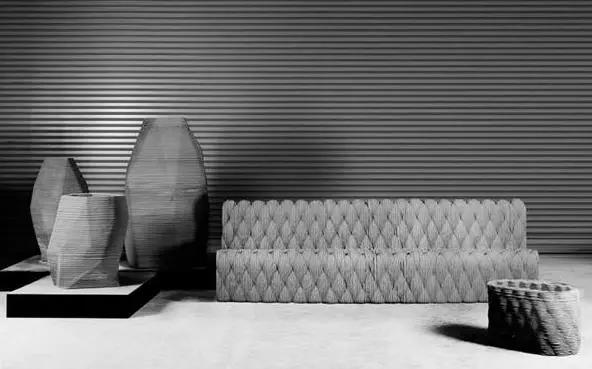
The 3D printed product modeling can be arbitrarily made and modified through 3D model files, and a large number of complex shapes, curved surface modeling and other difficult-to-open models can be realized through 3D printing, greatly improves the design to the physical conversion speed.
2. customizing
With the advantage of rapid prototyping, 3D printing can make the customization easier, realize the small batch production of products, and meet the needs of personalized customization. A large number of different products can make up for the furniture market product homogeneity serious disadvantages.
3. Research and development efficiency
The use of 3D printing technology can shorten the product development cycle, so that product style is no longer limited by time and production technology. Can show the product intuitive style, avoid size problems, style problems caused by sample adjustment.
4. Environmentally friendly materials
3D printing technology is different from the traditional furniture manufacturing technology of additive manufacturing, additive manufacturing is the progressive addition of materials through advanced molding process, so will not generate waste materials. And the material can be recycled, which is good for protecting the environment.
Application difficulties of 3D printing in furniture design:
1. The material of 3D printing technology is plastic, resin and metal, but the furniture is mainly made of wood. The material limitation has limited the development of 3D printing furniture.
2. Compared to the efficiency of mass production of molds, the printing speed of 3D printers is slow, and it takes a long period of time to produce mass-produced furniture and furniture with complicated shapes.
3. Because 3D printing technology itself is not perfect, the degree of precision and quality of printed furniture in some can not meet the requirements of use.
4. Furniture printing requires an industrial-grade 3D printer, and the actual size ratio also requires a large amount of resin materials, and the cost is high.
3.3D printed furniture cases:
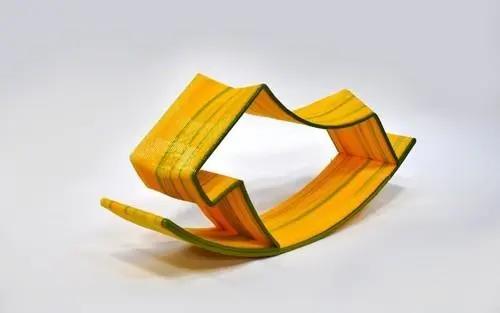
1. Chairs and tables made by robotic arms with 3D printing.
Designed by renowned Dutch designer Dirk Vander Kooij, the chair and table is a 3D printer that can be attached to an industrial robotic arm that can then be used to 3D print a variety of desirable furniture. The robotic arm can produce a chair in three hours, nearly 40 times faster than a conventional 3D printer, and is believed to be able to produce other creative furniture just as quickly.
2. Draft 3D printed chairs
The chair was designed by Swedish design team Front, who used a camera to capture the movement of their chair in mid-air. The movement was then transformed into a printable 3D file of the chair, which was printed in 3D.
3. Creative aluminum furniture — Batoidea 3D printed chairs
This organic 3D printed chair, created by Belgian designer Peter Donders, is a lightweight yet rigid 3D printed chair made of aluminum metal. If it is made by traditional casting method, it will meet many technical difficulties and very expensive.
4. Bloom lighting creative furniture
This 3D printed lotus lamp was designed by Patrick Jouin. You can open and close the lamp to create different lighting effects and bring different atmosphere to the indoor environment.
Another special thing about this lamp is that it’s all 3D printed and doesn’t require any final assembly.
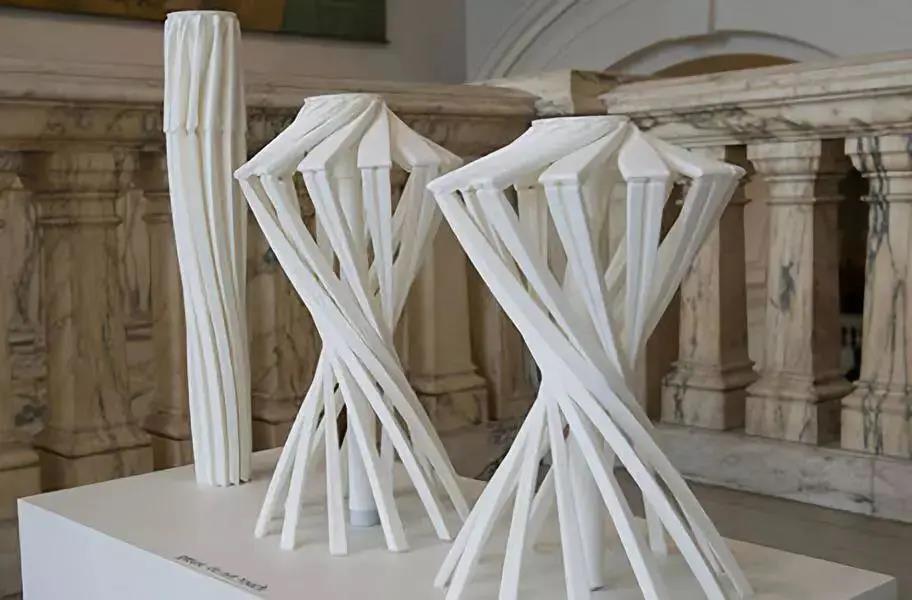
5. One Shot stool
Designed by Patrick Jouin, this umbrella like One Shot redefines the traditional folding stool with 3D printing and innovative ideas. Easy to store and save space.
6. A chair made of 3D printed material made from a refrigerator
The Pulse 3D printed chair was also designed by Dirk Vander Kooij, but he explored the possibility of 3D printing from a recycling perspective. The whole old refrigerator dissolves into a green dye for 3D printing, which is then printed using a 3D printing robotic arm.
This creative furniture design concept has inspired us to explore whether other discarded products can be used as 3D printing materials and then to design creative 3D printing furniture.
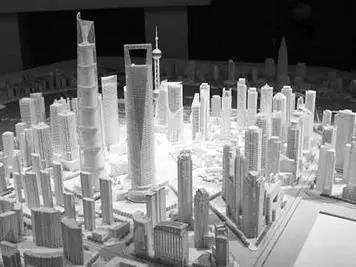
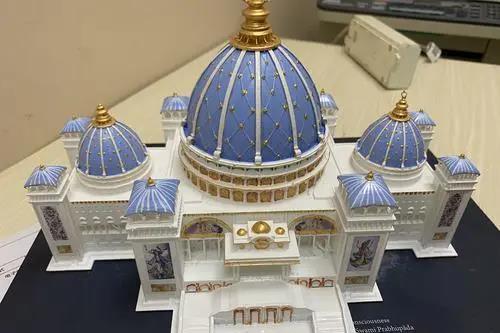
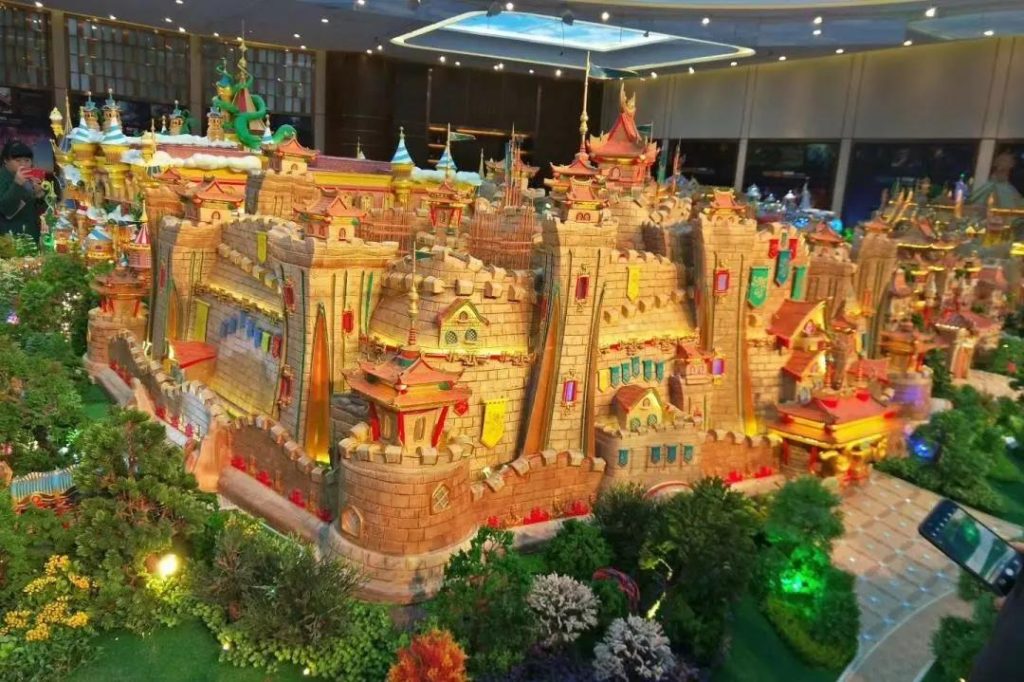
The role of the sand table model is to hope that people can through the reduced model, from a micro point of view to understand the real world of the macro-scene. The miniature sand table model is mainly used in building effect exhibition, city planning exhibition, military terrain simulation, road traffic, hydraulic engineering, tourism, Science and technology museum and so on.
The traditional sand table is usually made of plaster, glass fiber reinforced plastic, wood, acrylic board or foam to make the model. The process involves casting, cutting, splicing and so on, and it’s difficult to move the model after it’s made.
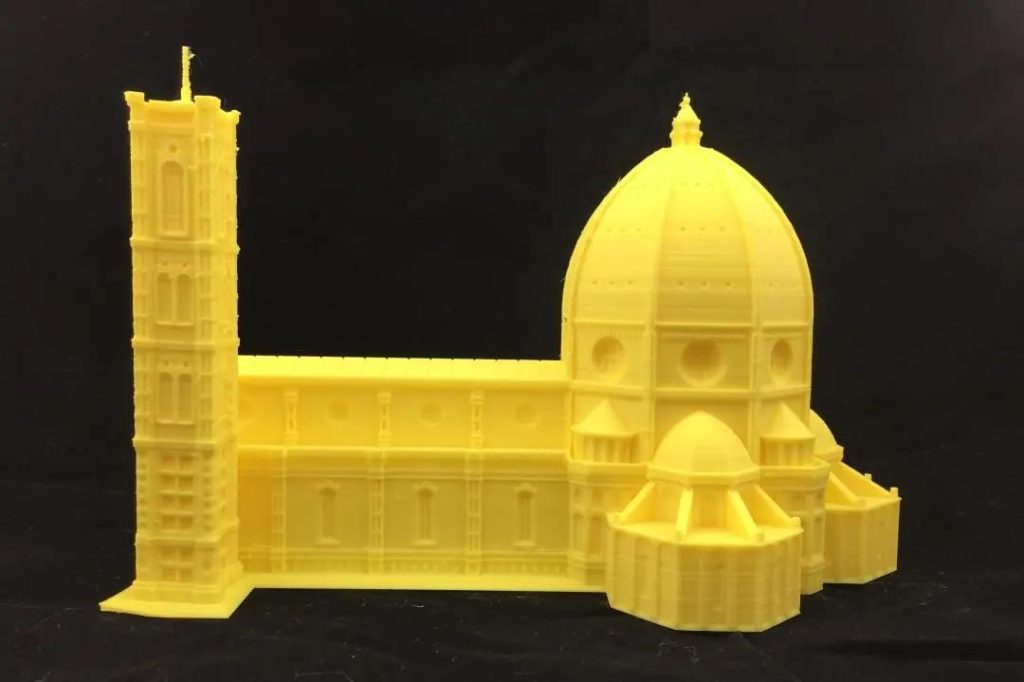
And if you own a 3D printer, you’re pretty good at making sand table models. Not only are the models produced by today’s professional 3 d printers extremely detailed, but Surface finish can also be produced without the rough surface detail of a FDM printer years ago.
And now the choice of materials is very wide, SLA technology nylon plastic and SLA light curing technology photosensitive resin is many designers use the most materials, material prices are very cheap. Full color 3D printing is also a good way to do this if you don’t want to do it yourself. What’s more, it takes very little work to make a miniature model by 3D printing, so the time period is very short.
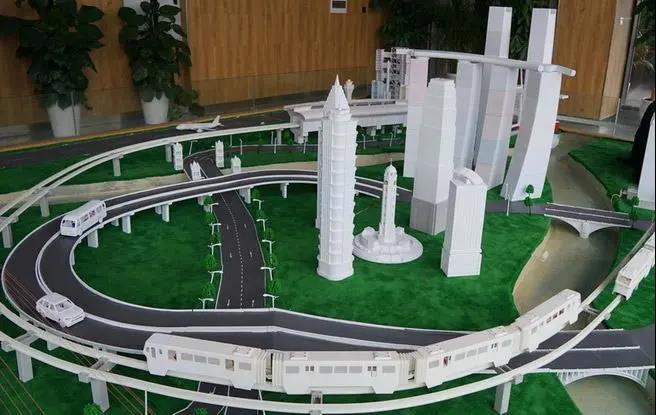
3D printing services to infiltrate the various industries, 3D printing processing sand table production what advantages? Architects used to use wood or foam to make scale models, but 3D printing combines accurate virtual 3D models with real objects, more and more people are realizing the benefits of using 3D printing for sand table models.
1. Better presentation
The 3D printing makes the design idea real and visible, and the digital parameter design uses a detailed scale model to discuss the design idea and find out the advantages and disadvantages of the design. And most importantly, for the end user, a 3D printed model of the building can quickly and realistically represent the ideas and sketches, making it easy to select the best solution.
2. Save manufacturing time
Using a 3D printer, you can turn a design into a tangible object, which is simpler and faster than traditional fabrication without the complicated process, which greatly reduces the time it takes to make scale models. By simply turning on 3D printing, you can move on to other important tasks, and the 3D printer will do the work automatically.
Another time saving point is to master the necessary 3D printing model design rules and use programs like 3D maxmaya, rhinoceros, SketchUp to design a 3D model that can directly output digital files for printing, you can save a lot of time by printing directly from a 3D printer.
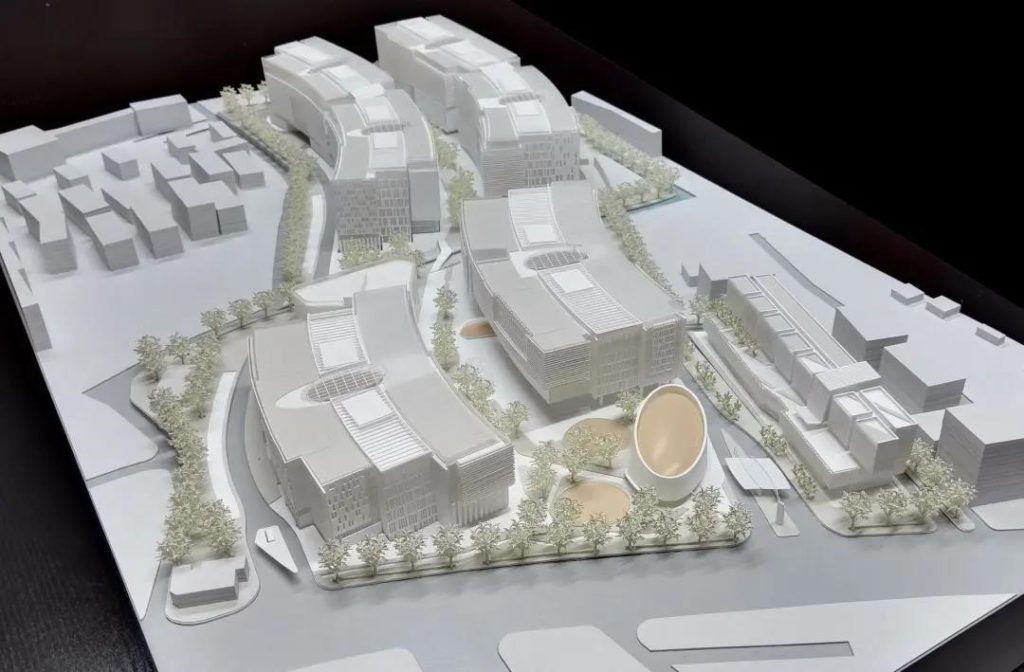
3. High quality models and materials
The era of rough and pixelated 3D printing is over, and professional 3D printers can now print architectural models in high detail and smooth surfaces. In addition, a wide selection of materials is available, nylon is the material most commonly used by architects; the base color of a scale model is usually gray if a color element is required and you don’t want to paint it yourself, color printing is the best option. You can even add transparent, metallic (steel, copper) elements to your model. You can also paint later to achieve the desired effect.
4. It’s easier to change
3D printing allows for more flexible handling of models, and if the customer makes a change, it can be edited on the 3D model file, shared with colleagues, and reprinted. If you need a similar model, print another one, and you’ll enjoy the benefits of 3D printing — complete control.
For this kind of distinct sand table model, using 3D printing technology is very cost-effective, not only the delivery speed than the traditional manual 2 ~ 3 times faster, the price will be reduced by 50% . And 3D printing of resin products can be post-paint operation, can meet most of the sand table needs.
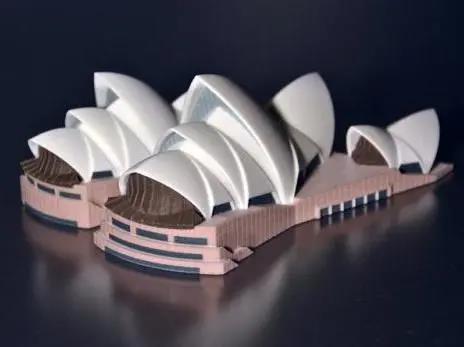
As the use of 3D printing increases, architects are trying to turn custom building drawings from computer software into an actual building, although there may be technical areas that need to be studied and planned, but that didn’t stop the team of architects from planning and designing the world’s first 3D printed canal house in Amsterdam.
In April of the same year, the architects planned to use the previously mentioned KamerMaker printer, a large metal clad machine built using shipping container. Based on the building’s drawings, the printer will use different types of plastic and wood fibers to print the building’s exterior walls, then build the ceiling and other parts of the room, and finally print the furniture.
The printed parts will be assembled in place and can be easily connected to each other because of the edge design, like a giant Lego block. The architects used it as an experiment to study the concept, design and construction of 3D printed buildings.
This kind of technology innovation will not be very smooth at first, but through people’s unremitting exploration, continuous improvement, to make some progress in the construction of 3D printed houses. So, at this point, the 3D printed canal house is also a major milestone in the development of science and technology.
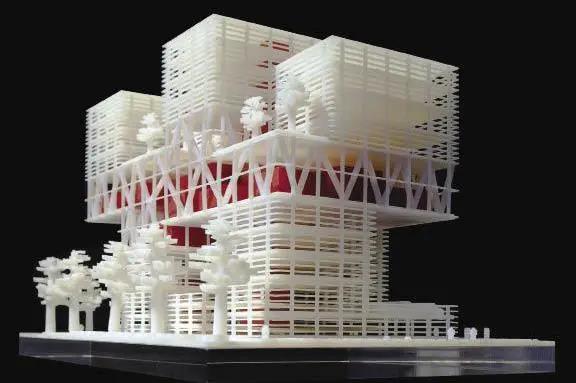
In addition to 3D printed components, 3D printed models are also another potential development ahead of the current development of 3D printed buildings, from building houses on the moon to quickly printing emergency shelters. In response, Chicago architects tried to use 3D printing technology to print architectural models of all Chicago buildings, a 320 square foot area of more than 1,000 buildings.
The idea was to give local residents and visitors an intuitive and comprehensive view of Chicago’s architecture. Including the urban power grid, high-rise buildings, residential areas, such as the height of these buildings, style and other development models. As 3D printing becomes more complex in the future, architects will be able to more easily visualize their ideas and designs through 3D printing.
All architectural practices are based on theoretical foundations, as in April 2013, the book 3D printing: From Reality to imagination, written by American writers Chudý Lipson and Kumaon division, is a comprehensive and accurate account of the wave of 3D printing that has swept the Digital Revolution, a new generation of manufacturing, design, biology and materials has emerged, and from a technical standpoint, 3D printing has brought the virtual world closer to the real world, integrating artificial intelligence into every aspect of real life.
In this book, 3D printing technology, advantages, manufacturing process, application fields, economic benefits and other aspects of 3D printing are described in detail, and intended to discuss the origin of 3D printing architecture and development possibilities. This book is not only about 3D printing classic books, but also for the formation of 3D printing architecture and development of a certain expectation.
In May 2013, for example, Ruairi Glynn and Bob Sheil, in their book making digital architecture, combed through trends in digital architecture’s complexity, diversity, and intelligence, 3D printing technology uses digital design to bring together the work of designers, architects and engineers at the level of architectural design, construction and computer applications, including not only the dimensions and types of each case, also studied its specific case of the building body.
From the latest design theory to digital manufacturing, the whole range of diversity is very comprehensive, and in the field of digital architecture design and manufacturing for a new understanding and thinking of the challenges. This book is not only based on the introduction of the theory, but also on the basis of the practice of summing up and imagination, for future generations and designers of 3D printing building understanding of a certain reference value.
In the development of the next generation of 3D printed architecture, it is worth noting that one of the designers, Mikell Hansmeyer, based his early work on the famous sixth order, inspired and influenced by the free form and geometry of nature, he combined the structure, pattern and texture of nature into his design, inspired by the splitting of cells, the use of natural forms of mathematics and science is fundamental to the creation of this complex form.
Mikell Hansmeyer first transformed the logic of the algorithm into a visualization of the basic shape of the research, in the greatest degree of combination and arrangement of algorithm overlay, Mechanism for further algorithmic language linking and writing, this lays a solid foundation for the final design of the complex entity. At the same time, a new subsystem and algorithm are written on the original system node for the following composite overlay or symmetric design.
In Toronto, Canada, on July 4 of the same year, a 1:3 scale model of a room designed by Mikell Hansmeyer and Benjamin Dillenberger called the “Digital Grotesque”was printed, it became a masterpiece of the 3D printed architecture of the time, which was a sensation around the world.
The design of the whole room is subdivided by an algorithm, totaling 800,000 faces. Its interior contains thousands of complex shapes and designs