
In the next 15 years, the new energy vehicle blowout market can’t do without it (UV laser marking)!

Tesla drives down prices

Recently, the heat of new energy vehicles has not decreased due to the sudden airborne news of a heavy price reduction. Energy-saving and emission-reducing cars have been pushed to the craze, and Tesla, which is in the tuyere of public opinion, has also been pushed into the hotlist.
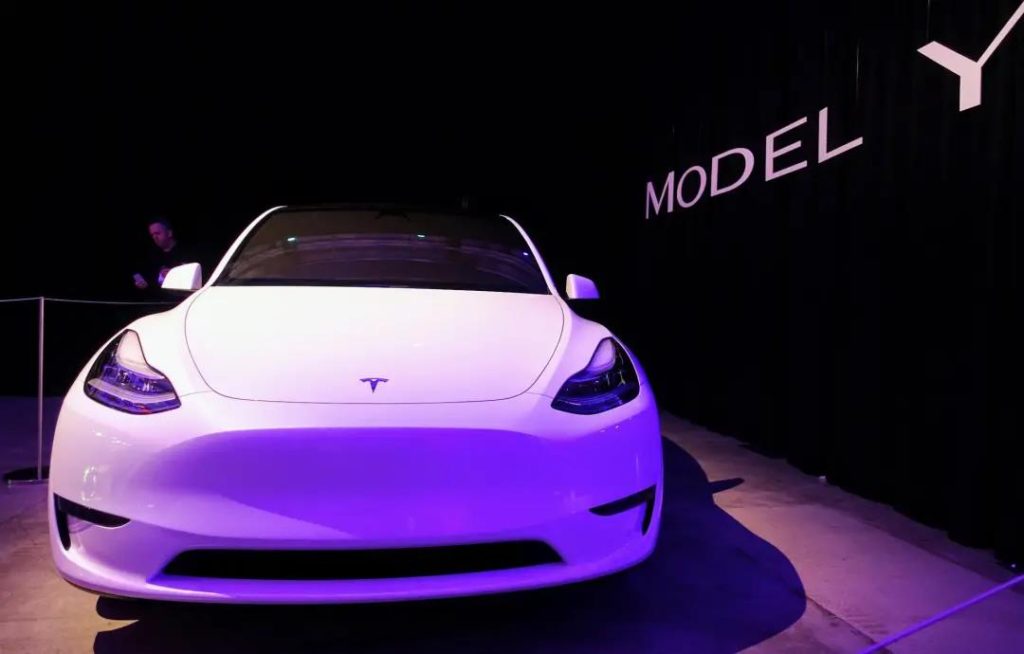
New Energy car craze

On Jan. 1, 2021, Tesla announced a steep price cut of about 150,000 yuan for Tesla’s new home made Model Y. The move immediately led to an unprecedented surge in car purchases at Tesla stores, with sales of the Model Y soaring and some orders only two months later. At this time the futuristic weilai automobile also timely launched a new product launch, NIO DAY 5G communication capacity, for power stations, sustainable capacity and subsidized prices attracted a large number of people’s attention. But behind this series of hot spots, is the people diligently to the new energy vehicle the need and the pursuit.
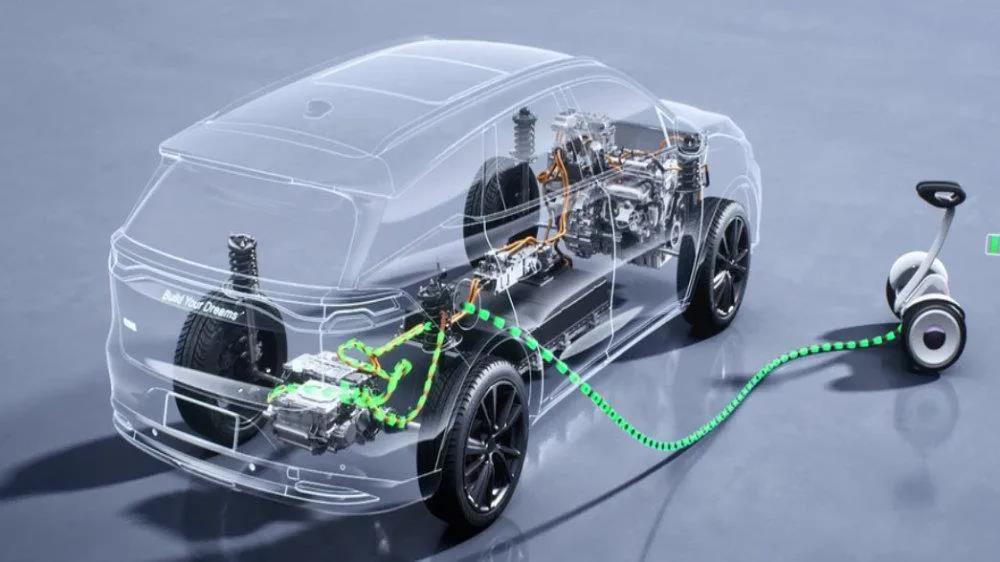
It has to be said that China has always called for energy conservation and emission reduction since 2015 to vigorously support the development of green new energy vehicles in the background, new energy vehicles received widespread attention. According to the statistics of the Ministry of Public Security, the number of new energy vehicles in China reached 4.92 million by the end of 2020, accounting for 1.75 percent of the total, with an annual growth rate of 29.18 percent. And according to the plan of the National Development Strategy, by 2035, pure electric vehicles will become the main selling product of the automobile industry, so its growth space is huge.
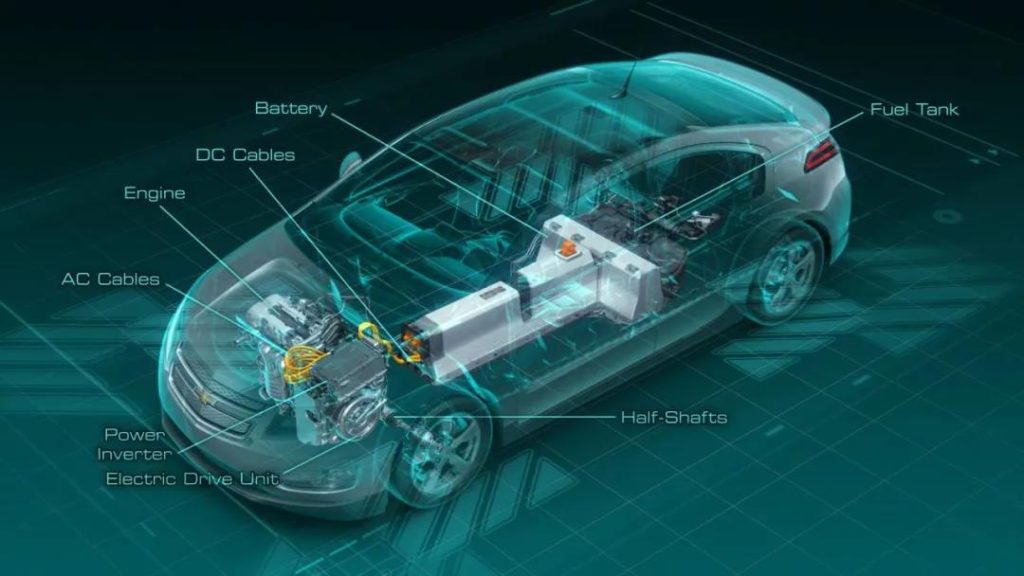
In addition to the introduction of the car dealers Tesla, domestic BYD Company, SAIC, weilai, Jianghuai, Xiaopeng, GAC, Verma, and others have also joined the development of new energy vehicles. I believe that the future in the new energy vehicle on the vast sales market will usher in a hundred flowers bloom scene.

The standard and the fast processing production nature also can not leave the laser processing. As a new “Fast! Accurate! Steady!”Processing mode, the use of lasers to participate in the processing of new energy vehicle core part of the processing technology has become an essential standard process.
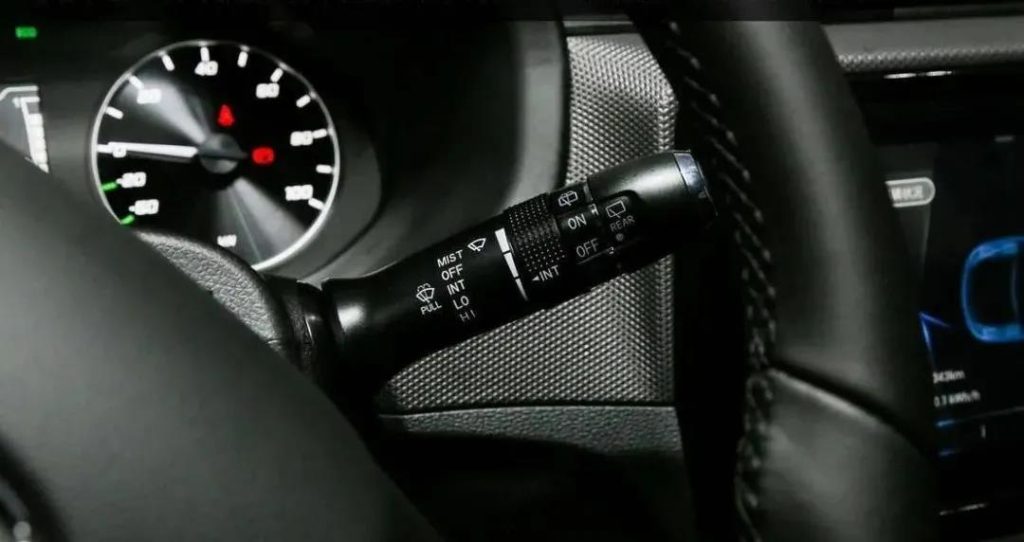
Electric vehicles (EVs) depend on the good operation of their core power electric energy system, and their processing depends more on high quality, high precision, and high automation. In particular, the precision processing of fine parts, it is not to have any mistakes. In addition, in order to enhance the car’s modern sense and fashion sense, car appearance mark and pattern also have high-quality is not easy to fall off, permanent processing needs.

Laser technology, just in line with the electric vehicle precision parts processing and efficient high-quality parts marking requirements

Laser processing leads the car technology manufacturing

Laser processing speed is extremely fast, higher efficiency, it can be carried out on a variety of materials, such as metal, plastic, media materials, etc., the low carbonization degree, the processing precision may achieve the micron level, has truly achieved the fine precision as well as the stable non-destructive processing component, and it’s to the environment non-pollution, does not have the special consumable request, is one section energy conservation reduces the consumption, the green environmental protection “Black Technology”, can effectively carry out the new energy electric vehicle laser drilling, micro-parts processing, and laser marking and other processes.
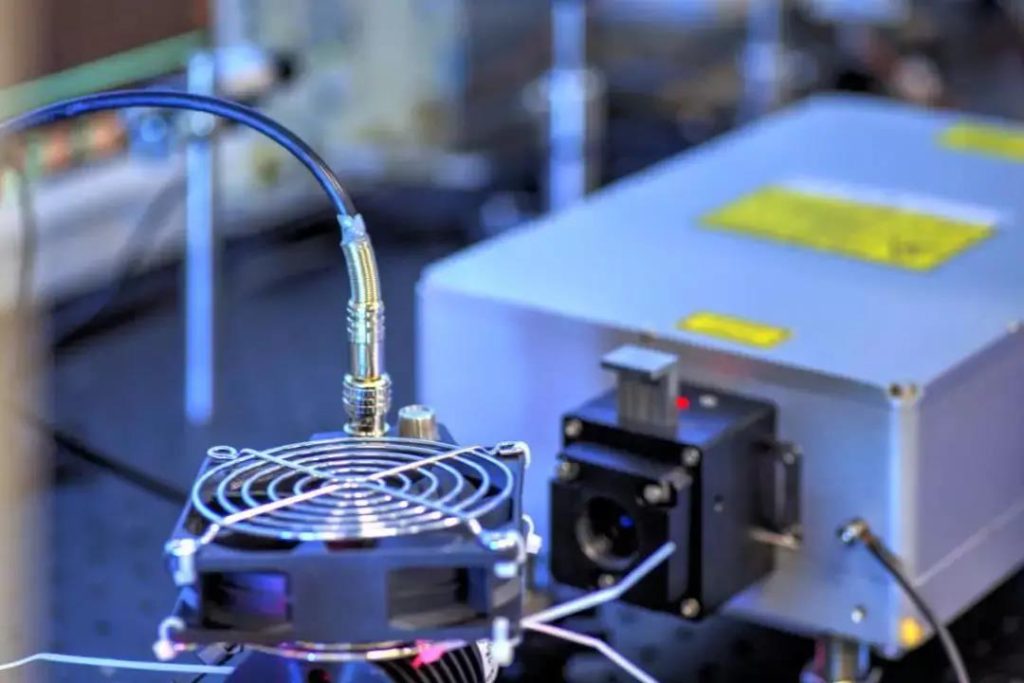
The next 15 years will be a glorious period for new energy vehicles to blossom all over the motherland. In its pursuit of quality, cheap and more competitive globally, laser technology will be its best processing partner, locking in JTC laser, invite you to create a new era of energy vehicles!

Comments Box SVG iconsUsed for the like, share, comment, and reaction icons
Cover for JTC Laser
JTC Laser

JTC Laser

935,180 Likes

Intelligent robot workstations, intelligent work islands, providing the entire process (cutting, assembly, welding, grinding, inspection, etc.) of intelligent applications for the non-standard metal structure manufacturing industry.

Sell and deploy them, one application scenario after another!
lasermanufacture.com/robotic-welding-system-selection-guide/
See MoreSee Less

6 days ago

It integrates the wire drum, welding power source, robot controller, and electrical cabinet, all mounted on the rail.

Installation is simple. Secure the expansion bolts on both sides, connect the cables to the standard ports, and then connect the power supply, wire-feed system, shielding-gas line, and compressed-air line. Start the computer, and the system is ready to operate.

Now, let’s see how it welds custom components. Use a forklift to position the workpiece freely beneath the robot. Large components can also be loaded with an overhead crane. No dedicated fixture is required.

Once the component is in place, the operator opens the system and moves the robot along the X-axis rail until it is positioned above the area to be welded.

A vision system is mounted on the robot. The operator clicks the capture button in the software interface, and the system acquires the component’s point-cloud data. The operator then defines the weld lines on the point cloud and assigns the welding task.

After the operator clicks “Confirm,” the robot scans the actual weld seams and collects detailed point-cloud data. Once the scan is complete, the system automatically calculates the welding path and generates the welding program.

The operator simply clicks “Confirm” again to begin welding. The entire process requires only a few mouse clicks.

While one robot is welding, the operator does not need to wait at the control station. Instead, the operator can prepare or operate a second or third robot, improving overall production efficiency.

Straight seams, curved seams, and wrapped corner welds can all be generated in a single programming cycle.

When the workpiece changes, the system can recognize the new component and generate the corresponding welding program.uses standardized equipment to handle a wide range of non-standard components.

The system can process components up to 3.5 meters wide and approximately 600 millimeters high. It can weld one type of component today and switch to a completely different component tomorrow.

Like and save this video. In the next video, we’ll introduce the nine-axis cantilever welding workstation.
See MoreSee Less

1 week ago

New features for existing customers—delivered through OTA updates.

We are upgrading our customers’ systems to the latest version, making robotic welding easier, faster, and more efficient to operate.

Robotic welding of ship outfitting components is now in progress…

Continuous upgrades. Simpler operation. More value from welding automation.

#RoboticWelding #SmartWelding #OTAUpdate #shippingbuilding #ShipOutfitting #WeldingAutomation #jtclaser

lasermanufacture.com/what-determines-robotic-welding-quality-a-practical-guide-to-vision-control-…
See MoreSee Less

1 week ago

A veteran welder with 11 years of experience recently asked me three questions. Out of respect, I would like to offer a brief response.

1. Is the Industry Led by Technology or Capital?

To determine whether an industry is driven by technology or capital, we should first consider two questions: What does the industry truly lack—technology or funding?

If a technology genuinely offers a competitive advantage and clear commercial value, it is unlikely to remain underfunded for long. However, even if a company has sufficient capital, that does not necessarily mean it can acquire or develop truly core technologies.

Capital helps technology move from research and development into industrialization and large-scale commercial application. It allows technological achievements to spread more quickly and enables more manufacturers to benefit from technological progress.

However, capital must be supported by genuine technological capability and real product value. Without a solid technical foundation, financial investment alone cannot create sustainable competitiveness.

This is particularly important in the robotic welding industry. A company may be able to advertise a welding robot for sale, but the long-term value of that system still depends on its underlying technology, welding capability, reliability, and real production performance.

Therefore, technology is the foundation, while capital is a tool that accelerates commercialization and market adoption. Capital may appear to be driving the industry, but core technology ultimately determines its direction.

2. The Two Technical Paths Behind Programming-Free Welding

Some companies in the robotic automation industry have been operating for ten or even twenty years, yet they still rely heavily on traditional technical approaches and rarely attempt to build an entirely new intelligent welding system.

To some extent, this comes from an excessive dependence on past experience. Experience is undoubtedly valuable, but it can also restrict a company’s ability to explore new technical paths.

If our understanding of automation and intelligent manufacturing does not undergo a fundamental transformation, then even after ten, fifteen, or twenty years in the industry, we may still remain within the traditional framework.

We have been continuously developing scan-and-weld and programming-free welding technologies for seven or eight years. Today, an increasing number of companies are entering this field, and more buyers are beginning to compare a conventional robotic welder for sale with a genuinely intelligent, programming-free welding system.

Before these technologies emerged, welding mainly depended on two approaches: traditional automation and skilled human welders.

Intelligent manufacturing can essentially be understood as the further development of these two paths.

The first path is the upgrade of traditional automation.

A three-dimensional model is imported first, followed by programming and trajectory planning. A vision system is then used for workpiece positioning, weld seam detection, and deviation correction before welding begins.

This is essentially an advanced version of conventional robotic automation. It improves accuracy and adaptability, but the basic operating logic still depends on models, programming, and predefined trajectories.

The second path is the intelligent upgrade of the way an experienced welder works. This is what we call “scan-and-weld.”

After receiving a drawing and observing the workpiece, an experienced welder can quickly determine the weld position, welding sequence, and torch angle before starting the welding process. This can be described as “see-and-weld.”

If we replace the welder’s eyes with machine vision and convert the welder’s experience into algorithms, welding process databases, and intelligent decision-making systems, the robot can scan and identify the workpiece and then automatically generate the welding task.

This is what we mean by “scan-and-weld.”

It is not simply a matter of adding a vision system to a robot. The real objective is to give the robot recognition, judgment, planning, and execution capabilities similar to those of an experienced welder.

When customers evaluate different systems, they should therefore look beyond the basic machine configuration. Two systems may appear similar, but their actual intelligence, ease of use, welding process capability, and adaptability can be completely different.

I do not intend to explain the deeper technical principles in excessive detail here. Once this technology is widely adopted, its actual market performance will provide the clearest answer.

3. Why Are Intelligent Manufacturing Systems Still Relatively Expensive?

This question is not difficult to understand.

At present, intelligent manufacturing is still in a stage of continuous investment, technological development, and market validation. Industry pioneers must bear substantial research and development costs, testing expenses, talent costs, and market education expenses.

This is also why searches such as welding robot price or robotic welding machine price cannot be answered accurately with a single standard figure.

The final cost of a robotic welding system depends on many factors, including robot configuration, working range, external axes, vision technology, welding process requirements, software capability, safety systems, installation, training, and after-sales support.

A low initial quotation does not necessarily mean a lower total cost of ownership. If a system requires extensive manual programming, frequent technical intervention, or complicated fixture preparation, the customer may face much higher operating costs later.

Followers in the industry also face their own challenges.

Once a technical path has been proven, a large number of companies may quickly enter the market and imitate it. As competition intensifies, product prices and profit margins inevitably decline.

Innovators bear the risks and costs of early-stage research and development, while followers face intense price competition later. This is a common pattern in the development of emerging industries.

Therefore, when customers search for an industrial welding robot for sale, they should not evaluate the system based only on its purchase price. They should also consider productivity, programming time, labor requirements, welding quality, system stability, maintenance support, and long-term operating costs.

Whether a company is a technology pioneer or a later market entrant, the ultimate objective should be the same: to use intelligent manufacturing to reduce production costs, improve product quality and production efficiency, and reduce excessive dependence on manual labor.

We hope that the manufacturing industry of the future will become more competitive. At the same time, we hope frontline workers can gradually move away from repetitive, dangerous, and harsh working environments and transition into positions with greater technical value, better working conditions, and higher incomes.

That is the fundamental purpose behind our commitment to intelligent manufacturing.
See MoreSee Less

1 week ago
Load more

Latest News

Contact Details

Subscribe Us

Join our newsletter; you will receive our newest videos/tips of our laser marking, cutting, welding, cleaning and cladding machine’s latest prices and the latest promotional news


You will also get our monthly report of best products, and also coupons.

Inquire Now

Feel free to inquire now. We are always here to help you.

¡Consulta ahora!

Siéntase libre de hacer su consulta ahora. Siempre estamos aquí para ayudarlo.

استفسر الآن

لا تتردد في الاستفسار الآن. نحن دائمًا هنا لمساعدتك.

Связаться сейчас

Не стесняйтесь задавать вопросы. Мы всегда готовы помочь вам.