
Laser-Flame Hybrid Cutting Machine

Laser-flame hybrid cutting · 1–200 mm carbon steel
One laser for thin sheet and 200 mm plate.
The JTCLASER laser-flame hybrid cutting machine pairs a 20kW fiber laser cutting machine with a flame-assisted cutting mode. Run fast laser cutting on thin sheet in the morning and cut 100 mm structural plate with ±45° weld bevels in the afternoon, on the same table and the same cutting head.
Max carbon steel thickness, edge-start hybrid cutting¹
Piercing time on 100 mm carbon steel in hybrid mode¹
V / Y / X / K bevel cutting in laser and hybrid mode¹
Speed vs. traditional flame cutting on 20 mm plate (1.4 vs 0.6 m/min)²
01 The thick-plate problem
Thick plate still runs on three machines and a grinder.
Most fabrication shops cut thin parts on a laser, heavy plate on a CNC flame cutting machine, and prepare weld bevels by hand. Every hand-off costs floor space, operators and lead time.
 Flame / oxy-fuel
Slow on anything under 50 mm
Oxy fuel cutting handles thickness, but it tops out around 0.4 m/min on 20 mm plate, needs long preheat for each pierce, and leaves a wide kerf and heat-affected zone that often needs grinding.
 Pure high-power laser
Quality ceiling, even at 30 kW
A 30 kW fiber laser keeps good edge quality only up to around 60 mm. Beyond that, piercing blows out, slag builds up and cut stability drops, so heavy parts go back to the flame table.
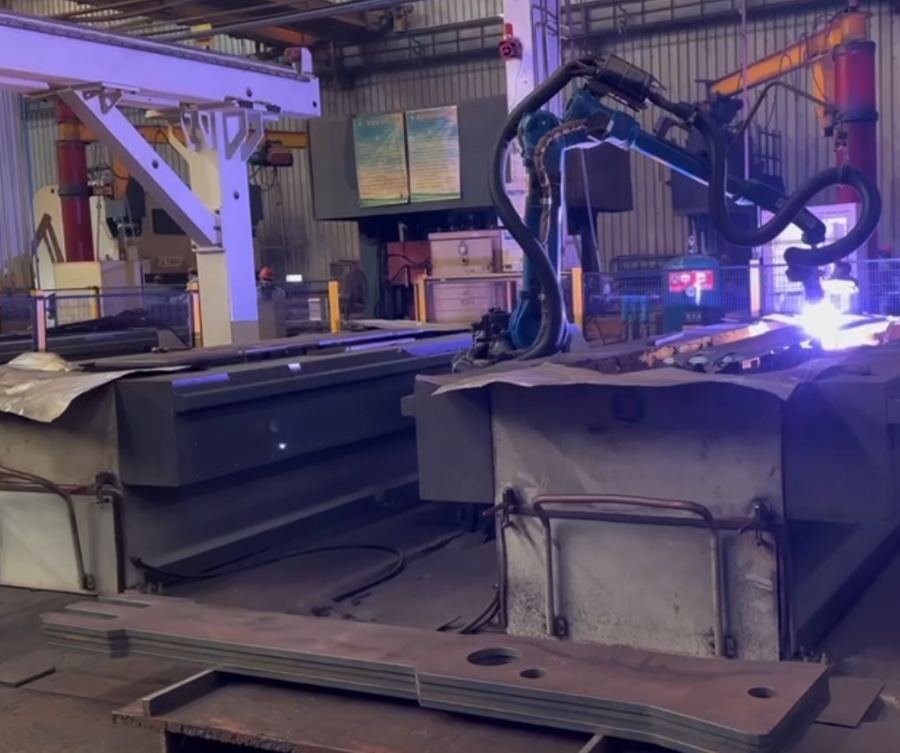 Secondary bevel prep
Extra handling, extra error
Bevels are added later by robot cell or hand torch. A typical robot cell covers about 1.5 × 1.5 m, needs manual teaching, and achieves bevel accuracy worse than ±2 mm.
Two cutting modes.
As a thick plate laser cutting machine, hybrid cutting replaces the flame table for thick work and keeps the speed of a fiber laser for everything thin. You switch modes by changing the ceramic body on the cutting head, without moving the plate or changing the machine.
02 How laser-flame hybrid cutting works
The laser pierces. The flame does the heavy lifting.
In hybrid mode, the laser beam and an oxy-fuel flame work through the same fiber laser cutting head at the same time. Each does the job it is best at.
Automatic ignition and preheat
The controller ignites the flame automatically before the cut and checks fuel, cutting and auxiliary gas pressure. No operator with a striker, no manual preheat timing.
Laser piercing
The focused laser opens the start hole. On 100 mm carbon steel this takes about 8 seconds, without the slag build-up and blowback typical of flame piercing.
Flame expands the kerf and clears slag
The flame widens the kerf and blows molten slag out through the full thickness, so the cut stays stable down to 180 mm pierced, or 200 mm from the plate edge.
Verticality and tilt compensation
Heavy plates are rarely flat. The system measures plate tilt and adjusts the head so the cut face stays square to the plate surface.
Fast laser cutting for thin and medium plate
- Air cutting carbon steel up to 20 mm (BLTF60)
- Oxygen carbon steel laser cutting up to 50 mm
- Stainless steel with air or nitrogen, 4–40 mm in the reference table
- 27–30 m/min on 4 mm carbon steel with air at 20 kW
Hybrid cutting for thick and ultra-thick carbon steel
- Hybrid piercing cutting up to 180 mm
- Edge-start (external lead-in) cutting up to 200 mm
- 100–140 mm/min on 200 mm plate, 250–320 mm/min on 100 mm
- Only 4 kW laser power used in hybrid mode per the reference table
03 Thickness capacity
Where each cutting method stops.
Maximum carbon steel thickness by cutting method, on the two cutting heads available for this system. Use it to check which head covers your thickest regular job.
04 Applications
Made for heavy fabrication.
A heavy plate cutting machine pays back fastest where thick parts and weld bevels make up a large share of the daily cut list.
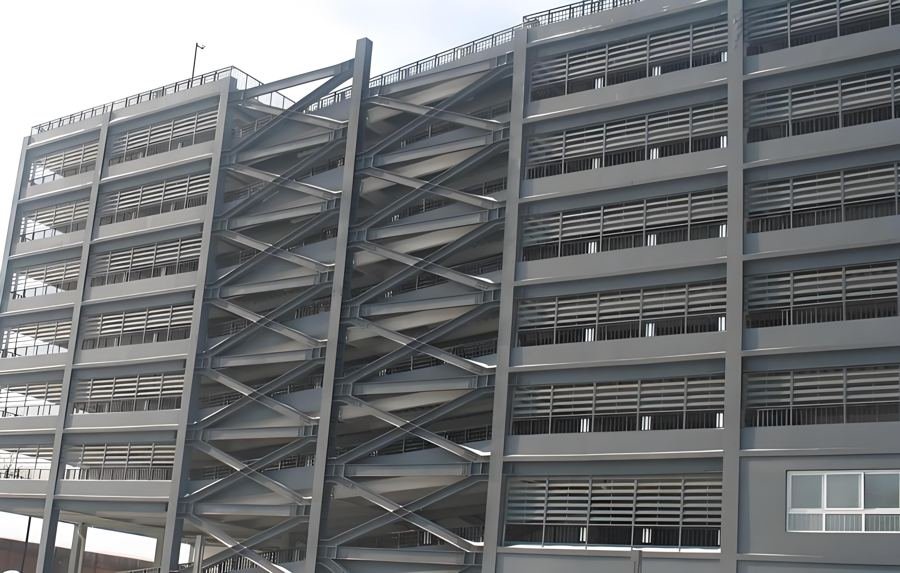
Steel structures
Base plates, gusset plates, column end plates with full-penetration weld bevels.
Typical 20–100 mm
Construction machinery
Boom plates, counterweights, track frames and wear parts in high-strength steel.
Typical 30–120 mm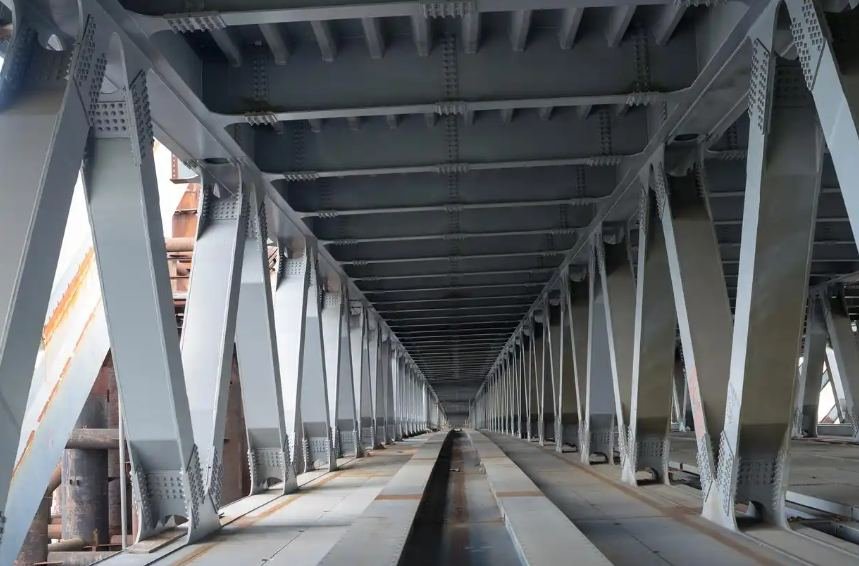
Bridges
Box girder diaphragms, bearing plates and stiffeners with X and K bevels.
Typical 30–80 mm
Marine & offshore
Hull structure, lifting lugs and platform nodes where plate thickness and bevel quality are critical.
Typical 25–150 mm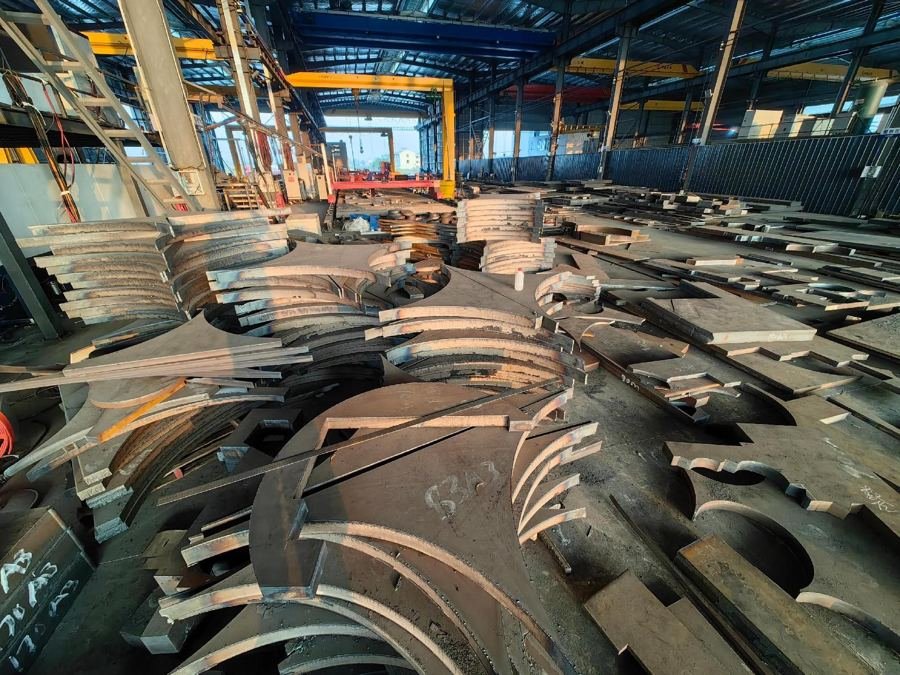
Job shops
Take thin and thick orders on one steel plate cutting machine and quote heavy work you used to turn away.
1–200 mm05 Cutting speed
Faster than flame from 20 to 160 mm.
Measured cutting speeds for laser cutting thick steel plate with the BLTF60 head in hybrid mode, compared with competing hybrid systems and traditional flame cutting.
Cutting speed by plate thickness
Carbon steel, m/min. Source: supplier test data².
Daily cutting-time estimate
Pick a thickness and enter how many metres of cut you run per day.
| Thickness | JTCLASER hybrid | Competing hybrid | Flame cutting | Gain vs flame |
|---|
Piercing 100 mm carbon steel
Piercing is where thick-plate cycles are lost. In hybrid mode the laser handles the pierce alone while the flame expands the hole and removes slag. You get a fast, reliable start with no slag pile-up and no blowback onto the nozzle.
For laser cutting 100mm steel, the reference speed is 250–320 mm/min straight and 150–220 mm/min at 45°. Parts with many holes, such as flanges and base plates, gain the most. Every pierce that took minutes of flame preheat now takes seconds.
06 Real cutting footage
Watch it cut.
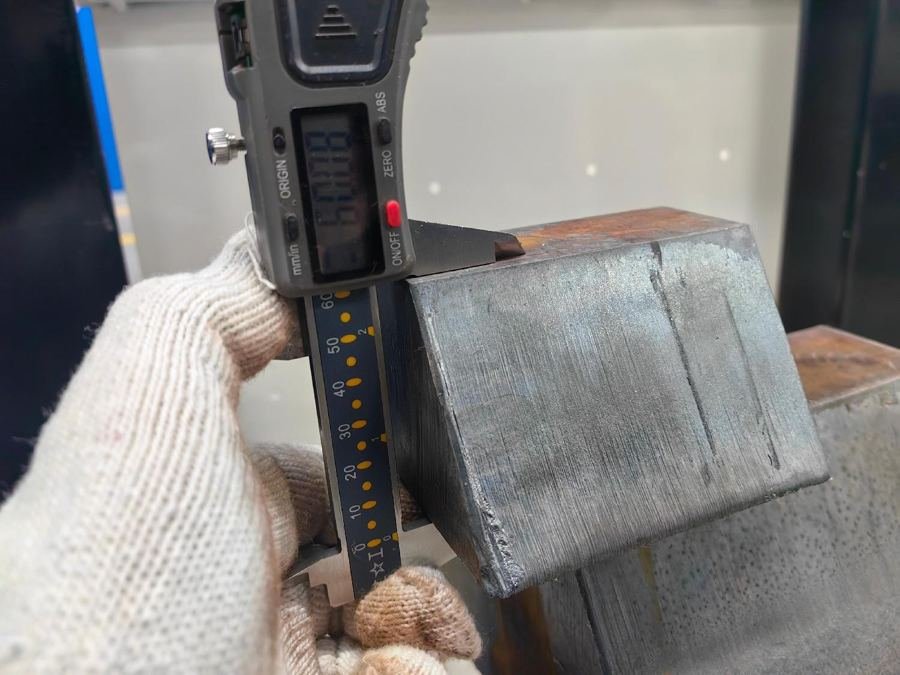
Unedited shop-floor clips from hybrid cutting trials: thick-plate profiles, bevels, and finished parts measured with a caliper.
Demonstration footage shows the process. Material grade, thickness and settings vary by clip; use the parameter reference below for documented values.
07 Laser bevel cutting
Cut the part and the weld prep in one pass.
The rotary bevel axis makes this a laser bevel cutting machine as well. It tilts the head up to ±45° in laser and hybrid mode, so the profile and the weld bevel preparation come off the table together. That removes a separate grinding or robot station.
Single bevel, fixed or variable angle
Bevel with root face (land)
Double bevel, both faces
Double bevel with land on one side
Fixed angles, variable (gradual) angles and special-shape bevels are supported. The reference table lists 30° and 45° speeds for every thickness up to 160 mm in hybrid mode.

08 Process parameters · 20 kW
See the numbers for your next job.
The full process reference from our application lab: speed, nozzle, gas pressure, focus and power for every thickness and bevel angle. Pick a material and thickness to read off the setting, and use the result as a laser cutting speed chart when you plan jobs.
Test setup: FACut controller / BLTF60 head / 20 kW fiber source. Values are process references, not guaranteed production rates; final settings depend on material grade, surface condition and part geometry. Hybrid nozzles are custom parts supplied by us.
09 System configuration
A connected cutting system, from head to controller.
Every machine ships with the dual-mode cutting head, a controller designed for hybrid cutting, and the bevel axis. Scanning modules can be added for remnant cutting and secondary bevelling.

BLTF60 dual-mode cutting head
Up to 20 kW. Switch between laser and hybrid mode by changing the ceramic body. Five protective windows, water cooling and collision protection.
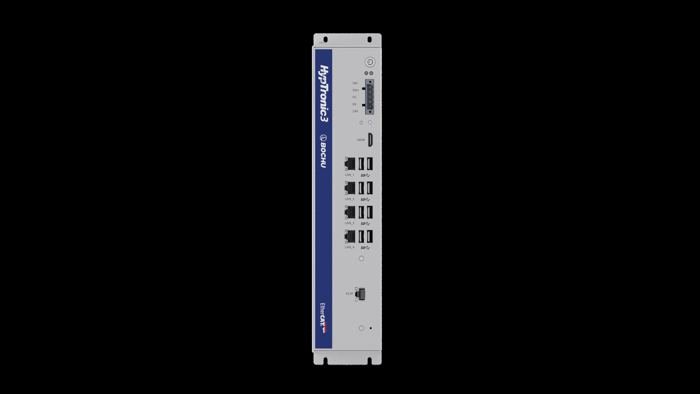
FSCUT9100 controller
Bus-based controller with multi-sensor monitoring, automatic ignition, plate tilt compensation and gas safety interlocks.

Rotary bevel axis
±45° V/Y/X/K bevels with fixed, gradual and special-shape angle control.
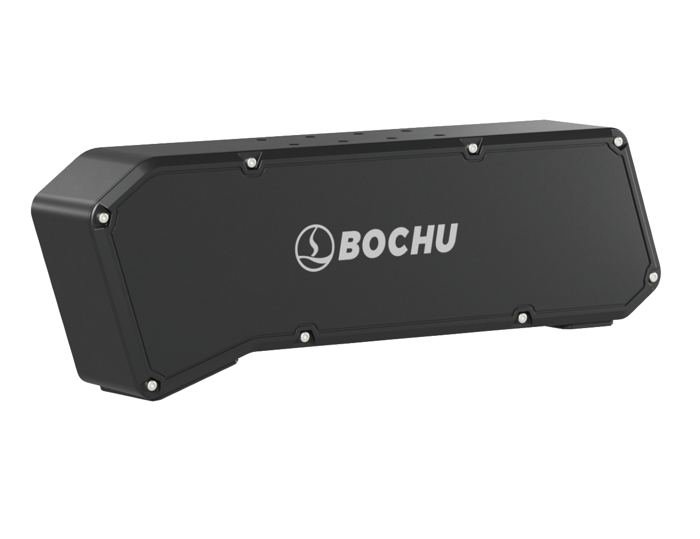
Remnant profiler & BCW400F-E
Scan remnant outlines to nest new parts on offcuts, and scan cut parts for accurate secondary bevelling.
Gas safety monitoring
Fuel gas, cutting gas and auxiliary gas pressures are monitored continuously, with gas leakage detection.
Protective window check
Automatic contamination check on the protective window before cutting thick plate, where a dirty lens costs the most.
Plate tilt compensation
Measures plate inclination and compensates verticality so the cut face stays square on uneven heavy plate.
Collision protection
Head collision protection for tipped parts and warped plates, a common risk on thick-plate tables.
Automatic ignition
Pre-cut ignition is automated in hybrid mode, cutting manual intervention and set-up time per sheet.
One head, any thickness
1–200 mm carbon steel on one head, plus stainless steel in laser mode. You don’t buy or maintain a second cutting technology.
10 How it compares
More than a hybrid nozzle.
Several suppliers now offer laser-flame cutting. Fewer cover bevelling, gas safety and remnant handling in the same system. Here is a feature check against three competing hybrid solutions.
| Category | Feature | JTCLASER | Competitor A | Competitor B | Competitor C |
|---|
Comparison based on the supplier’s market review of competing laser-flame hybrid cutting solutions. Competitor names withheld.
11 Material-saving solutions
Get more parts out of every plate.
At 100 mm, one square metre of plate weighs about 785 kg. Two optional scanning solutions put offcuts back into production and take secondary bevelling off the robot cell.


Remnant reuse
The remnant contour laser profiler scans the outline of a leftover plate. The controller then nests new parts directly onto the real shape.
- Place the remnant on the table in any orientation.
- Scan its contour automatically.
- Nest parts on the scanned outline and cut.
This improves plate utilization and saves the drafting time of measuring offcuts by hand.
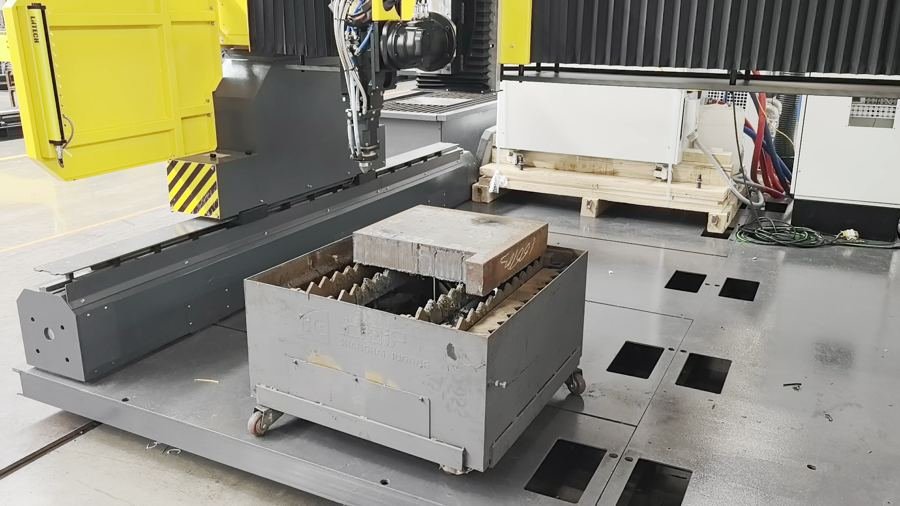
Additional-bevel cutting with BCW400F-E
For parts that are cut first and bevelled later, the BCW400F-E profiler finds them on the table, matches them to the part library and corrects the toolpath.
- Coarse positioning: locate randomly placed parts, match them to the parts database and pre-process the toolpath.
- Fine scanning: scan part contours and compensate for dimensional deviation and surface deformation.
| Item | Traditional robot bevel cell | JTCLASER + BCW400F-E |
|---|---|---|
| Processing area | About 1.5 m × 1.5 m | Min part 100 × 100 mm; any size within scan range, recommended under 3 m × 12 m |
| Positioning | Manual teaching or single-line scan | Cross-line laser positioning up to 18 m/min |
| Positioning accuracy | — | ≤ 0.3 mm |
| Bevel cutting accuracy | > 2 mm | ±1 mm |
| Thickness range | Limited scenarios | Any thickness the head can cut |
12 Technical specifications
Cutting head specifications.
Two head options. Choose BLTF60 for 12–20 kW sources and full thick-plate capability, or BLTF20 for up to 8 kW where hybrid mode carries the heavy work.
| Specification | BLTF20 | BLTF60 |
|---|---|---|
| Laser power | ≤ 8 kW | ≤ 20 kW |
| Cutting modes | Laser and laser-flame hybrid (switch by ceramic body) | |
| Max air cutting, carbon steel | 6 mm | 20 mm |
| Max oxygen cutting (positive focus) | 25 mm | 50 mm |
| Max hybrid piercing cutting | 180 mm | 180 mm |
| Max hybrid edge-start cutting | 200 mm | 200 mm |
| Bevel cutting | ±45°, V / Y / X / K | |
| Fiber interface | QBH, EOC, QD, Q+, ADD | |
| Focusing magnification | M = 2.5 / 3.0 | |
| Focus range | M=2.5: −70 to +50 mm · M=3.0: −100 to +50 mm | |
| Focus speed | 500 mm/s | |
| Repeatability | ±0.01 mm | |
| Laser wavelength | 1030–1090 nm | |
| Max gas pressure | 25 bar | |
| Controller | FSCUT9100 bus system | |
Machine bed size, gantry, table and laser source brand are configured per project and confirmed in the quotation.
13 From inquiry to production
How a project runs.
For a thick-plate line, buyers want proof on their own parts before they sign. Every project follows the same five steps.
Share your parts
Send drawings (DXF/DWG/STEP), material grade, thickness range and monthly volume.
Sample cut test
We cut your part on a hybrid machine and send photos, video and measurements of the cut face and bevel.
Configuration & quote
Bed size, laser power, head, bevel axis and scanning options matched to your part mix and floor space.
Acceptance
Factory acceptance on agreed test parts before shipment, with process parameters for your materials.
Install & train
Installation, commissioning and operator training for laser mode, hybrid mode and bevel programming.
14 FAQ
Questions buyers ask before they specify.
Don’t see yours? Ask in the form below and an application engineer will answer.
What is laser-flame hybrid cutting?
It is a thermal cutting process where a fiber laser and an oxy-fuel flame work through the same cutting head at the same time. The laser pierces and starts the kerf; the flame adds heat, widens the kerf and blows slag out. This lets a laser machine cut carbon steel far beyond the normal thickness limit of pure laser cutting.
Can it really cut 200 mm carbon steel?
Yes, with an edge start (external lead-in). The reference speed at 200 mm is 100–140 mm/min. For cuts that start inside the plate, the hybrid piercing limit is 180 mm. Actual results depend on steel grade, plate condition and part geometry, so we recommend a sample cut on your material.
How is this different from a CNC flame cutting machine or oxy fuel cutting?
A flame cutter needs long preheat for every pierce and is slow on plate under about 50 mm (around 0.4 m/min at 20 mm). The hybrid machine pierces 100 mm in about 8 seconds with the laser, cuts 20 mm at 1.4 m/min, and also runs as a normal fiber laser for thin sheet and stainless steel.
How do I switch between laser mode and hybrid mode?
By changing the ceramic body on the cutting head and selecting the mode in the controller. The plate stays on the table and no second machine is needed. Ignition in hybrid mode is automatic.
Does hybrid mode work on stainless steel or aluminum?
No. Hybrid mode relies on oxy-fuel combustion and is for carbon and low-alloy steel. Stainless steel is cut in laser mode with air or nitrogen; the 20 kW reference table covers stainless steel from 4 to 40 mm.
What laser power do I need for thick plate laser cutting?
The BLTF60 head takes up to 20 kW and covers air cutting to 20 mm, oxygen cutting to 50 mm and hybrid cutting to 200 mm. In hybrid mode the reference process uses only 4 kW of laser power, so most of the thick-plate work is done by the flame. If your work is mostly heavy plate, a lower-power source with the BLTF20 head can be enough.
Can it cut weld bevels on thick plate?
Yes. The rotary axis cuts V, Y, X and K bevels up to ±45° in both laser and hybrid mode, including variable-angle bevels. Reference speeds for 30° and 45° are published for every thickness up to 160 mm.
What gases does hybrid cutting use?
Oxygen as cutting gas plus a fuel gas for the flame, monitored by the controller together with the auxiliary gas. Fuel gas type and supply are confirmed during project planning to match local regulations and your existing gas system.
How do I evaluate it for my parts?
Send a drawing, material grade and thickness through the form below. We run a sample cut and return photos, video and measurements, then propose a configuration and quotation.
15 Request a sample cut
Your next thick-plate job starts with one test part.
Tell us about your material and parts. An application engineer will reply with a sample-cut plan and a recommended configuration.
- Tell us your material grade and thickness range.
- Attach or describe a typical part and its bevel requirement.
- Receive the sample-cut result and a configuration proposal.