
Many buyers expect one smart robot to weld every part. I see this mistake often. The result is wasted time, poor welds, and wrong equipment choices.
A no-teaching, no-programming welding robot workstation works best when the weld is visible, the torch can reach it, the fit-up is controlled, and the joint shape is clear. It reduces manual teaching, but it does not remove the need for good parts, good fixtures, and a suitable welding process.
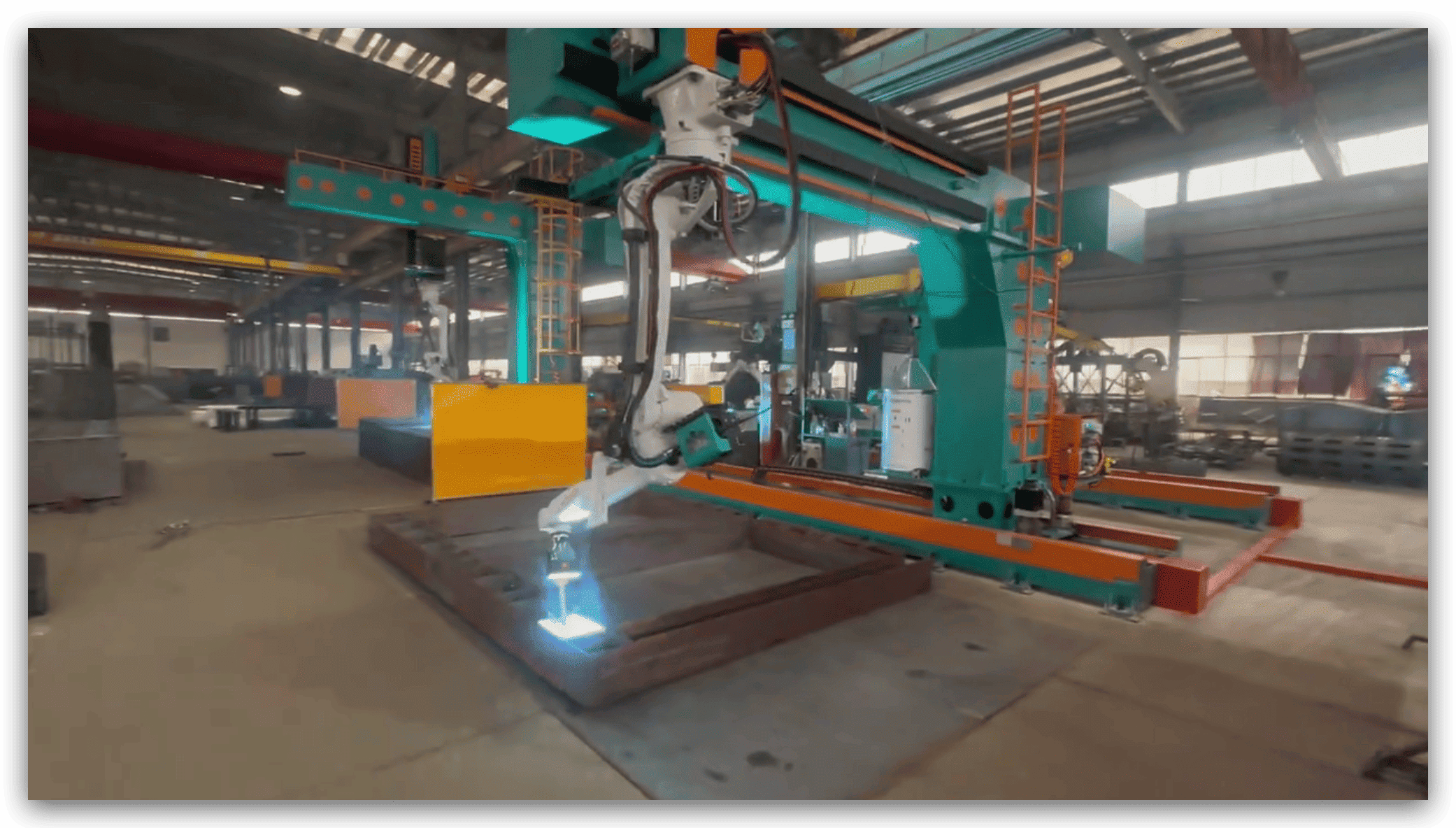
I write this guide because I have seen many customers ask the same question before buying a robotic welding system. They want higher output, stable weld quality, and less dependence on skilled welders. I understand that pressure very well. A robot welding machine can help a factory move forward, but only when the workpiece matches the real ability of the system. If the part has heavy blocking, extreme gaps, mirror reflection, or no stable weld feature, even the best industrial welding robot will struggle. This article explains the real boundary clearly, so you can judge your own products before you invest.
Why Is Intelligent Welding Not Universal Welding, And How Do Workpiece Structure, Fit-Up Accuracy, And Welding Space Decide The Result?
Some factories buy automation with high hope. I have also met buyers who think vision can solve every issue. That belief creates risk before the first weld starts.
A smart welding workstation can generate paths by vision, laser scanning, and robot motion control. It still needs an open weld area, reachable torch angle, stable part position, and acceptable joint condition. If the structure blocks the sensor or torch, the system cannot weld reliably.
What I Mean By “No-Teaching” And “No-Programming”
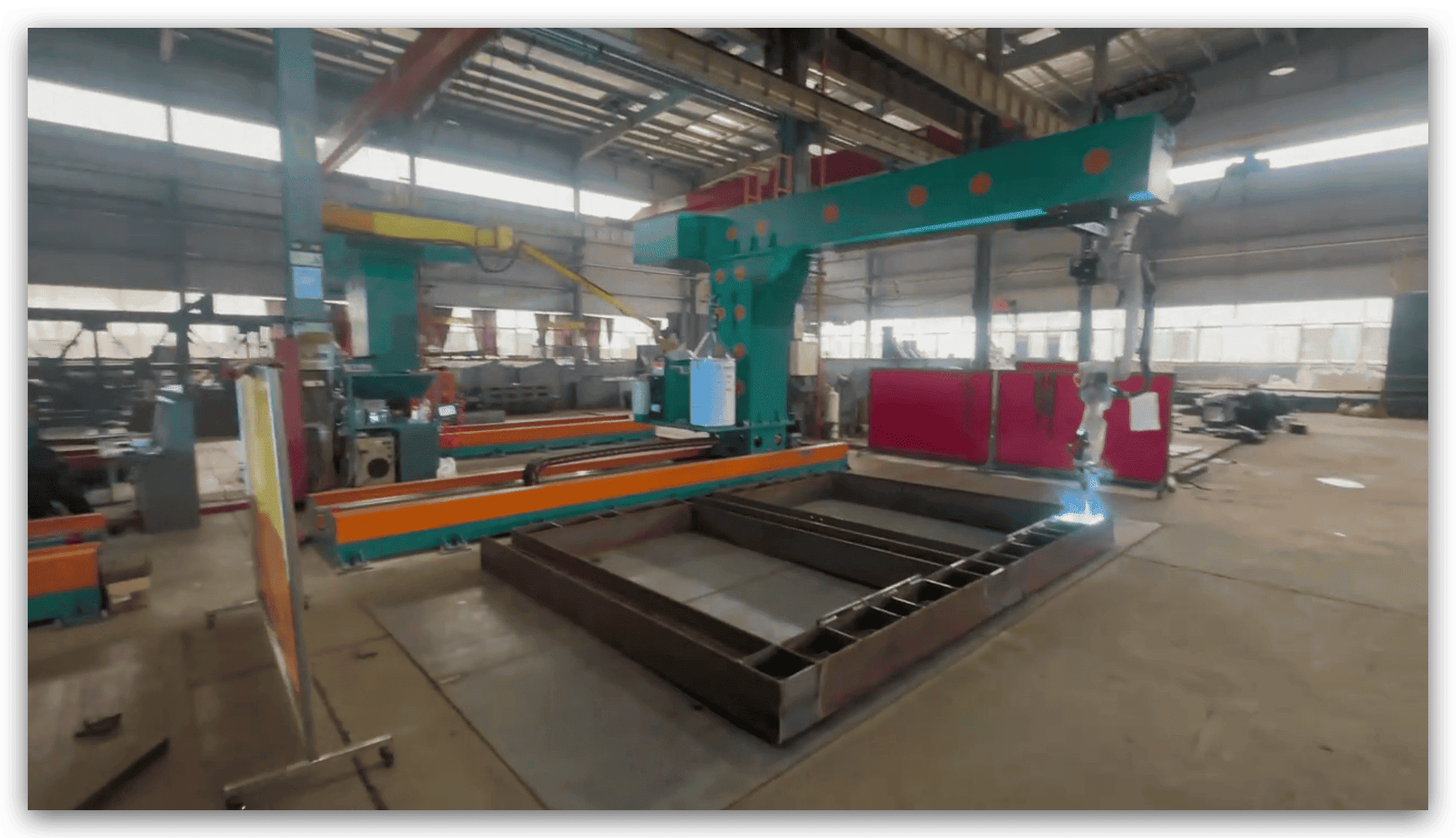
I use the term no-teaching, no-programming to describe a welding system that reduces manual point teaching and repeated robot path editing. The system uses a camera, laser seam finding, weld scanning, feature recognition, and automatic path generation. The robot then follows the generated path with a set welding process.
This does not mean the robot understands every possible metal part like a human welder. It means the system can recognize defined weld types under defined conditions. A human welder may tilt the body, change the hand position, and judge the puddle in a very narrow space. A robotic welder needs enough room for the torch, the cable, the sensor, and the robot wrist. The system also needs a safe motion path.
I normally explain the boundary with three simple questions.
| Question I Ask First | Why I Ask It | What A Good Answer Looks Like |
|---|---|---|
| Can the sensor see the weld? | Vision and laser scanning need a clear line of sight. | The weld is not hidden by ribs, covers, or inner walls. |
| Can the torch reach the weld? | The robot must keep a correct torch angle. | The torch can enter the area without collision. |
| Is the fit-up controlled? | Large gaps and wrong angles cause weld defects. | The gap, mismatch, and angle stay within agreed limits. |
Why Workpiece Structure Comes First
I always check the workpiece structure before I talk about robot brand. Some customers first ask whether they should buy a KUKA, SIASUN, ABB, Fanuc, or other robot. I understand the question, but the structure matters more at the start. A strong robot cannot weld a joint that the torch cannot reach. A high-level vision system cannot scan a seam that is hidden.
No-teaching workstations are usually suitable for steel structures with open top space or open side space. I often see good results on H-beam stiffeners, bracket plates, purlins, bridge plate units, cross plates, power tower angle parts, small ship block parts, transformer tanks, pipe base stiffeners, T-bars, hatch covers, and intermittent weld frames for machinery.
These parts are not always high-volume parts. Many of them are high-mix, low-volume parts. That is why no-programming automation has value. The parts change often, but the weld logic is still clear. The seam is usually a fillet weld, butt weld, lap joint, pipe-to-plate joint, or groove weld. The robot can scan the feature and build a path.
Why Fit-Up Accuracy Still Matters
I have seen a customer place a part with the idea that “the robot can find it anyway.” The robot did find the weld, but the gap was too large. The weld looked unstable. The defect was not a robot problem. It was a preparation problem.
In many open welding areas, the total positioning and assembly error may be handled within about 30 mm, when the robot path has no collision risk and the seam remains inside the scanning area. The assembly angle deviation may be handled within about 8 degrees. The weld length variation may be handled within about 30 mm. These figures still depend on the real fixture, part size, seam type, and sensor setup.
The laser seam finder also has a working field of view. A common useful width may be around 100 mm. This means the weld does not need to be in the exact same place every time, but it must still be inside the searchable area. I often tell customers one simple rule. The part can have normal variation, but the part cannot be placed randomly.
Why Welding Space Is Not The Same As Robot Reach
Robot reach is only a number on a catalog. Real welding space is different. The torch needs a work angle and travel angle. The wire, nozzle, sensor, anti-collision device, and cable package also take space. The robot wrist needs space to rotate. The system also needs a safe approach and exit path.
A weld may sit inside the robot working radius and still be impossible to weld. This happens when a rib blocks the torch angle, when a side wall blocks the camera, or when a narrow box structure traps the torch. A robot simulation can often reveal this problem before production. I prefer to check real samples, 3D models, and weld position photos before I confirm a solution.
Where A Cobot Welder Fits
A cobot welder can be useful for smaller workshops, light parts, and flexible production. A cobot welding system often has easier operation and lower entry cost. It can help a team that is moving from manual welding to basic automation. But I still use the same rule. The seam must be visible. The torch must reach it. The fit-up must support the weld quality.
A larger automated welding machine with an industrial robot is usually better for heavy structures, long welds, high duty cycle, positioners, gantries, or track systems. The choice is not only about robot payload. It is about part size, weld length, cycle time, joint access, and production plan.
How Should I Judge Materials, Welds, Gaps, And Joint Types Before Choosing Robot Welding?
Many welding projects fail before the robot arrives. I often find the real cause in material surface, joint gap, weld length, or wrong expectations about the process.
I should judge material type, surface reflection, weld method, joint form, gap size, groove shape, weld length, and part access before I choose robot welding. A robot welder works best when the material is weldable, the seam feature is clear, and the joint condition supports stable arc welding.
What Welding Processes Are Usually Suitable
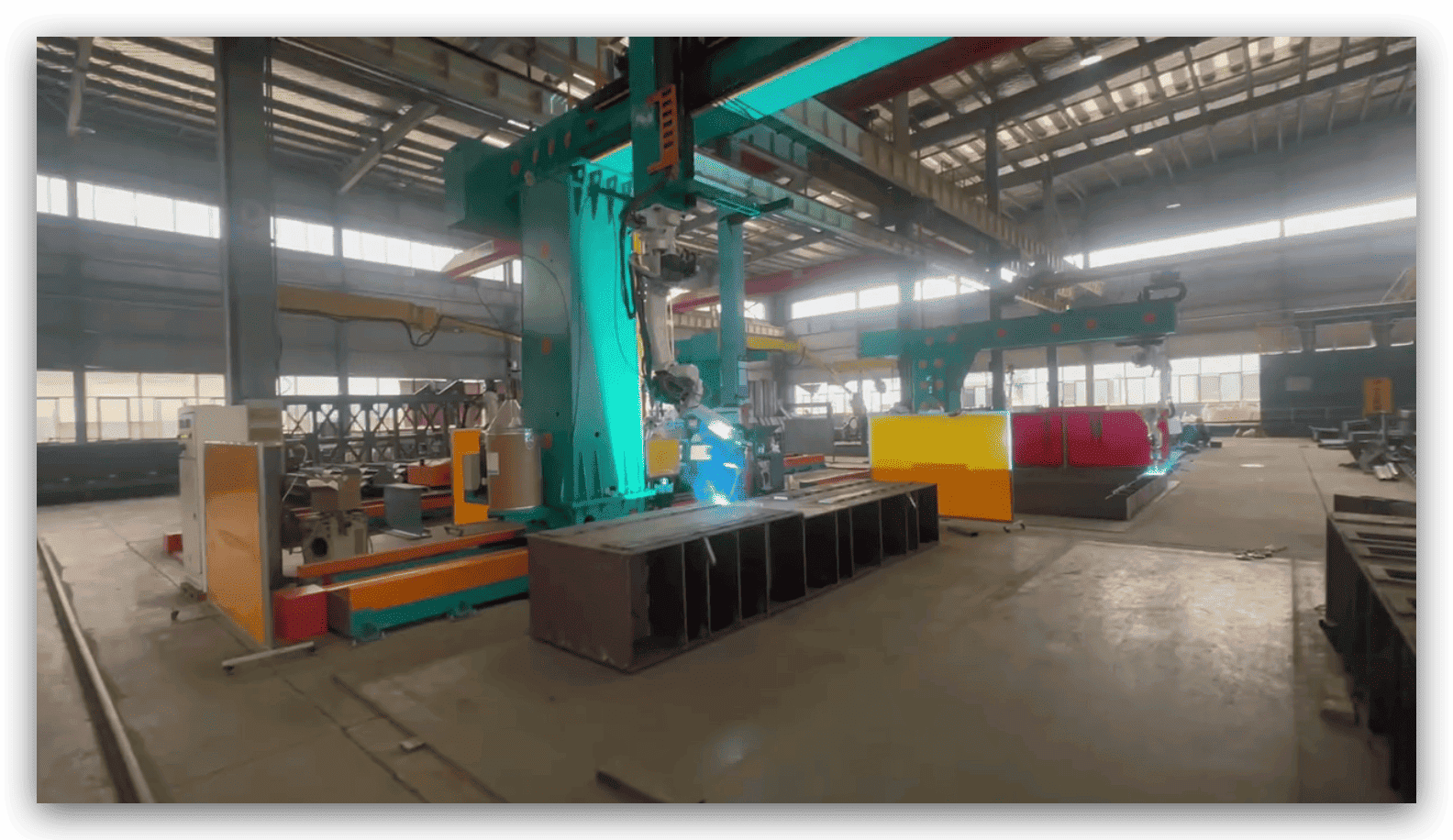
Most no-teaching, no-programming welding workstations are built around gas metal arc welding. This includes common MIG or MAG welding for carbon steel, low-alloy steel, and non-mirror stainless steel. The system can support positions such as flat welding, horizontal fillet welding, horizontal welding, vertical up welding, and vertical down welding, when the process is set correctly.
Common shielding gases include CO₂, Ar + CO₂ mixed gas, and Ar + O₂ mixed gas. Common wire sizes include 1.0 mm, 1.2 mm, and 1.6 mm solid wire. Some systems also use 1.2 mm flux-cored wire. I choose the wire and gas based on plate thickness, weld size, speed target, penetration need, and spatter control.
The workstation can include software packages for weaving welds, intermittent welds, continuous welds, corner welds, multi-layer and multi-pass welds, restart after break point, crater filling, welding through access holes, and groove adaptive welding. These functions help the robot adjust the path, torch posture, and some process behavior. They do not remove the need for a correct WPS.
What Materials Need Extra Care
I treat the surface condition as a key item. A vision-guided system needs a stable image or laser profile. Strong reflection can break that stability. Mirror-polished stainless steel is difficult. Aluminum also has reflection challenges. Aluminum may also be unsuitable for some arc tracking methods. Non-mirror stainless steel can be possible, but I still prefer testing before formal production.
Surface contamination also matters. Oil, heavy rust, oxide scale, zinc coating, paint, water, and cutting slag can affect recognition and welding quality. A robot does not like surprises. A human welder may clean a point during welding. A robot follows the program and process window.
| Material Or Surface | Typical Risk | My Normal Advice |
|---|---|---|
| Carbon steel | Rust, scale, cutting variation | Clean the seam area and control fit-up. |
| Low-alloy steel | Process and heat input control | Confirm wire, gas, and weld procedure. |
| Non-mirror stainless steel | Reflection and heat discoloration | Test vision recognition and shielding. |
| Mirror stainless steel | Strong reflection | Avoid direct use or test special treatment. |
| Aluminum | Reflection and tracking limits | Evaluate with samples before proposal. |
| Galvanized steel | Fume, porosity, unstable arc | Confirm process, ventilation, and cleaning. |
What Gap Size Tells Me
A robot can find a gap, but it cannot always fill a bad gap. This is a very important point. For fillet welds, when the leg size Z is 8 mm or larger, a maximum assembly gap of about 3 mm may be acceptable in many cases. When the leg size is between 5 mm and 8 mm, a maximum gap of about 2 mm may be more suitable. These numbers are not a universal rule. They are a practical starting point for evaluation.
For square butt welds without groove, the gap may often sit around 3 mm to 5 mm, and the wire may point toward the center of the gap. If the gap is too large, the weld can become underfilled, undercut, collapsed, or badly shaped. The part may also distort more.
I often explain this to customers in plain words. Smart welding cannot replace good cutting, good assembly, and good fixture control. The robot can help production become stable. It cannot turn poor part preparation into perfect welding every time.
What Groove Welding Requires
Groove welds usually need more process control. Multi-layer and multi-pass welding can be done, but the groove size must be stable. I prefer groove dimension consistency within about ±1 mm when possible. I also like the groove angle deviation to stay within a narrow range, such as 0 to 5 degrees, based on the project condition.
If the groove is too narrow, the torch may not access the root. If the groove is too deep, the system may need more passes and better interpass control. If tack welds sit too close to the arc start point, the robot may have a poor start. If the groove has slag, spatter, or cutting defects, the next pass may not form well.
For box columns and similar structures, the requirements can be stricter. Plate thickness, backing gap, mismatch, root opening, tack weld position, and interpass cleaning can all affect success. A common project may require backing gap within 2 mm, mismatch within 2 mm, root gap in a defined range, no tack weld inside the groove path, and proper cleaning between layers.
What Joint Types Are Usually Possible
A no-programming workstation can often handle many common joints. These include plate-to-plate T joints, lap joints, corner joints, pipe-to-plate fillet joints, pipe-to-pipe butt joints, pipe-to-plate butt joints, and plate butt joints with groove features. The system still needs clear geometric features.
For a single weld, the minimum weld length is often not too short. A value like 30 mm is a common reference. Very short welds are harder to identify and less efficient for robot production. If a joint has been ground to a mirror finish, vision recognition may also suffer.
| Joint Type | Typical Feasibility | Key Check |
|---|---|---|
| T joint | Usually good | Height, plate width, clear corner feature |
| Lap joint | Usually good | Edge visibility and gap control |
| Corner joint | Usually good | Open space and torch angle |
| Pipe-to-plate fillet | Often possible | Pipe radius, pipe height, base plate size |
| Pipe butt joint | Possible with right setup | Rotation, alignment, and seam tracking |
| Groove butt joint | Possible but more demanding | Groove consistency and pass planning |
| Deep inner joint | Often difficult | Sensor view and torch access |
What I Ask Customers To Send First
Before I recommend a robot welder for sale, I ask for clear technical information. I need product photos, 3D models, or 2D drawings. I need weld position marks. I need material, thickness, weld size, weld method, and inspection needs. I need the assembly gap and allowed tolerance. I also need to know the current manual welding method.
I also ask whether the part needs multi-pass welding. I ask for workpiece size, weight, and placement direction. I ask about workshop space, target cycle time, and yearly production volume. These details decide whether a single workstation, ground rail system, cantilever system, gantry system, eight-axis workstation, or nine-axis workstation makes sense.
Some buyers search online for terms like leister robot welder, lincoln robotic welder, cobot welder, or industrial welding robot. I understand that search process. Still, I believe the best first step is not brand comparison. The best first step is workpiece evaluation.
What Does Mature Intelligent Welding Really Mean, And How Do I Match The Right Workpiece With The Right Equipment And Process?
Many people think mature automation means the robot solves every problem. I see it in a different way. Mature automation starts with honest limits.
A mature intelligent welding project matches the right part, the right robot, the right sensor, the right welding power source, the right fixture, and the right process. It does not force one robotic welding system to handle every part in the factory.
Why I Start With The Workpiece, Not The Robot
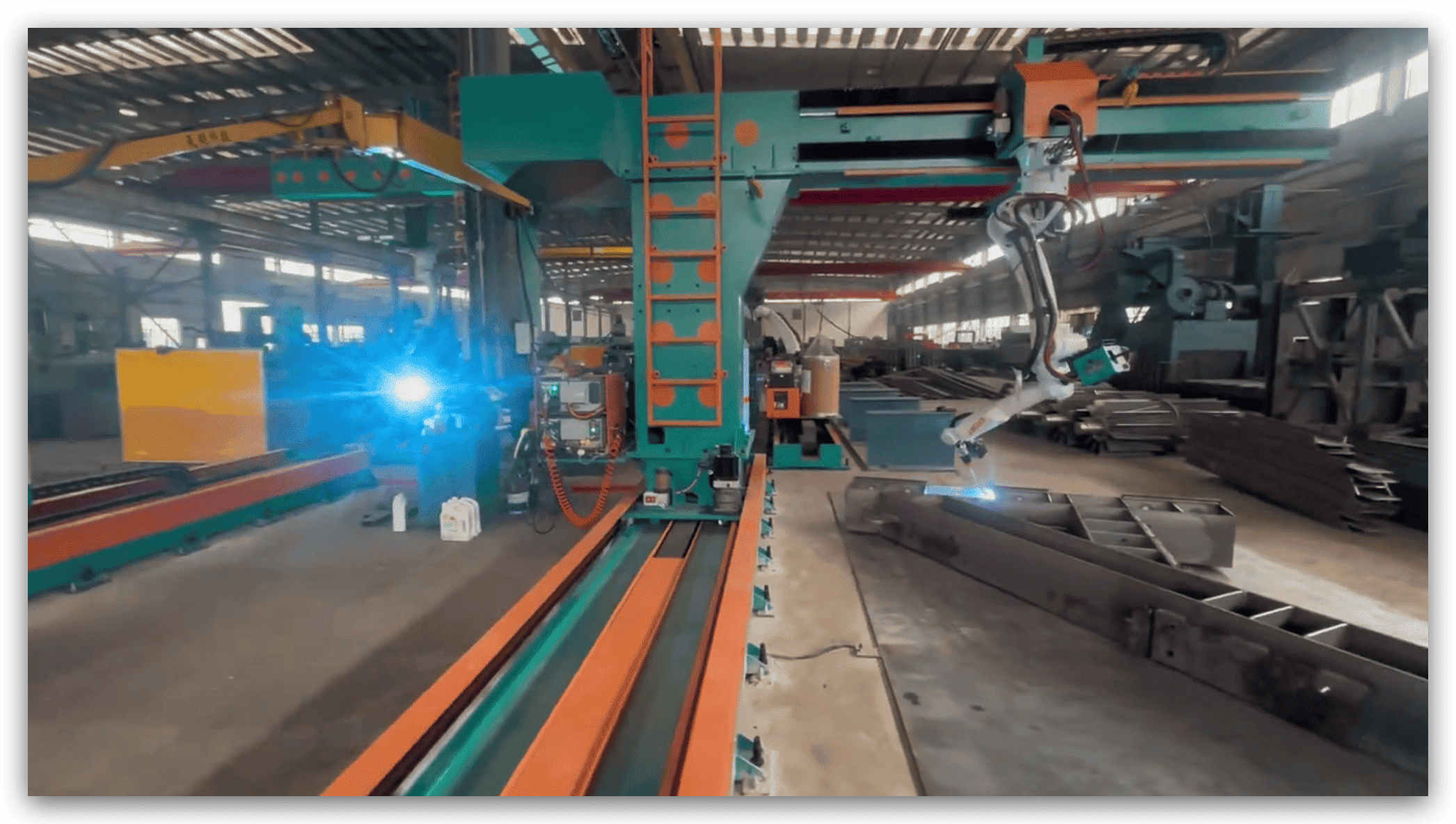
I have worked with customers who wanted to automate all products at once. I usually suggest a smaller first step. I ask them to choose parts with clear welds, open access, repeatable assembly, and meaningful labor cost. This first project gives the team confidence. It also gives the factory a process model that can be copied later.
A mature robotic welding system is not only a robot arm. It is a production cell. It includes a welding power source, wire feeder, torch, cleaner, sensor, safety system, fixture, positioner, robot controller, software, and service plan. If one part is weak, the whole system becomes unstable.
For example, an expensive sensor cannot fix a loose fixture. A strong robot cannot fix a bad joint design. A famous power source cannot fix a blocked torch path. A good engineer must look at the whole cell.
How I Classify Applications
I usually divide applications into three groups. This helps customers make a practical decision.
| Application Group | Typical Features | My View |
|---|---|---|
| Good fit | Open welds, clear features, controlled gaps, stable material | I recommend automation evaluation. |
| Possible with changes | Some blocking, moderate variation, fixture issues, process questions | I recommend sample testing and design changes. |
| Poor fit | Hidden welds, mirror surface, huge gaps, deep narrow cavity, random parts | I do not recommend direct automation. |
This table prevents a common problem. Some factories try to automate the hardest part first. That can make the project slow and expensive. I prefer to automate the most suitable parts first. Then I extend the scope step by step.
What Equipment Configuration May Be Used
A simple workstation can use one robot and one fixed table. This can be enough for small and medium steel parts. A station with a positioner can rotate the workpiece and keep better welding position. A ground rail can extend robot reach for long beams or large structures. A gantry can serve wide workpieces. A cantilever system can cover long weld areas with better access. An eight-axis or nine-axis system can combine robot motion with external axes.
A cobot welding system may fit a small workshop that needs easy operation and lower cost. A heavier industrial welding robot may fit steel structure, bridge part, tank, truck frame, or heavy machinery production. An automated welding machine can also include MIG, MAG, TIG, or laser welding, based on material and quality needs.
In my own project discussions, I do not sell one layout to every buyer. I match the layout to the part. I check weld length, weld position, weight, loading method, crane access, safety space, and operator flow. A beautiful layout drawing means little if the operator cannot load the part easily.
How Sensors And Software Help
Vision and laser scanning reduce teaching work. The system can locate the seam, identify weld features, and generate a robot path. Arc tracking can help correct real-time deviation in some welds. Multi-pass software can plan layers and passes. Weaving control can help fill larger welds. Breakpoint restart can help after wire change or production stop.
These functions are valuable. I use them often. But I do not treat them as magic. The camera must see the feature. The laser must scan the profile. The robot must move without collision. The welding arc must remain stable. The fixture must hold the part. The operator must follow a correct workflow.
This is why no-programming does not mean no-process. The process still needs current, voltage, wire feed speed, travel speed, torch angle, stick-out, gas flow, preheat if needed, interpass cleaning if needed, and inspection standards.
What Situations I Usually Reject Or Recheck
I usually recheck or reject direct no-teaching welding in several cases. If the seam or sensor path is blocked, the system has no reliable input. If the torch cannot reach the weld, the robot cannot form the weld. If the surface is mirror reflective, the sensor may fail. If the gap is too large or mismatch is severe, the weld quality may fail. If the weld is too short or the feature is unclear, the system may not identify it well.
I also recheck deep inner cavities, narrow box sections, heavily covered welds, and parts with no stable reference. If every part is different and no clear rule exists, automation becomes difficult. If the customer expects the system to solve all weld scars, distortion, and extreme assembly errors, I slow the project down and return to the real conditions.
I have learned that it is better to say “not suitable now” than to sell a system that disappoints the buyer later.
How I Build A Practical Evaluation Flow
I like to use a simple evaluation flow before quotation.
- I collect drawings, photos, videos, and weld requirements.
- I mark each weld as easy, medium, or difficult.
- I check material, thickness, surface, and joint type.
- I check gap, mismatch, angle, and fixture concept.
- I check robot reach, torch angle, and sensor view.
- I check whether a positioner, rail, gantry, or extra axis is needed.
- I run simulation if the part is complex.
- I suggest sample welding when risk exists.
- I define the process window and acceptance standard.
- I confirm training, installation, and after-sales support.
This flow protects both sides. It helps the customer understand the project. It also helps me design the right workstation. A good project does not depend on a single promise. It depends on clear data.
How I Think About ROI
I never judge return on investment only by robot price. I look at labor saving, weld quality stability, rework reduction, output increase, skill shortage, and delivery pressure. I also look at part loading time, cleaning time, fixture cost, gas and wire use, and maintenance.
A robot may weld faster than a human during arc time. But the real cycle also includes loading, clamping, scanning, moving, welding, unloading, and inspection. If the fixture is slow, the total cycle suffers. If the parts need too much manual grinding before welding, automation value drops.
A good ROI often appears when welds are repeated in shape, even if the product models change. This is why steel structures, tanks, pipe supports, bridge panels, and machinery frames can be strong candidates. The work is not always identical, but the weld rules are often repeatable.
How I Compare Brands And Keywords In A Real Buying Decision
I know many buyers compare a lincoln robotic welder, a local robot welding machine, a cobot welder, or a complete robotic welding system from different suppliers. I also know that some search terms, like leister robot welder, may come from other welding fields or brand habits. The search words are useful, but the buying decision must return to the actual weld.
I would compare suppliers by application experience, sample testing ability, software fit, sensor quality, welding process knowledge, fixture design, installation support, spare parts, and training. I would also check whether the supplier explains the limits clearly. A supplier who says “everything is possible” may create more risk than a supplier who asks hard questions.
I believe a professional manufacturer should help the buyer avoid wrong use. That is part of technical responsibility.
Conclusion
I trust intelligent welding when the weld is visible, reachable, and controlled. I match the part, process, fixture, sensor, and robot before I promise automation.