
When 3D printing goes into lampshade creative design (I)
In recent years, with the continuous optimization and development of computer graphics and manufacturing of special materials, 3D printing has gone from the past fantasy into reality. Now, 3D printing has been gradually introduced into various fields of production and manufacturing.
With the flourishing development of cultural and creative industries, the product design which merely satisfies function has been abandoned by the times. The function-oriented product design has been playing an important role in the design stage for a long time.
At the same time, also exposed more monotonous and boring, hidden design attributes and characteristics. Product function, product appearance, product concept, product structure, and other factors are interdependent, interrelated, and inseparable.
Luminaire design
In the lighting design industry, 3D printing has an important application. Lighting design is an important field in the manufacturing industry, which has both artistic and practical responsibilities. At present, all kinds of lighting manufacturers the same technology, the core of competition are mainly creative.
3D printing is a creative content in the teaching of lighting design, which shortens the time for lighting designers to transform the design idea and the concrete figure into the concrete product, and effectively improves the production efficiency of manufacturing enterprises. Therefore, now 3D printing in the manufacturing industry has an important application, its development prospect is broader.
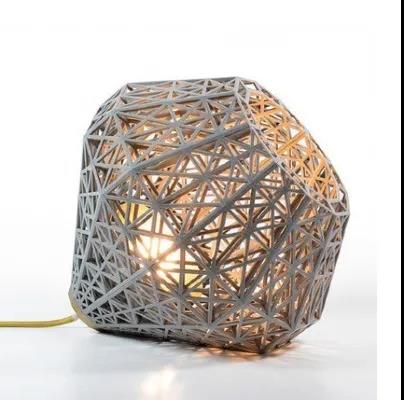
1.The bottleneck of lamp design teaching
Lamps and lanterns have thousands of years of history in China. From ancient times to the present, it has a profound cultural heritage, which is currently engaged in lighting design personnel to inspire. At present, domestic lighting design in the industrial field and the general education industry.
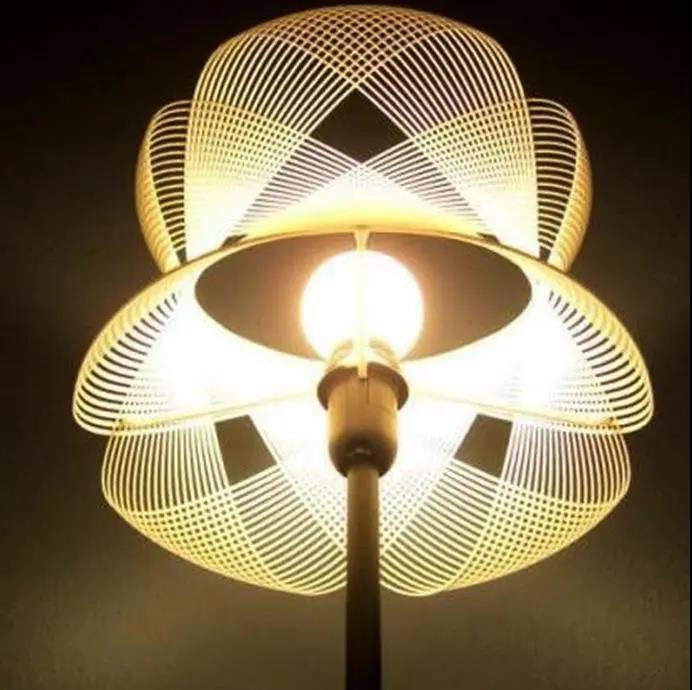
In the field of education, teachers usually teach the concept of the lamp design, then students freely design the lamp, and finally make the design into a finished product. Previous lamp design, if not the final product, it is difficult to understand the specific design concept of lamps.
This takes quite a long time from design, drawing to manufacturing. At present, the design of traditional lamps and lanterns can not adapt to the development of modern science and technology, and the single lamps and lanterns can not meet the needs of modern people. The traditional design mode of lamps and lanterns can not provide the teaching environment and basis that people need.
The former design form can improve the student’s imagination and thinking ability in design, and can also improve the lighting designer’s entry standard. The application of 3D printing in the teaching of lamps and lanterns can improve its technical level, open up students’ imagination space and enhance students thinking ability.
2.Advantages of 3D printing in teaching lighting design
3D printing relies on 3D manufacturing software, which can be directly connected to a computer to produce 3D graphics. 3D printing can be modified as an object is manufactured to make the final object more interactive.
In a narrow sense, 3D printing increases the efficiency of the manufacturing industry. But from an artistic point of view, 3D printing breaks through the traditional way of drawing. By integrating the computer with the integrated system, the 3D images in the computer can be printed directly without the need to add extra abrasives to make them, this reduces the cost of production for enterprises.
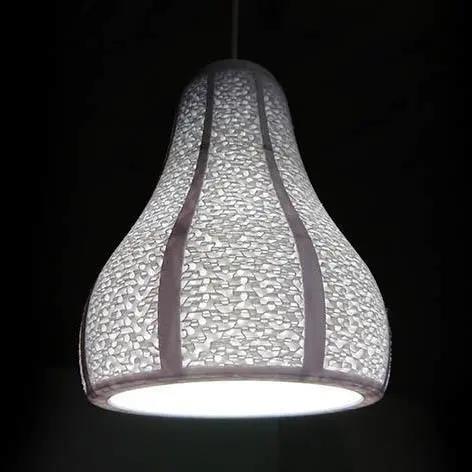
3D printing is a major change in industrial production because it is completely automated by computers and manufacturing systems without the need for manual manufacturing. 3D printing is a radical idea that separates the product from the production line, from the idea to the molding, in just a few simple steps.
For example, a designer could create a three-dimensional lampshade on a computer that could be connected directly to a printer. Now in the teaching of lighting design, schools have gradually introduced three-dimensional software to assist teaching, which makes teaching more flexible.
3.Application of teaching methods in lamp design
The introduction of 3D printing into the teaching of lighting design is an innovation in teaching. 3D printing is a new concept in the field of design and manufacture. 3D printing can increase student’s interest in design after class.
Teachers can use student’s interests to complete the required teaching content, thus creating the overall atmosphere of the classroom. The introduction of 3D printing in teaching breaks the previous passive form of education for students and makes students explore this new technology actively, which can be used by teachers to carry out classroom teaching effectively.
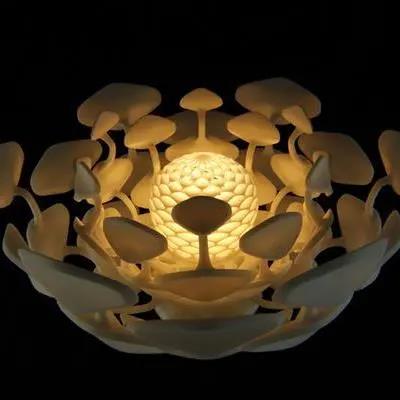
For example, teachers can add appropriate experimental links in the classroom, on-site production of lamps. The teacher can evaluate the student’s design based on the finished product. Compared to the previous single drawing design, 3D printing for students to increase the practice opportunities, students can design in their spare time, using 3D printing to produce it, enhance the ability of students in lamp design.
4.The significance of 3D printing to instructional design
Due to space constraints, 3D printing is not widely used in the classroom for current lighting design, but it is of long-term significance. Teachers can use 3D printing to improve student’s basic knowledge of design.
Lighting design is a comprehensive subject, which not only requires students to have certain theoretical knowledge but also requires students to have certain artistic qualities.
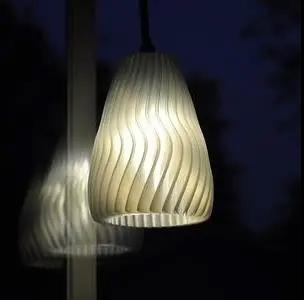
The application of 3D printing can help students improve the two aspects of literacy and ability, increase the opportunity for students to practice, improve the ability of students to practice. 3D printing has effectively promoted student’s commercialization of lamp design from creativity to finished products, can make the student’s design work conforms to the modern enterprise as well as the social request.
Therefore, 3D printing effectively promotes the accumulation of student’s practical experience in school. Domestic 3D printing technology is in the initial stage, but its application in various fields in China is very good. In education, 3D printing has been added to design textbooks.
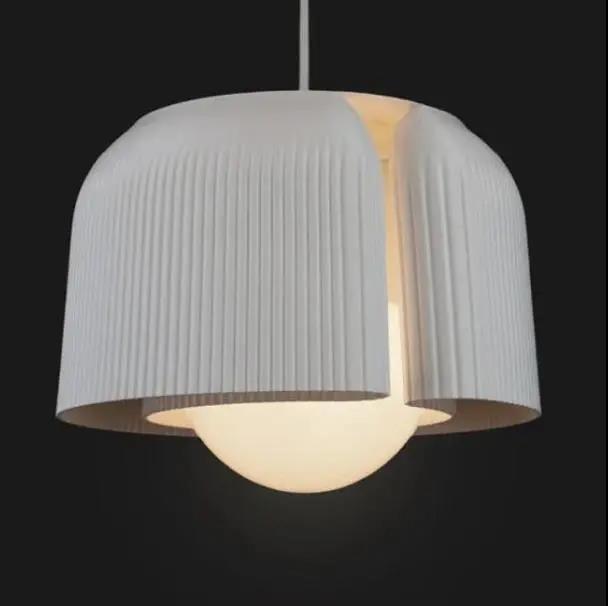
In the field of lighting design, 3D printing requires students to master basic design knowledge, but also to master higher practical ability. Although the current level of 3D printing teaching in schools is limited, with the development of electronic technology and materials technology, more forms of 3D printing equipment and materials are bound to be used in classroom teaching in the future.