
Shipyard parts change fast. Welders and engineers feel pressure. A robot alone can become another bottleneck when every seam still needs manual teaching.
Intelligent welding can help shipyards automate suitable small sub-assemblies and medium-resistance components by using 3D vision scanning, seam recognition, real position correction, and automatic weld path generation instead of repeated manual robot programming.
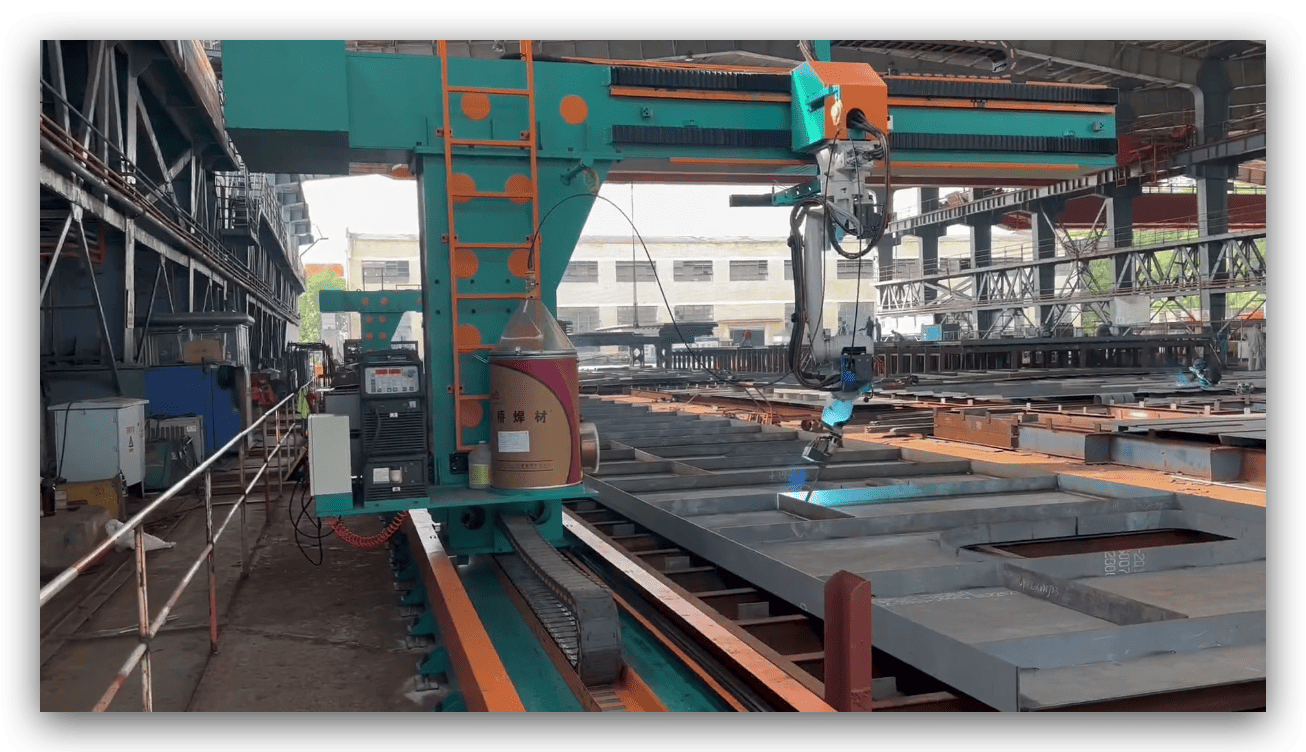
I have seen this problem in real shipbuilding manufacturing discussions. The hard part was not only welding speed. The hard part was making automation fit parts that were not always the same. I want to explain what I learned from these projects, and I want to keep the discussion close to the workshop floor.
Why Is It Not Enough to Simply “Buy a Robot” for Non-Standard Welds?
Many factories first think the robot is the answer. I understand this thought. But a robot without seam understanding may only move the programming work from the welder to the engineer.
A robot can repeat a taught path very well. But shipyard small sub-assemblies and medium-resistance components often have part variation, assembly deviation, and different seam positions. Intelligent welding must first identify the real weld seam before it can weld well.
The Real Problem Is Part Variety
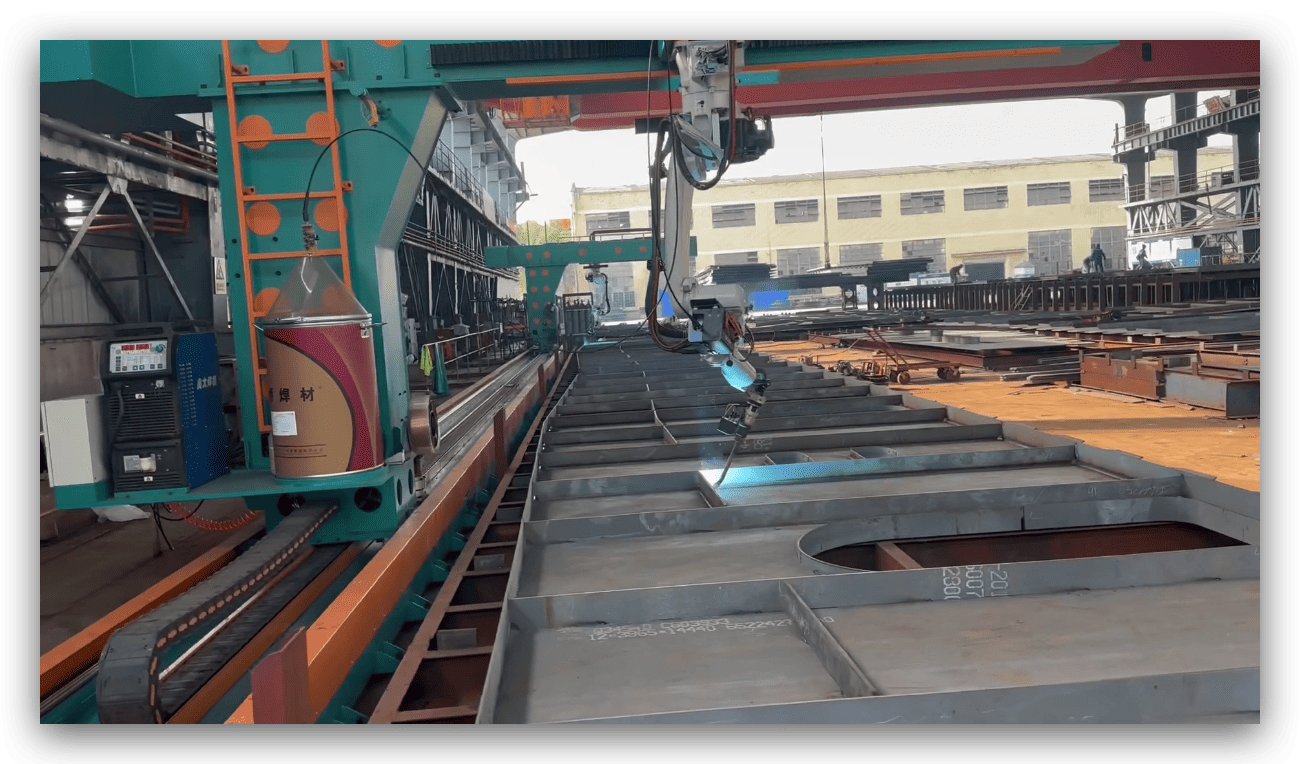
In many shipyard workshops, small sub-assemblies do not behave like standard mass-production parts. I may see similar parts on the drawing, but I still see small changes in the real workpiece. The length may change. The plate position may shift. The gap may not be the same. The fixture may hold the part well, but it may not remove all deviation.
Traditional robot welding works best when the part position is repeatable. It also works well when the same workpiece runs many times. But many shipyard small parts are high-mix and low-volume. This means the parts change often and the batch size is not large. If every new part needs hand teaching, the programming time can eat the benefit of automation.
What I Check Before I Suggest Automation
I usually ask for drawings, photos, material thickness, weld type, and production rhythm. I also ask about fixture condition and access space. These basic details tell me if intelligent welding can help or if the part still needs process adjustment first.
| Item I Check | Why It Matters | Common Risk |
|---|---|---|
| Part variety | It decides programming workload | Too many versions need manual teaching |
| Assembly deviation | It affects seam location | Robot path misses real seam |
| Seam accessibility | It decides torch reach | Robot cannot keep proper angle |
| Material and thickness | It affects power and penetration | Weld may lack fusion |
| Fixture stability | It affects repeatability | Scanned path changes too much |
| Weld requirement | It affects process choice | Appearance or penetration may not meet target |
The Robot Is Only One Part of the System
I see the robot as a strong arm. But the arm still needs eyes and a brain. In intelligent welding, the “eyes” are usually 3D vision or laser scanning. The “brain” is the software that finds the seam and creates the welding path. The welding power source, torch, wire feeding, shielding gas, fixture, and safety system also matter.
I do not say manual welding is weak. I also do not say traditional robot welding is wrong. I only say each method has its place. For shipyard small sub-assemblies and 中阻力件, the key question is simple. Can the system find the real weld seam and generate a reliable path without heavy manual work?
How Do 3D Vision Scanning, Seam Recognition, and Automatic Path Generation Reduce Repeated Teaching?
Engineers lose time when every small change needs a new robot program. The pressure grows when production needs change daily. Manual teaching can become the hidden cost.
3D vision scanning captures the real workpiece shape. The system then recognizes weld seams, corrects position errors, and generates robot paths. This reduces repeated teaching and helps the robot weld the actual part, not only the ideal drawing.
The Workflow Matters More Than One Single Device
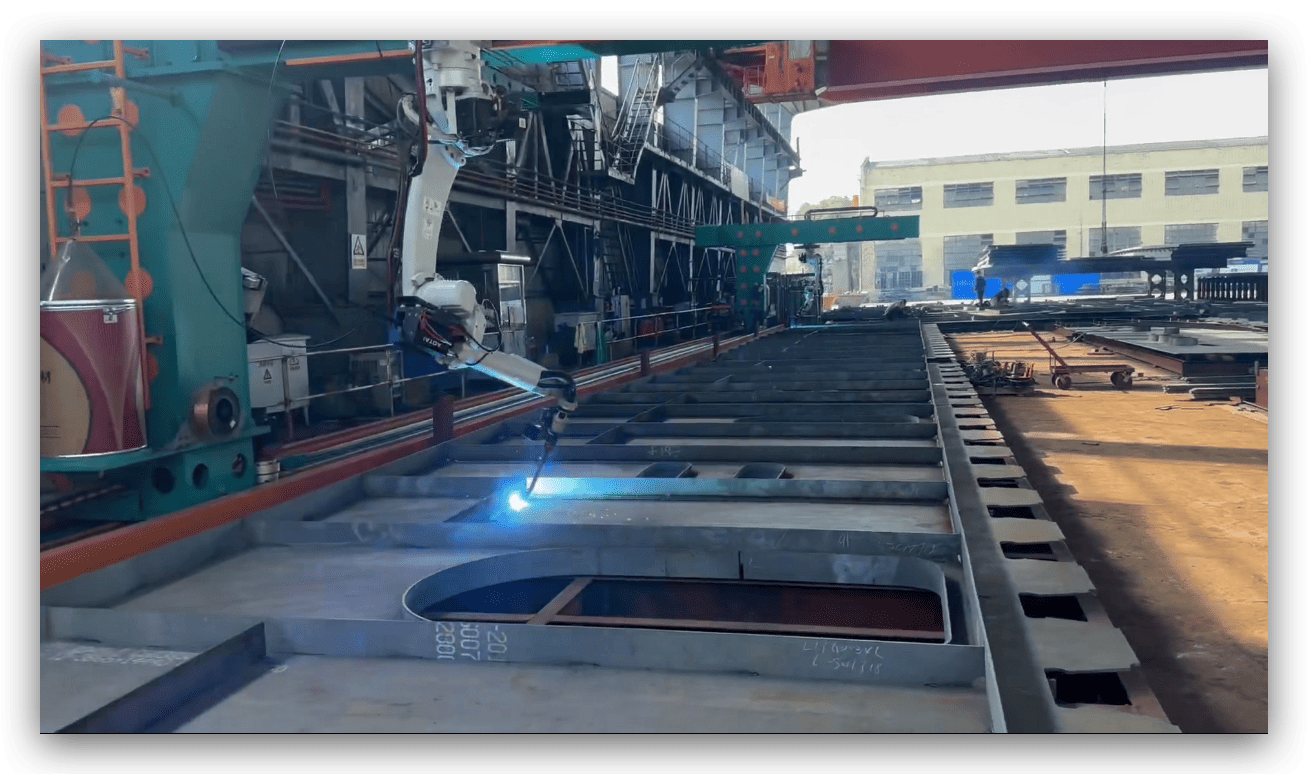
In one domestic top-tier shipbuilding manufacturing scenario I worked with, the main question was not “Can the robot weld?” The robot could weld. The real question was “Can the system prepare the path fast enough for changed parts?” That is where the workflow became important.
A useful intelligent welding workflow usually follows this order:
| Step | What I Expect the System to Do | Practical Value |
|---|---|---|
| 3D vision scanning | Capture the real part shape | Reduce dependence on ideal fixture position |
| Weld seam recognition | Find the weld position and type | Reduce manual seam marking |
| Position correction | Compare real part with expected model | Avoid path offset problems |
| Automatic path generation | Create robot motion and welding path | Reduce repeated teaching |
| Welding execution | Keep stable speed, angle, and process | Improve quality consistency |
| Process review | Check output and improve settings | Support continuous improvement |
This workflow is important because shipyard parts often have real-world error. The drawing is clean. The workshop part is not always clean. The system must bridge that gap.
What Seam Recognition Really Means in the Workshop
Seam recognition is not magic. It depends on shape, contrast, access, scanning angle, part cleanliness, and algorithm setting. If the seam is blocked, the system may not see it well. If the gap is too irregular, the process engineer still needs to judge the right welding method. If the groove is not suitable, automatic welding may need fixture or process changes.
I prefer to explain this clearly before a project starts. Intelligent welding is not a universal fully automatic answer for every ship part. It is a practical tool for suitable parts. It is strongest when the workpiece has enough repeatable features for scanning, enough access for the torch, and a clear welding requirement.
Why Automatic Path Generation Changes the ROI Discussion
Many managers first ask about welding speed. I understand that question. But I often look at programming time, rework risk, and operator dependence as well. A fast weld is not useful if it needs too much setup time. A fast robot is not useful if engineers must teach hundreds of short seams by hand.
Automatic path generation can improve the whole rhythm. The operator loads the part. The system scans the part. The software finds the seam. The robot receives the path. The welding process runs with stable movement. This can make automation more realistic for high-mix and low-volume work.
| Old Question | Better Question |
|---|---|
| How fast can the robot weld? | How fast can the system move from part loading to stable welding? |
| Can the robot repeat the path? | Can the system find the real seam position? |
| How many programs do I need? | How many paths can the system generate automatically? |
| Can I replace welders? | Can I reduce repeated teaching and improve consistency? |
I have found that this way of thinking gives a safer decision. It also reduces disappointment after purchase.
What Makes Intelligent Welding Suitable for High-Mix, Low-Volume Shipyard Components?
Small shipyard parts can look simple from far away. But the real welding work can be hard. The part mix is wide, and each seam may need stable penetration and appearance.
Intelligent welding fits suitable high-mix, low-volume shipyard components when it reduces programming work, handles real part deviation, keeps weld quality stable, and matches the material, thickness, groove, access, and fixture conditions.
The Strongest Use Case Is Not Replacing Every Welder
I do not suggest that a shipyard should replace all welders with automation. That is not how real production works. Skilled welders and process engineers still matter. They understand groove quality, heat input, deformation risk, and weld acceptance better than any sales sheet.
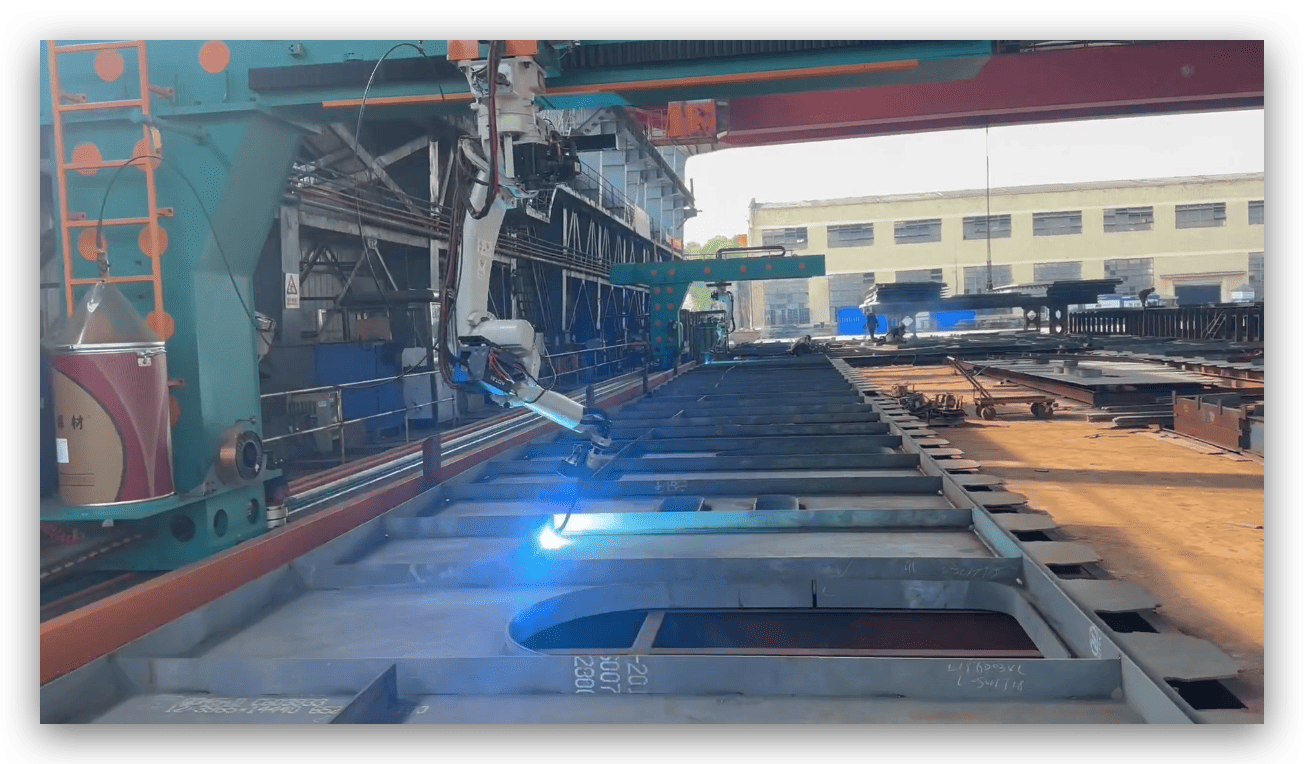
The stronger use case is different. Intelligent welding can take over suitable repetitive seams on non-standard or semi-standard parts. It can reduce dependence on repeated robot teaching. It can help the workshop get more stable output from shift to shift. This is very useful when experienced welders are limited and young workers need easier operation support.
What Conditions Make a Part More Suitable?
I usually divide the evaluation into technical fit and production fit. A part may be possible to weld by robot, but it may not be worth automating if the quantity is too low or the loading process is too hard. A part may have good quantity, but it may fail automation if the seam is hidden or the fixture is unstable.
| Evaluation Area | Suitable Condition | Warning Sign |
|---|---|---|
| Material | Common weldable steel or approved material | Unknown material or unstable surface condition |
| Thickness | Matches power and process window | Thickness needs special multi-pass control |
| Groove design | Clear seam shape for scanning | Inconsistent groove or heavy gap change |
| Accessibility | Robot torch can reach with proper angle | Narrow space blocks torch or scanner |
| Fixture | Holds part with acceptable stability | Part moves after scanning |
| Batch rhythm | Similar families appear often | One-off parts with long setup time |
| Quality need | Stable weld appearance and penetration needed | Requirement is unclear or changes often |
Stable Quality Matters as Much as Speed
Many production managers care about speed, but I hear another concern more often after deeper talks. They worry about rework. Rework wastes time, gas, wire, grinding labor, inspection time, and delivery confidence. In shipyard work, a small defect can create a large process delay if it appears at the wrong stage.
Intelligent welding can help reduce variation when the process is well set. The robot can keep travel speed, torch angle, arc length, and path position more stable than a tired human hand. The 3D vision system can help correct the path when the part position is not exactly the same. The software can reduce manual teaching error. The result is not only faster welding. The result can be more predictable welding.
Process Engineers Still Need to Lead the Project
I always tell customers that intelligent welding still needs welding process input. The system can generate paths, but the process rules must be right. The power, speed, wire feed, weaving, shielding gas, and torch angle must match the real material and joint. If full penetration is needed, the power level and joint preparation must support that goal. If the part is thick, one pass may not be enough. If the appearance requirement is strict, the process window must be tested.
This is why I like to start with part evaluation. I ask the customer to send drawings, material, thickness, weld length, weld type, photos, and daily output target. If possible, I ask for sample parts. I then judge whether handheld laser welding, robotic laser welding, MIG/TIG robotic welding, or intelligent programming-free welding is the better direction.
How I Prefer to Start a Shipyard Automation Review
I prefer a controlled start. I do not promise that all components can be automated. I pick part families that have good access, clear seams, stable fixtures, and enough production need. I then test scanning, seam recognition, path generation, and welding quality. This method protects the buyer and the supplier.
| Review Step | What I Ask From the Shipyard | What I Try to Confirm |
|---|---|---|
| Part selection | Drawings and part photos | The part has automation value |
| Process details | Material, thickness, groove, weld type | The welding method is suitable |
| Production rhythm | Batch size and shift demand | The ROI is realistic |
| Fixture review | Current fixture photos or design | The part will not move too much |
| Access check | Space around the seam | Robot and scanner can work |
| Trial plan | Sample parts or test scope | The risk is visible before purchase |
I have learned that this careful start builds trust. It also helps both sides avoid a wrong project. Intelligent welding is powerful, but it needs the right scenario. Shipyard small sub-assemblies and medium-resistance components are often a good direction because they create repeated programming pressure, but they still have enough structure for system recognition when selected well.
Conclusion
I see intelligent welding as a practical path for suitable shipyard parts, when seam recognition, path generation, and process control work together.